[001][03.12.25]

“Iconic” is an attribute that gets thrown around quite a lot when talking watches, and often sounds exaggerated. It’s not easy, really, to agree on what makes a timepiece an actual icon; it would probably be a mix of breakthrough design, enduring legacy, and heavy influence on…
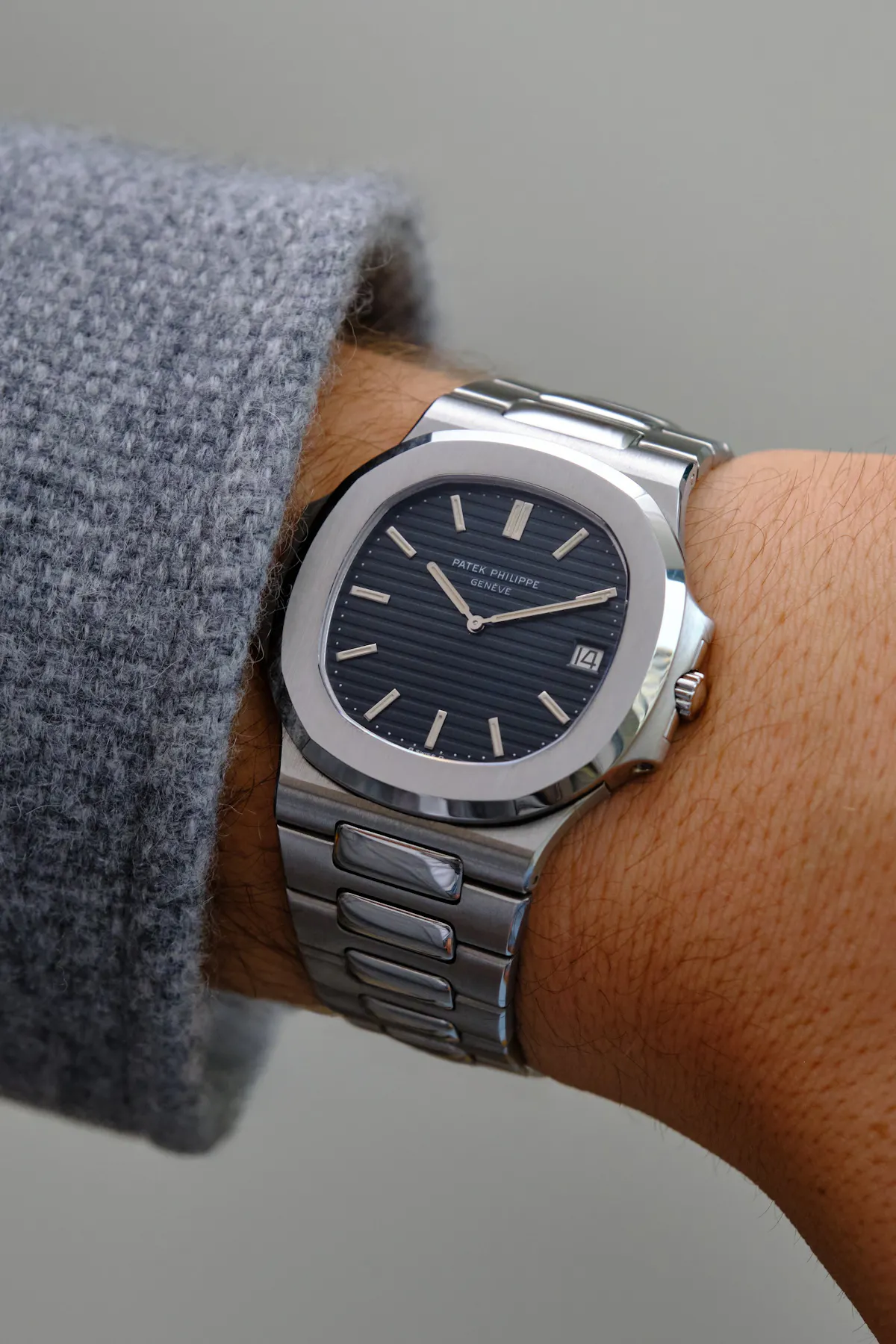
“Iconic” is an attribute that gets thrown around quite a lot when talking watches, and often sounds exaggerated. It’s not easy, really, to agree on what makes a timepiece an actual icon; it would probably be a mix of breakthrough design, enduring legacy, and heavy influence on the contemporary and vintage market. A fair share of watches tick all these boxes, and today we’ll focus on the Patek Philippe Nautilus - the OG one, better known as the reference 3700. Its background should be known to most: it was penned by Gerald Genta, the Swiss designer whose notable creations also include the Audemars Piguet Royal Oak, the Universal Geneve Polerouter, and even the watch that eventually evolved into the Bulgari Octo Finissimo.
Interestingly enough, the Nautilus was not a direct commission by Patek. Rather, it was Genta himself who pitched the design to Patek Philippe executives - and according to the legend, it all happened in a restaurant, after the designer spotted Henri Stern dining with some close collaborators at the next table. Whatever the real story is, the Nautilus came to be in 1976, as Patek Philippe’s first sports watch - and a quite evident reply to the Royal Oak, too. Its price tag read the remarkable sum of $3100, almost at par with a yellow gold Calatrava: this, paired with the imposing dimensions that earned it the nickname “Jumbo”, made for a shy commercial debut.
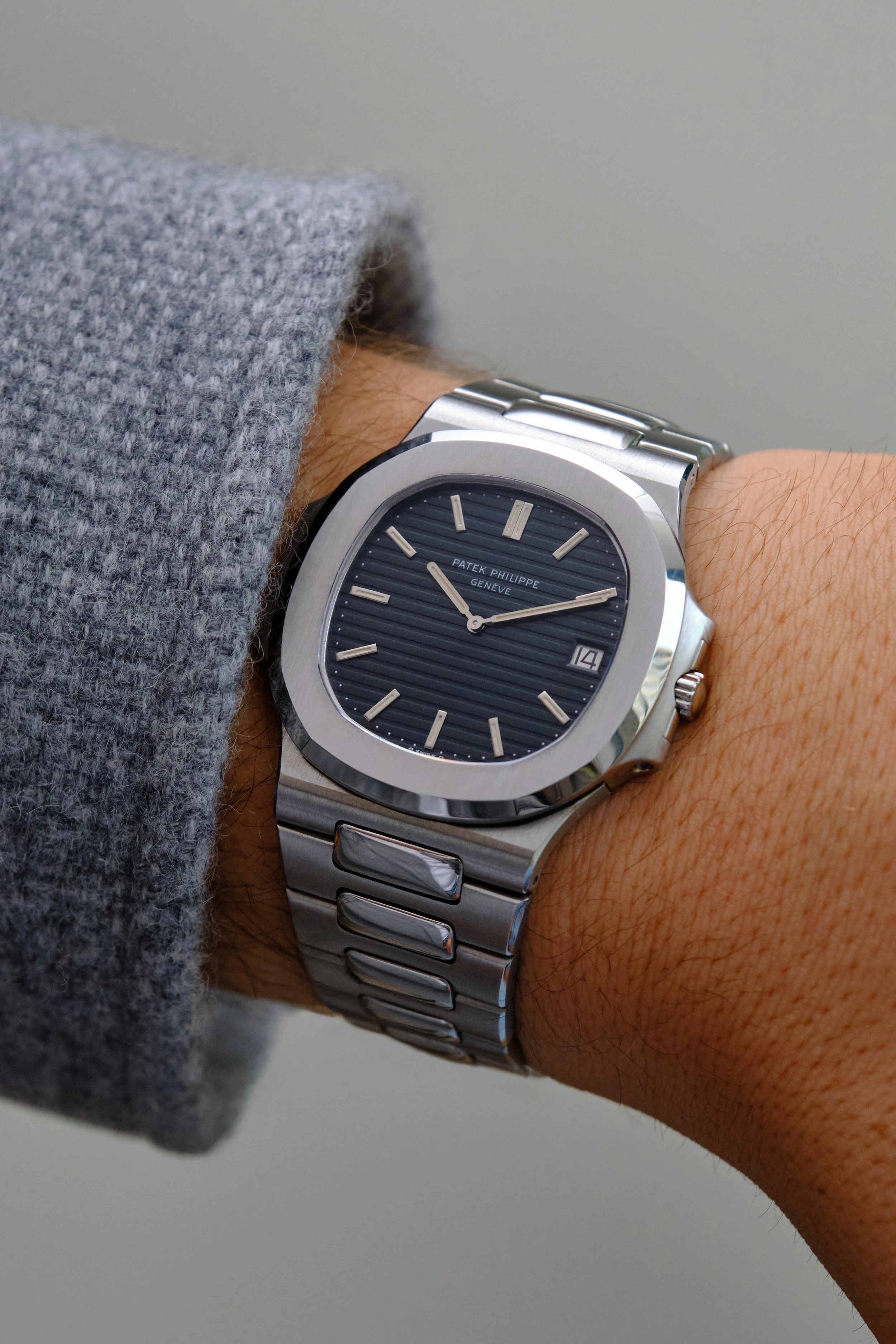
But how come the watch was so costly? It was partly a marketing move and partly a necessity: the case envisioned by Genta was innovative, but also complex to manufacture. It featured a two-piece construction, maintained on all Nautilus until the 5711, which ensured water-tightness by reducing the number of parts; there are, in fact, only two: the caseback, which houses the movement, and the bezel. The two elements are secured by screws running through the “ears”, and are sealed by a single gasket. Underneath the bezel are engraved the last three digits of the serial number, which figures in full inside the caseback.
No expense was spared for the movement, either: the Nautilus 3700 was powered by caliber 28-255C. Specifically, it was Patek’s version of the legendary 920 from Jaeger-LeCoultre, an ultra-thin, full-rotor automatic movement also found in the Royal Oak 5402 and Vacheron Constantin 222 among others. It still is one of the thinnest - and best finished - automatic movements in the history of watchmaking. Finally, the watch was initially presented in a highly distinctive cork box, an object that can now trade hands for five-digit sums on its own.
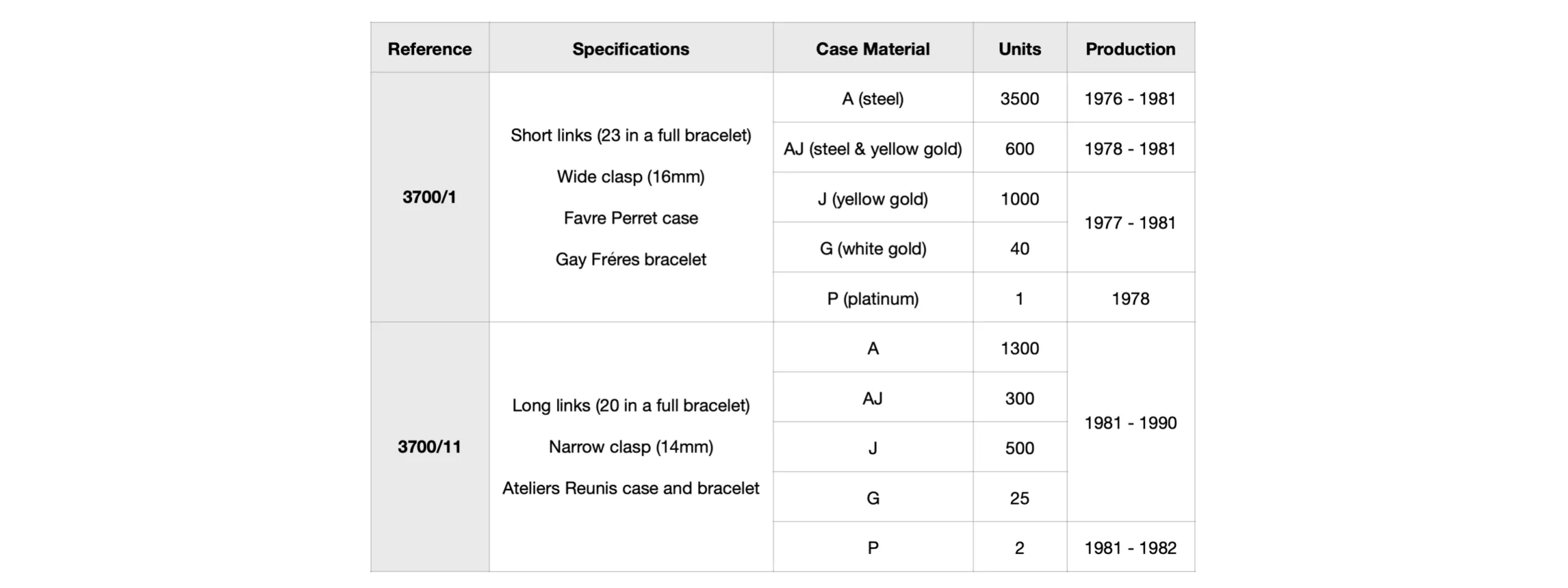
Looking back at the production history of the first Nautilus is an interesting exercise in many ways. It allows to place it in a precise time frame, as not everyone realises that, by the time the automatic Daytona was launched, the 3700 was on its way to retirement. Then - and more importantly - it sheds light on the actual rarity of a reference that, for how ubiquitous it may seem today, was only manufactured in an esteemed total of 7500 pieces, spread across a vast number of configurations that make it all the more attractive to collectors. These figures should be even more impressive when compared to what is considered desirable (read: hyped) in the market for modern watches - and remind us once again of why vintage has always been the real deal.