[001][16.02.23]
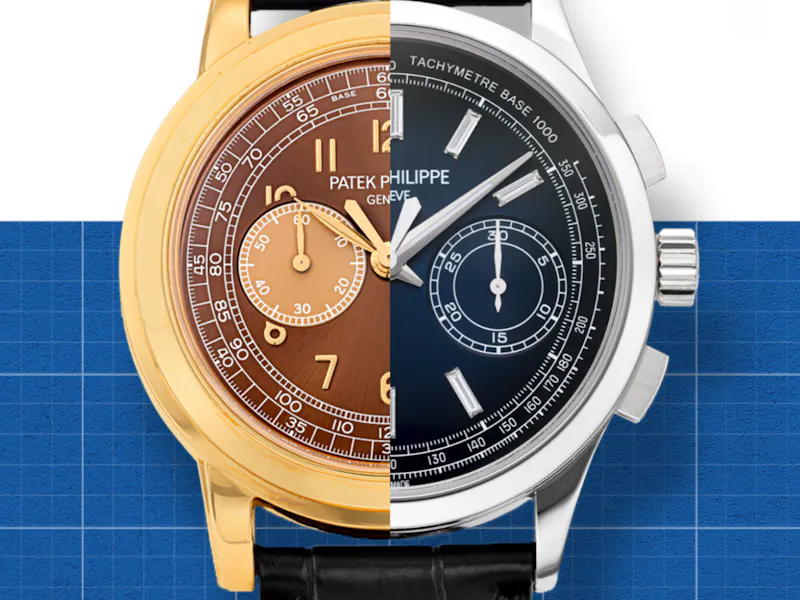
The perpetual calendar chronographs are arguably the guiding stars of Patek Philippe’s long-standing reputation as a complications maker. The 1518 was groundbreaking; the 2499 continued that legacy; the 3970 advanced it; and the 5970 brought it into the modern era.
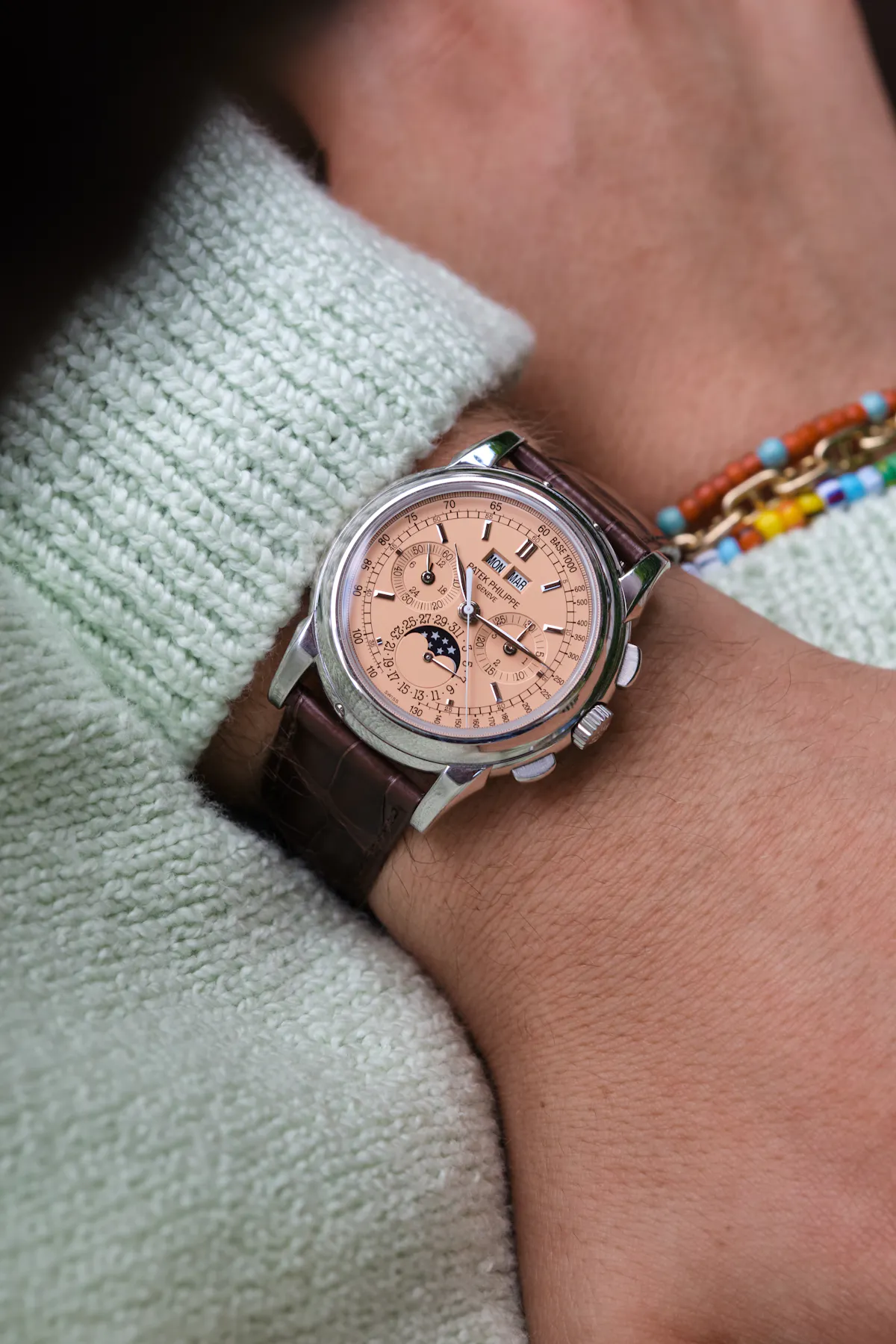
The 2000s were an era of big change for Patek Philippe, not only for technical achievements, but for company structure, too. Though he wouldn’t officially take the house’s reins until 2009, Thierry Stern is widely credited for having assumed responsibility for the design of the Patek Philippe 5970, released in 2004. While it still retained hallmarks of Patek’s perpetual-chrono paragons of the past, the 5970 truly was the watch that brought the brand into modernity: introducing a bigger case size and much larger production numbers, but retaining the Lemania-based calibre that defined its predecessors. Had it not been for its success, one must wonder whether Patek Philippe would be the brand that it is today.
Whereas references like the 1518 and 2499 were produced in the hundreds, the 5970 followed in the footsteps of the 3970, at least when it came to production numbers. (The near-20-decade-long production run of the 3970 would be hard to match.) But where it really differentiated itself from all other Patek perpetual calendar chronographs was its case, now measuring a brawny 40mm in diameter and 13.5mm in thickness, with muscularly angular lugs and square chronograph pushers. Don’t get me wrong — it was far from sporty — but it certainly made for a modern-looking (and more legible) Patek Philippe, and one which looked right at home in the mid-2000s watch climate that leaned towards larger diameters.
With this increase in size, Patek was suddenly working with a lot more dial real estate, which surely influenced the decision to space out the printing somewhat, as well as bring back the tachymeter scale that had been missing since the 2499 (unless you’re Eric Clapton, I guess). Another nod to the 2499, its second series in particular, is the return of the aforementioned rectangular chronograph pushers.
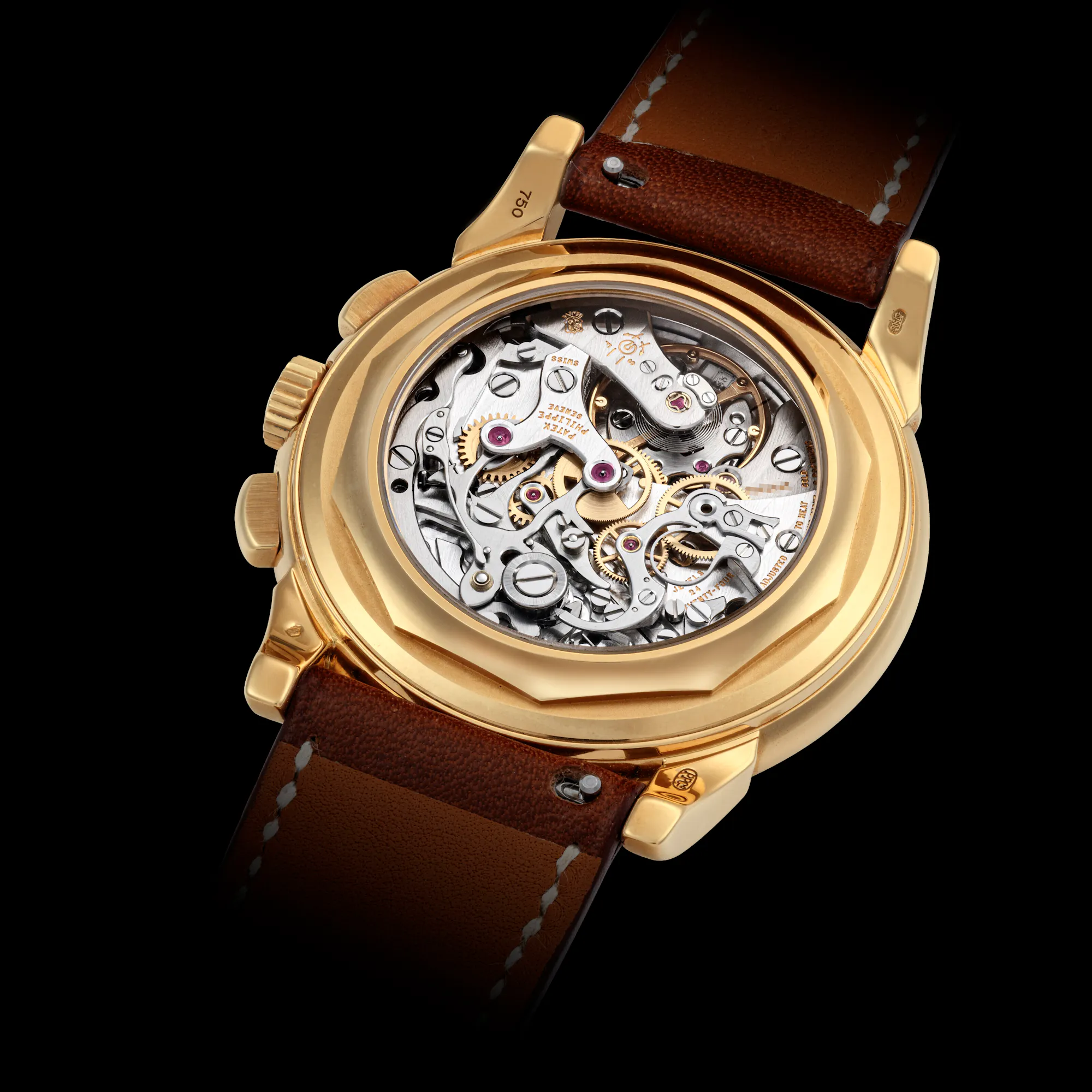
The 5970 wasn’t completely out of touch with what came before, however. Famously, it was the last perpetual chronograph reference (well, if you exclude the 5971P — more on that shortly) to use the famous Lemania-based architecture that typified Patek’s most sought-after watches for decades. I shudder to say this given the inherent value, but despite the success of the 5970 and its historical importance, the larger production numbers of two of its standard-production variants make it relatively accessible in the world of important, complicated vintage Patek.
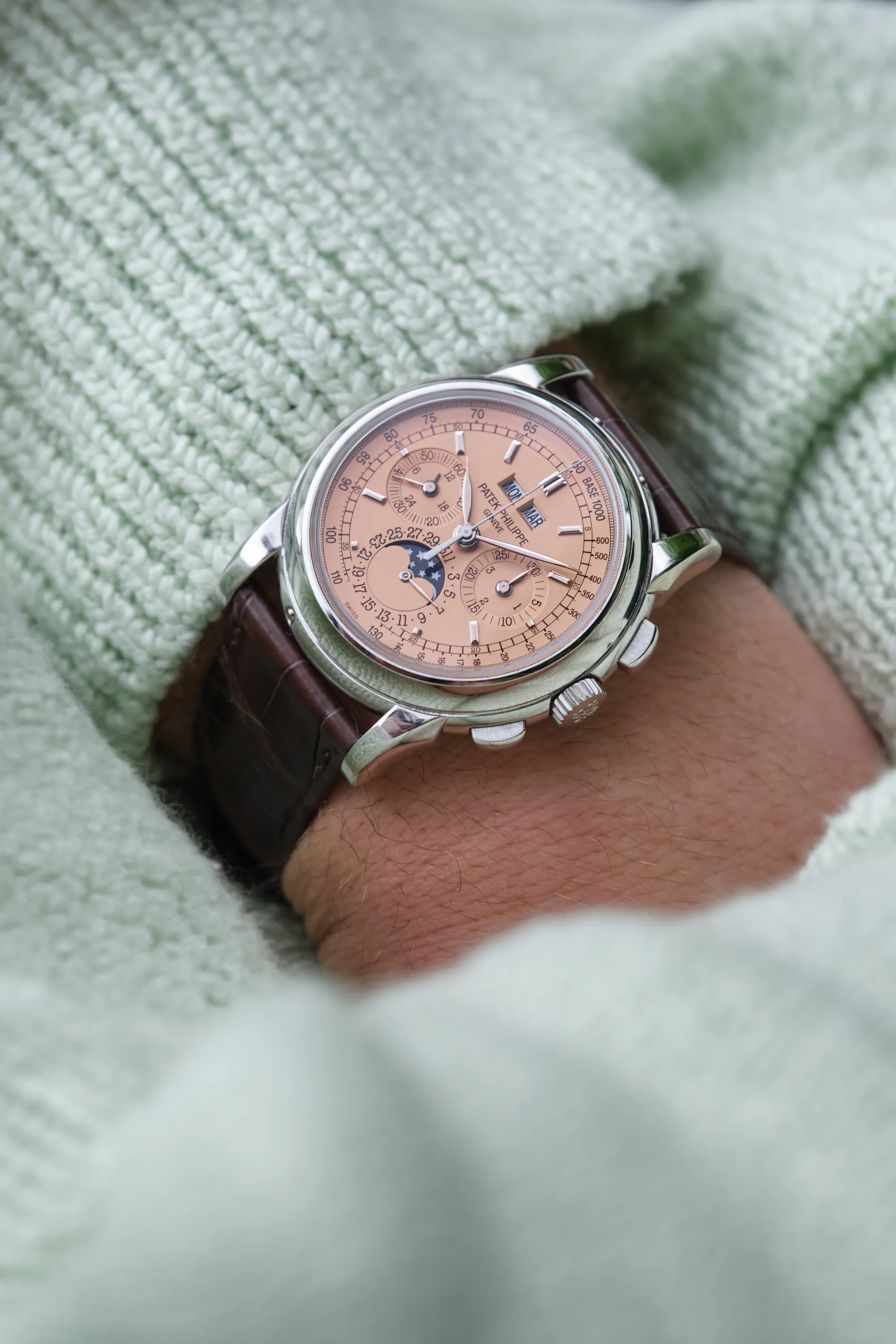
With a short production run lasting from 2004 until 2010 (though with some pieces selling much later into the 2010s), the 5970 is also an example of Patek’s improvement in manufacturing capacity. While production numbers haven’t been confirmed by the brand, the most widely accepted estimate places it at some 2,800 pieces across four metals, as suggested by Collectability’s John Reardon.
First, in 2004, came the 5970G and 5970R, each estimated to have been made in just over 1,000 examples, with their production runs ending in 2009. They’re characterised by their white dials and case-matching leaf hands and baton markers, a trend that would continue with the circa 2008 introduction of the 5970J. Curiously, the most classic of golds is also the rarest when it comes to this particular reference, with 100-300 pieces being estimated in a short, year-long production run.
To celebrate the end of an era, both for the 5970 as a model, but also the 27-70Q calibre, Patek unveiled the platinum-cased 5970P and 5971P, the latter using the same 40mm case, but flooded with diamonds for the bezel, dial, and pin buckle. Despite being more numerically common than yellow gold, the platinum remains the most sought-after 5970, likely for its black dial — a sight previously unseen in a standard-production platinum Patek. Between 300 and 500 of the 5970Ps are estimated to have been produced, while the blingy 5971P was even rarer, at an approximate total of only 100 pieces.
An interesting tidbit for the discerning collector and movement nerd will be that, despite introducing the self-gratifying Patek Philippe Seal in 2009, all 5970s and their Lemania-based calibres still feature the Poinçon de Genève, despite some models being delivered well after that cut-off date.
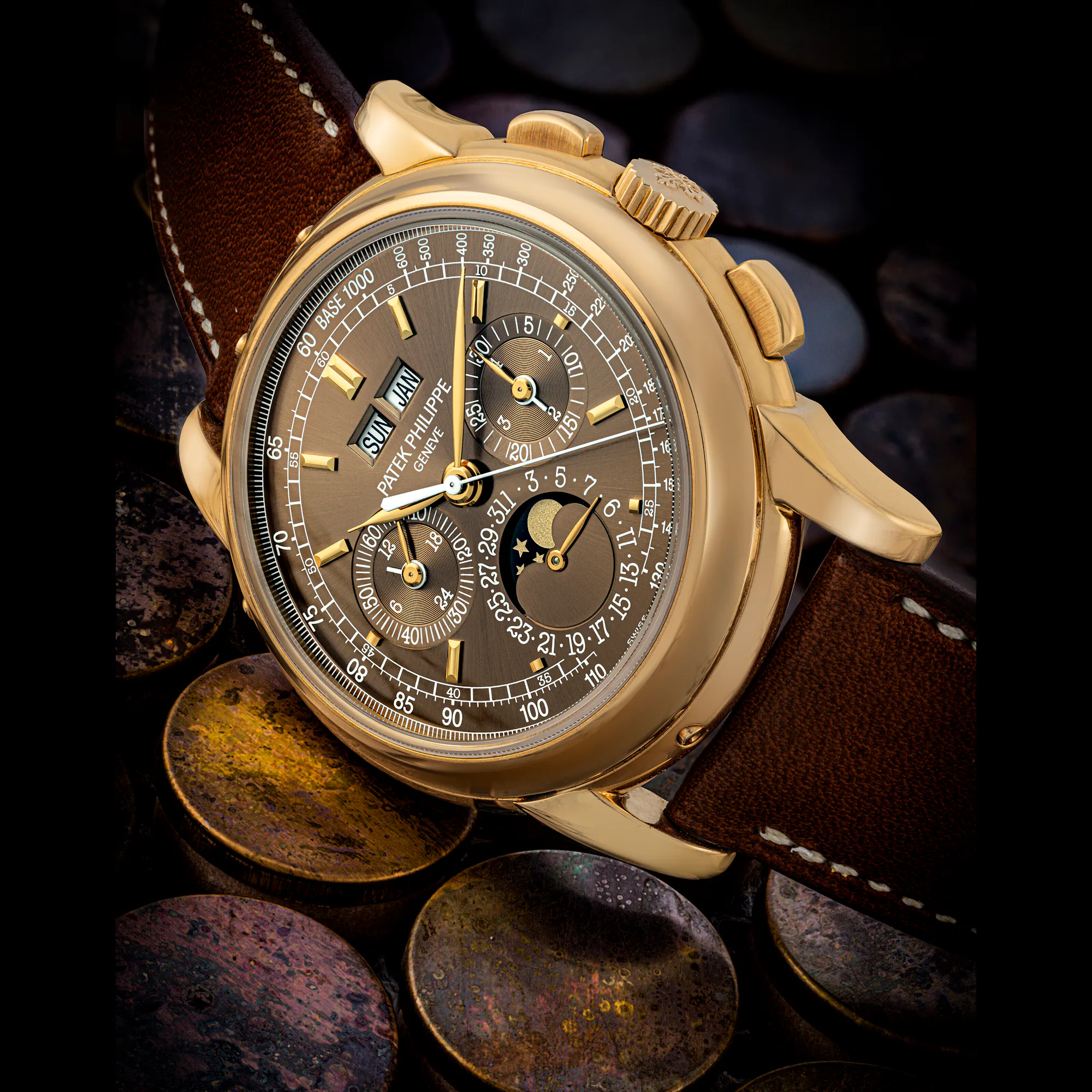
These pieces no longer formed part of standard production, and were offered in extremely limited numbers, and for special occasions. The first of these was for those who found the 5970P as insufficient in celebrating the model — an invite-only, IYKYK kinda thing — and saw a set of four pieces, one in each metal, with uniquely coloured dials sporting the Roman “XII” instead of 12, and with dot markers instead of batons. White gold and platinum were paired with salmon dials, yellow gold got champagne, and the rose gold model came with black. Finally, in 2015 for Patek’s Grand Exhibition in London, the brand offered two special pieces, another 5970G with a salmon dial (though with regular batons), and a delectable 5970R with a sunray bronze.
One of the more effective ways to distinguish a 5970 from its predecessors, and in turn, identify it as a truly modern Patek, is by the sheer number of special-order and “possibly unique” pieces. The easiest ones to mention at the outset would be those that are double-signed, the most famous of which was probably the Tiffany one purchased by one Mr Ben Clymer.
One also can’t forget to mention Eric Clapton when talking about special 5970s, whether it’s his own 2006 quartet with Breguet numerals and brick bracelets; or the set @horology_ancienne commissioned, directly inspired by those pieces. There are also at least three, but more likely five 5970Rs with sunburst bronze dials, which Wei Koh believes to be the only sunray-finished variation made of the model. If you’ve been around the auction block, you may also remember a 5970P — the most collectible of the four standard models — but with white hands, selling at Sotheby’s back in 2016 for some 20% over what standard-production platinum models sold for at the time.