[001][10.05.23]
[Written by THOMAS WOJTOWICZ]
Deep Dive: The Patek Philippe Ref. 2499 'Third Series'
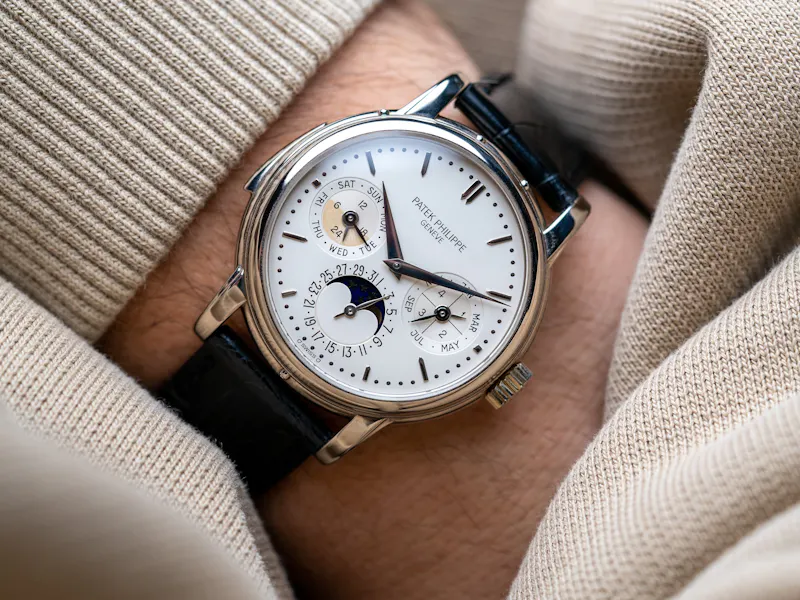
The ‘third series’ of Ref. 2499 watches represents the beginning of a more consistent era in Patek Philippe’s output. During the 1960s and 1970s, production increased, and with it the 2499 began to embrace a cleaner, more contemporary energy.
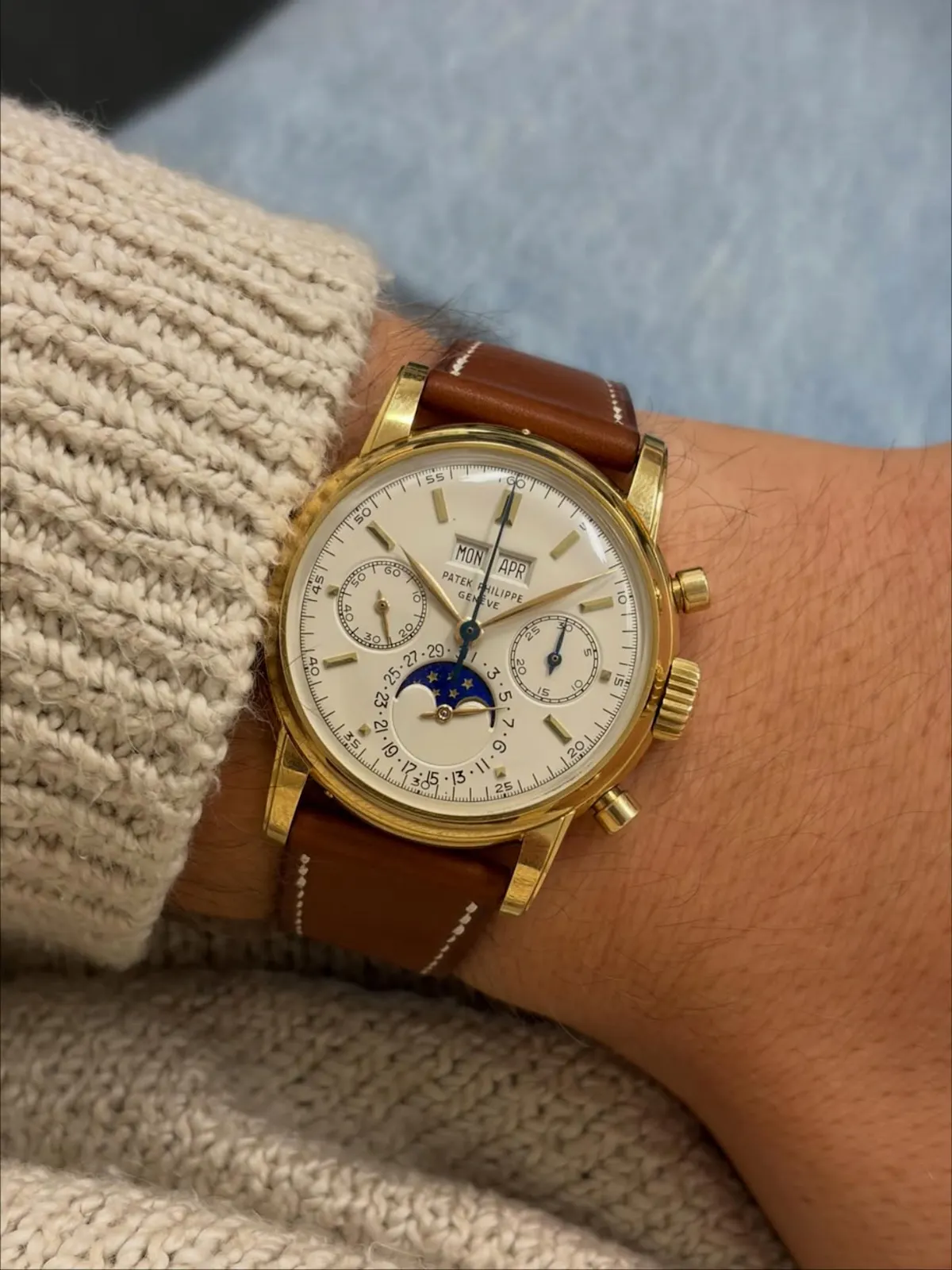
Editor's Note: This deep dive into the Patek Philippe Ref. 2499 family of perpetual calendar chronograph watches was last updated in December 2025, with an additional chapter dedicated to collecting the reference's 'Third Series'.
Collector's Guide: The Ref. 2499 'Third Series'
The serialised perpetual calendar chronograph at Patek Philippe is undeniably one of the most important and collectable lineages in Swiss watchmaking’s history. Fortunately it continues to see development by Patek to this day. Yet for many collectors, the vintage era is where the magic truly lies and where the inspiration for many of Patek’s modern watches continues to emanate from. The timeframe we’re talking about kicked off in 1941 with Ref. 1518, followed soon after by Ref. 2499 in 1951, and then Ref. 3970 in 1986.
Out of all three dynasties in the lineage, the Ref. 2499 has long proven the most desirable (despite the earlier Ref. 1518 being the more ambitious technical achievement of its time). Mostly, this is due to how impressively the Ref. 2499 balances vintage charm and historical significance with contemporary style and wearability.
In other words: the 2499 takes much of what makes the 1518 so special, while combining that with what the modern collector loves about the 3970.
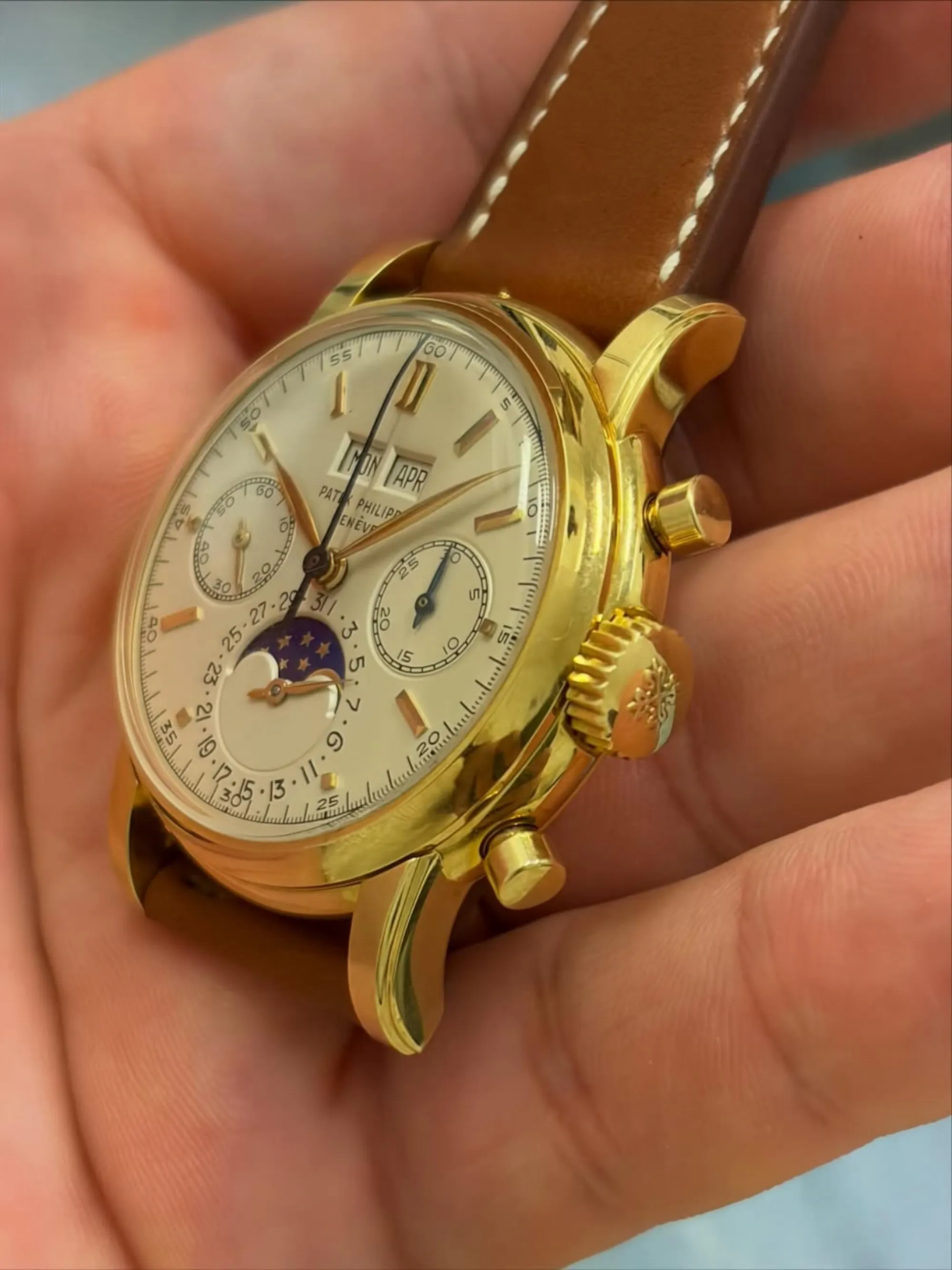
The third series of 2499 production began in 1960, spanning almost 20 years. This era of the reference is when the tachymetre disappeared from the dial, and hard enamel signatures were similarly phased out. Not just from the 2499 – but all of Patek’s production. (At scale, these details were simply proving too economically unviable to produce.)
Made in around 160 examples between 1960 and 1979, the whole run of cases was produced by Wenger (‘Key No. 1’ hallmark). Vichet cases (‘Key No. 9’ hallmark) were phased out shortly after the inception of the second series, before the company went out of business in its entirety during the 1960s.
Almost all of these sturdy Wenger cases were yellow gold, with three known examples in pink gold. The latter were all produced in 1971 with case numbers ranging from 2,637,707 – 2,637,716. That range itself suggests as many as 10 pink gold 2499s were made.
Case Metals
[ Metal ] | [ Units Manufactured ] | [ Appearances at Auction (since 1989) ] | [ Period of Manufacture ] |
|---|---|---|---|
Yellow gold | ~150 | 82 | 1960-1979 |
Pink gold | ~10 | 6 | 1971 |
TOTAL | ~160 | 88 | 1960-1979 |
As mentioned, the third series saw the removal from the dial of the tachymetre – at least, for the most part. A small handful of examples with this scale are still known to exist, although we’re unsure as to why. (Possibly special orders, or perhaps the blurring of lines between different series of production?) Early examples of the third series featured hard enamel dials, a charming quirk which was rapidly phased out. Besides this, there was little change throughout the 60s and 70s, as Patek increasingly streamlined its production.
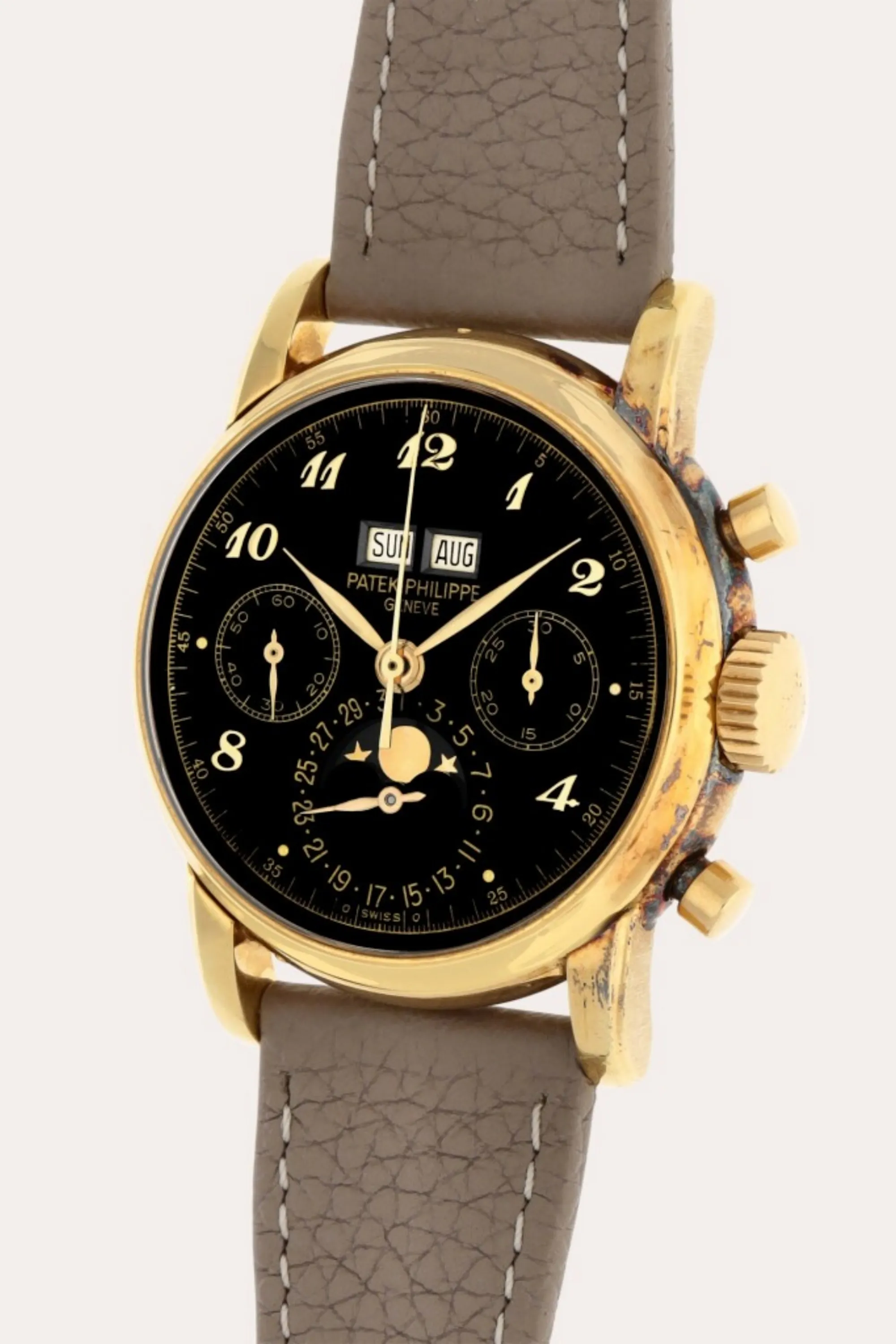
Dials appear to have been produced solely by Stern Frères, sometimes noted by the star engraving on the rear. Nearly all dials were silvered, yet there are three confirmed examples with black dials. To the best of our knowledge, all three have been retrofitted, though Patek’s own archives prove that at least one was born with a black dial. It was later switched to a silvered alternative and then back to black again, although it’s not clear if that is the same as the period-correct factory-issued black dial. This example, bearing movement number 869,332, is the only 2499 to have an archival extract confirming its black dial’s originality.
Dial Variants
[ Colour ] | [ Appearances at Auction (since 1989) ] | [ Period of Manufacture ] |
|---|---|---|
Silvered | 83 | 1960-1979 |
Black (original) | 2 | 1963 |
Black (retrofit) | 3 | 1963-1972 |
TOTAL | 88 | 1960-1979 |
Talk of rare black dials aside, the third series wasn’t otherwise devoid of variation. Both dauphine and feuille hands continued to make their way onto the 2499 during this series – and in fairly equal proportions to boot.
Only three flat dials are known to have been fitted to the third series 2499, two of them cased in yellow gold. The remaining example is in pink gold, making it the only flat dial that forms part of the three known pink gold third series 2499 watches. These are likely to have been the last of the flat dials produced, as beyond this series they were no longer seen.
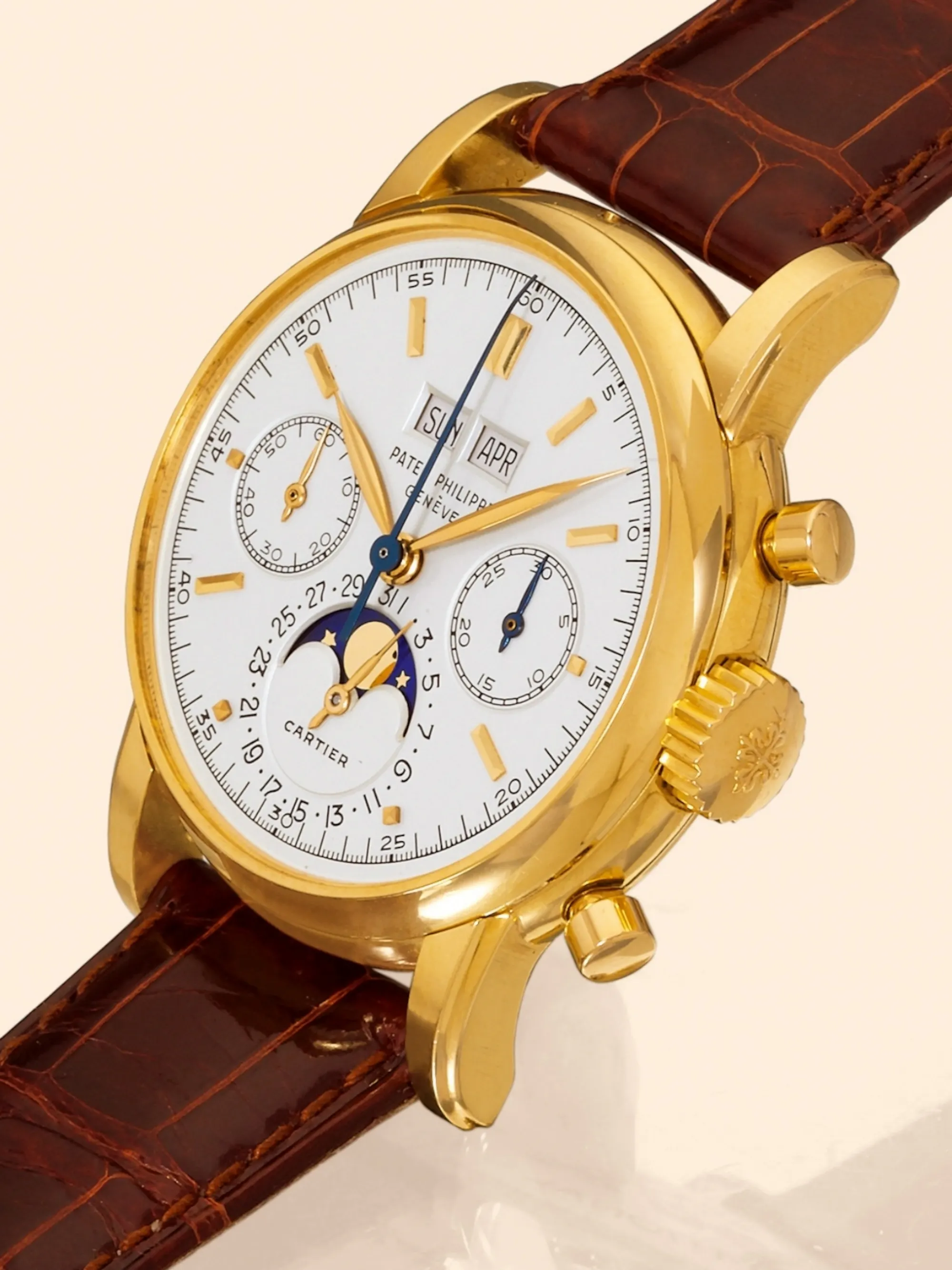
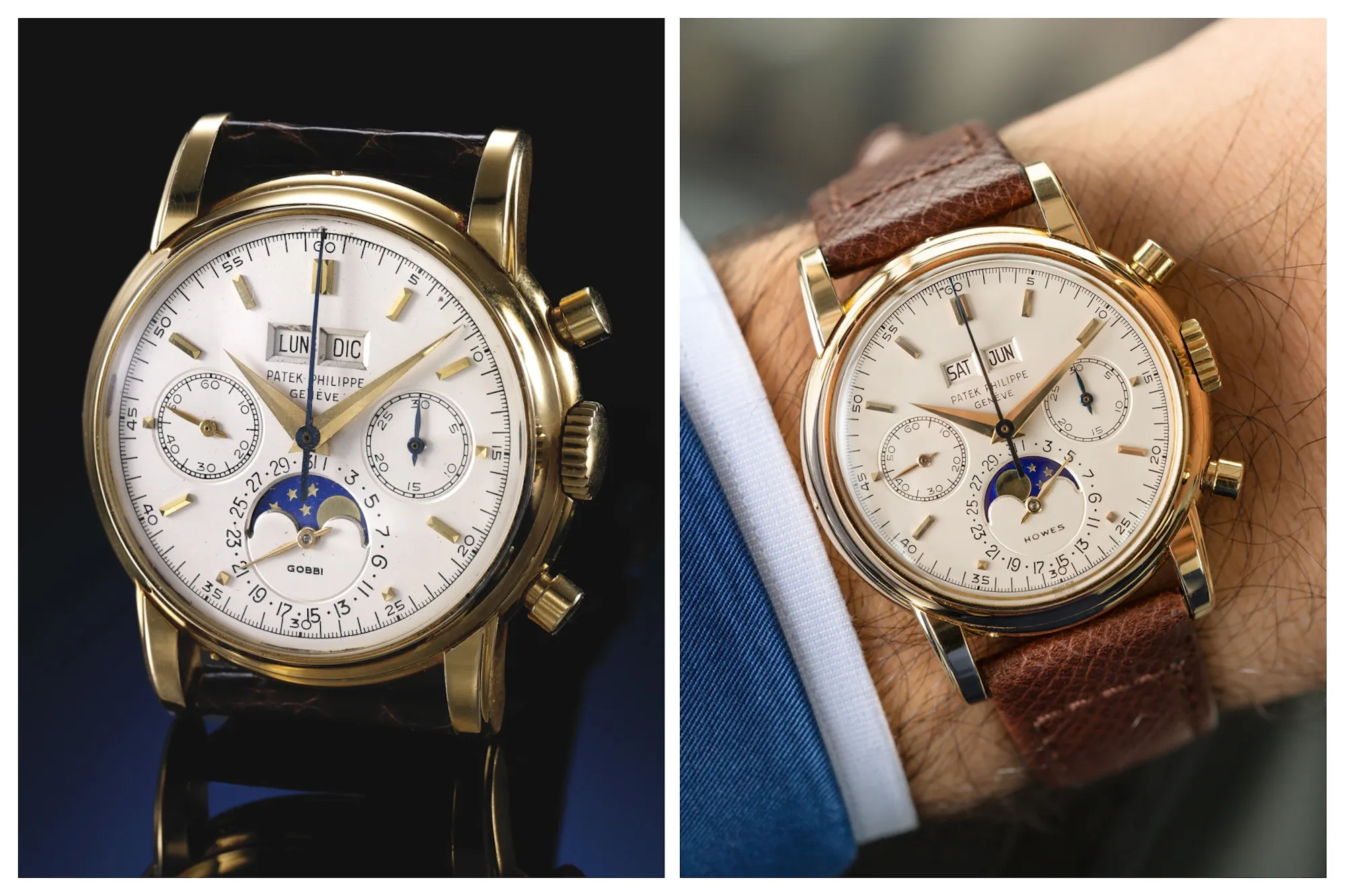
Additionally, a variety of retailers added their signatures to these watches – in fact in greater numbers than the previous series, likely due to the increased production capacity of the period. Since 1989, 14 individual double-signed examples of the third series 2499 have surfaced at auction: with those signed by Trucchi, Cartier, and Tiffany & Co having appeared more than once.
Retailer Signatures
[ Retailer Signatures ] | [ Appearances at Auction ] | [ Unique Auction Appearances ] | [ Movement Numbers ] | [ Period of Manufacture ] |
|---|---|---|---|---|
Tiffany & Co | 9 | 7 |
| 1964-1977 |
Beyer | 3 | 3 |
| 1967-1977 |
Trucchi | 3 | 1 | 869'437 | 1971 |
Cartier | 2 | 1 | 869'360 | 1966 |
Howes | 1 | 1 | 869'452 | 1973 |
Gobbi | 1 | 1 | 869'447 | 1972 |
TOTAL | 19 | 14 | N/A | 1964-1977 |
Collector's Guide: The Ref. 2499 'Fourth Series'
Widely considered the most transitional of the four series, Patek’s 2499/100 bridges the gap between vintage charm and modern wearability. With production more consistent across the fourth series, condition stands out more than ever today.
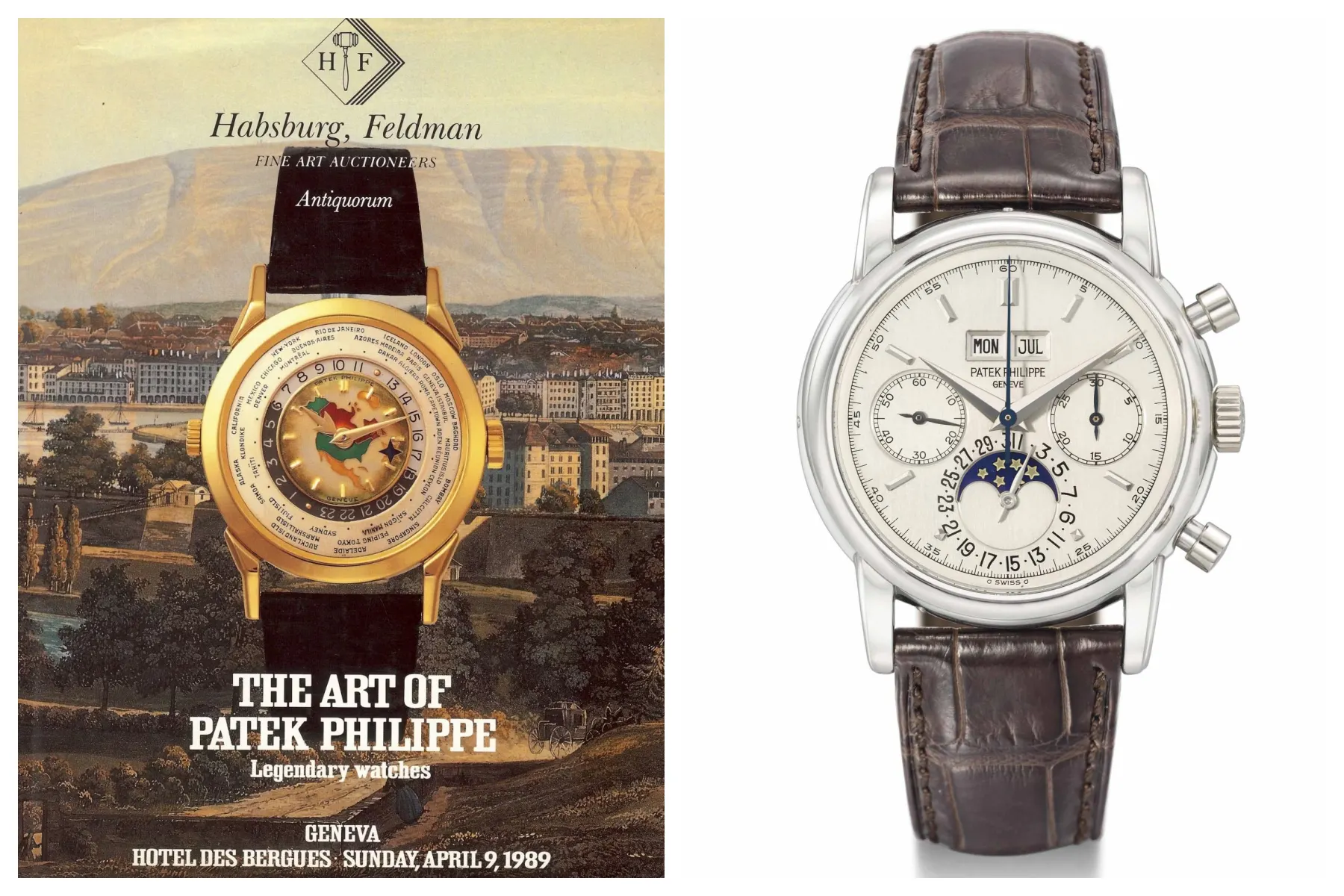
In the second half of 1979, production began on the Ref. 2499/100, the fourth and final series of production for the iconic reference. This series remains unmatched when it comes to balancing the two forces that make the 2499 so desirable.
The earlier plexiglass was replaced by modern sapphire crystal, along with a more refined dial which offers more ’breathing space’ than the preceding three series’. This was combined with a sturdy 37.5mm case (manufactured mostly by Wenger) which allows the 2499/100 to sit excellently on the wrist — just like the 3970 — or even a Perpetual Calendar Chronograph Patek would produce in the modern era.
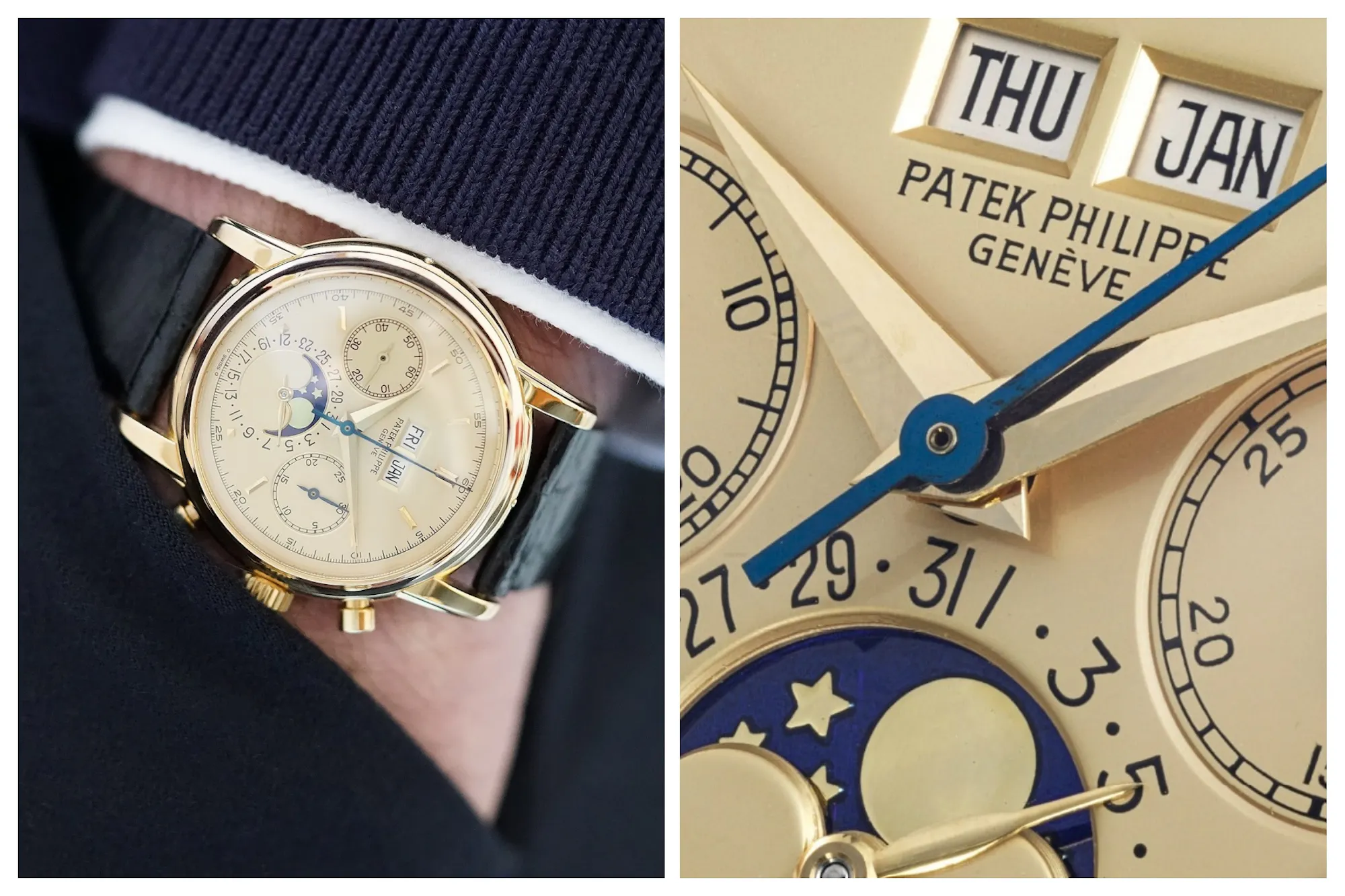
Produced in around 100 examples between 1979-1985, the fourth series 2499 cases were made mostly by Wenger (‘Key No. 1’ hallmark). However, in 1982 this production was moved in-house to Atelier Réunis (‘Key No. 28’ for Patek) who went on to produce the remaining cases as well as those of the 3970. As a result, these later and final cases took a shape that more closely resembled that of the 3970, and were designated Mark II.
Cases were made pretty much exclusively in yellow gold with snap-on casebacks. Unlike the previous three series’, there are no known public examples of the 2499/100 in pink gold. The last two examples of the series, and indeed the entire reference, were produced in platinum at a much later date, by special request of Philippe Stern.
These were completed in 1987, almost 2 years after the final yellow gold example was cased up. One went directly into the Patek Philippe Museum in Geneva, while the other was offered for sale two years later at Antiquorum’s legendary ‘The Art of Patek Philippe’ auction hosted in Geneva, 1989.
Case Metals
[ Metal ] | [ Units Produced ] | [ Total Appearances at Auction ] | [ Period of Manufacture ] |
|---|---|---|---|
Yellow gold | ~160 | 82 | 1960-1979 |
Pink gold | ~10 (3 known) | 6 | 1971 |
Total | ~170 | 88 | 1960-1979 |
As with the case materials, dial production had also been made cleaner and significantly more consistent in the fourth series of production. Gone was the ‘30’ on the minute track, yielding more space for the date/moonphase subdial. Unfortunately, the streamlining of the fourth series dial did result in the definitive end of the hard enamel signature — phased out midway through the third series of production in the mid 1970s.
Dials appear to have been produced solely by Stern Frères, sometimes noted by the star engraving on the rear. As with all preceding series, nearly all of these dials fitted to the fourth series watches were silvered. One singular example has appeared with a black dial, albeit this was almost certainly retrofitted and would have left the manufacturer as a silvered dial.
One further example was fitted with an archive confirmed Champagne/Doré dial. This unique watch (both in the literal and visual sense) was sold in 2018 by Phillips, clearing the CHF 1.5 million mark. There’s just something so charming about that Champagne colour against the blue fired chronograph hand.
Dial Colours
[ Dial Colour ] | [ Total Appearances at Auction ] | [ Period of Manufacture ] |
|---|---|---|
Silvered | 77 | 1979-1985 |
Champagne/Doré | 1 | 1979 |
Black (retrofit) | 1 | 1980 |
Total | 79 | 1979-1985 |
It wasn’t just the dial colours that were streamlined with the Ref. 2499/100. Hands were exclusively Dauphine and even retailer signatures were quite a rare sight by the time of the fourth series’ arrival. Once again: due to a greater consistency in production, but also due to the dissolution of numerous quirky and iconic foreign retailers by the close of the 1980s.
Pretty much all that remained were Patek’s most important partners in the Northern Hemisphere: specifically Tiffany & Co, Gübelin and Beyer Chronomètrie. Between these three exclusive retailers, only 11 individual double-signed examples of the fourth series 2499 have appeared at auction between 1989 and today, two of them appearing a second time.
And lest we forget, there’s John Lennon’s retailer-signed example from Tiffany & Co (which has never before publicly appeared at auction).
Retailer Signatures
[ Retailer ] | [ Total Auction Appearances ] | [ Unique Auction Appearances ] | [ Movement Numbers ] | [ Period of Manufacture ] |
|---|---|---|---|---|
Tiffany & Co | 3 | 3 |
| 1983-1984 |
Gübelin | 6 | 5 |
| 1980-1985 |
Beyer | 4 | 3 |
| 1981-1984 |
Produced in just 349 examples across all series, the Ref. 2499 has been one of the most significant and desirable watches from Patek for a decent amount of time. But with the recent strong performance at auction of ‘special order’ or early (first and second series) 3970 watches from Patek, which were of course produced later on, the fourth series 2499 begins to appear as more of a bargain than you’d initially think.
There’s no doubt that the Ref. 2499/100 is much more historically significant and rarer than the 3970, but finding a full set example in well preserved condition with sharp lugs and crisp hallmarks is even rarer.
The ultimate challenge for a dealer, but the ultimate desire for a collector.
[News]