[001][15.05.22]
Our London-based contributor dreams of a new golden age of vintage Patek, in which Graves minute repeaters and mid-century perpetual calendars in platinum return to the public spectacle of the auction block.
Whilst the 5004 is touted as the first “serially produced” perpetual calendar split-seconds chronograph, there were in fact four individual examples that came long before, three of them designated under a single reference.
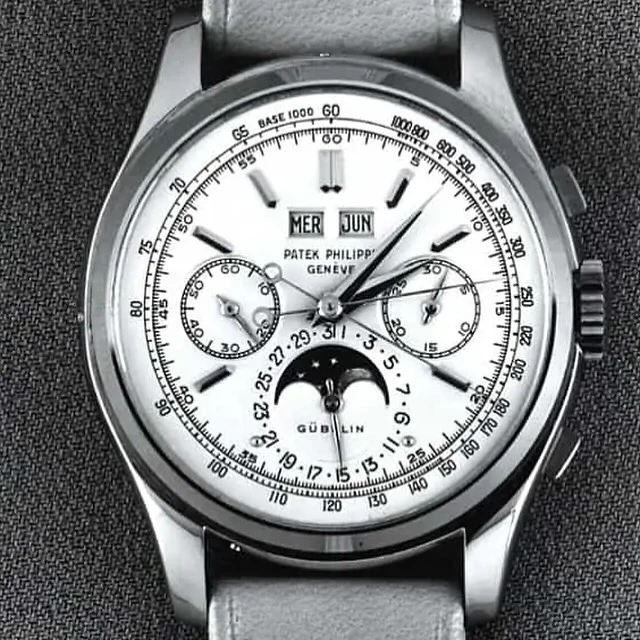
In 1955, just four years after the 2499 was introduced, an estimated three 2571 watches left the Patek Philippe manufacture in Geneva. These were the very first perpetual calendar rattrapantes ever produced. They were also to be the last for the better part of three decades. The watches featured a completely different appearance to the 2499 that was in production at the time, with elegant lugs and cases that were significantly larger (40mm) than what was customary in that era.
There is very little information on these watches as none are yet to reach the auction market, but one of them was retailed by Gübelin and, as such, features its signature on the dial. If either of the two 2571s known to be in public circulation were to come up for auction, they would reach some impressive levels – especially with what would now be treated as an aggressive, thoroughly contemporary design.
The final example in pink gold resides in the Patek Philippe museum in Geneva. Safe to say, it’s not going anywhere.
ESTIMATE: US$15 million+
Reference 2497 was introduced in 1951 as the first serially produced perpetual calendar wristwatch from Patek to feature centre seconds, something which remains fairly rare across even the brand’s modern catalogue of perpetuals.
With cases produced by Vichet and Wenger, the 2497 is widely considered one of the most attractive perpetual calendar references from Patek. On top of that, production was low, with 179 documented examples produced across both Ref. 2497 and its watertight sibling, the 2438/1. As a result, the 2497 is estimated to have been produced around 100 times, making it one of the rarest vintage perpetual calendar references from Patek in serial production.
The vast majority of 2497s were cased up in yellow gold, with a small number in the elusive pink gold and just three in white gold. What about platinum, you ask? Well, in the haystack that is the 2497, these are truly needles.
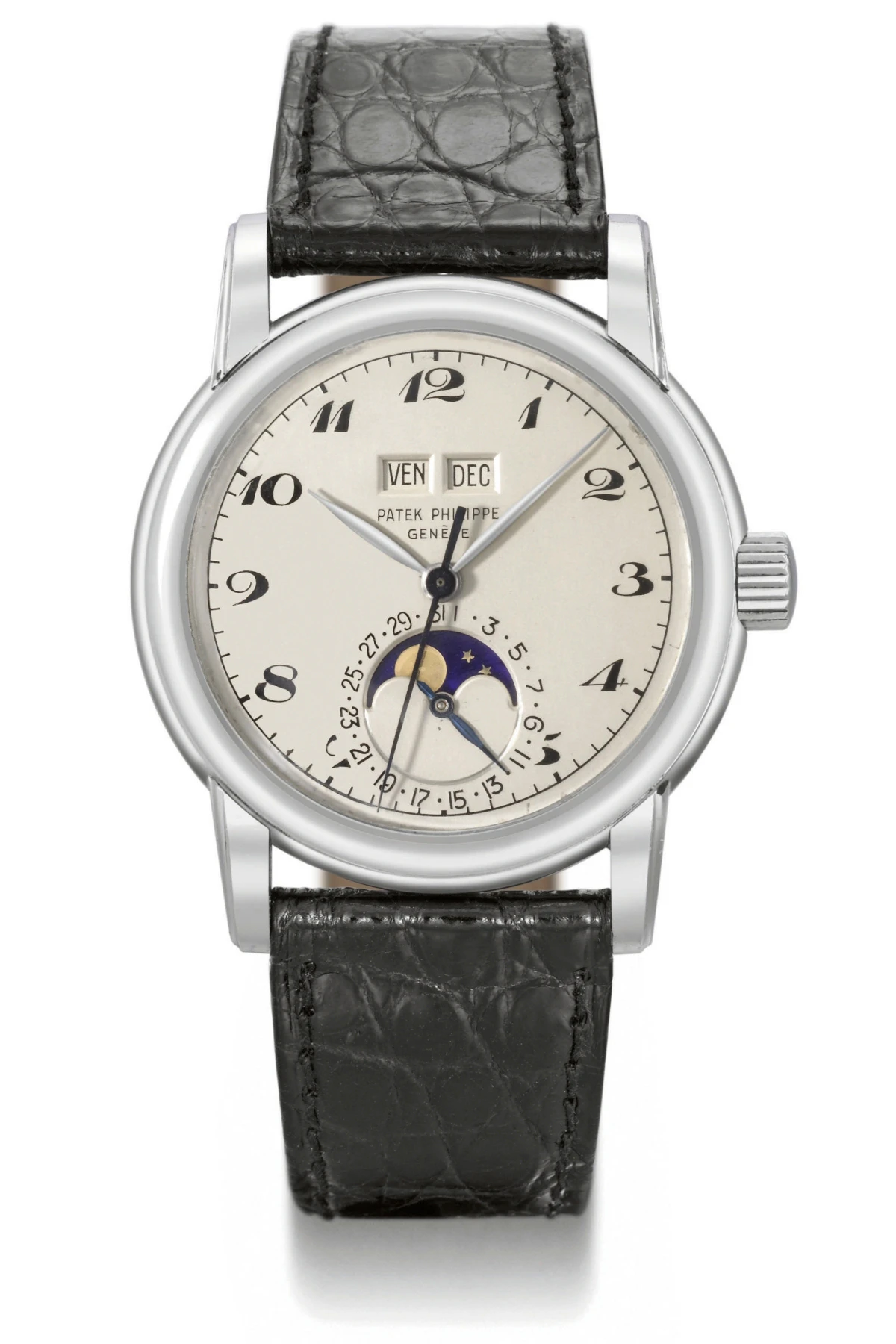
The present example features a silvered dial with Breguet numerals in classic Stern Frères hard enamel – completely different from most of the other 2497 watches which have a mixture of dot markers and Arabic numerals (first series), or Baton markers (second series). Matching feuille hands complete the monochromatic look for this truly special dial.
As just one of two known platinum examples of the 2497, it bears the dual distinction of being among the only platinum perpetual calendar wristwatches made by Patek Philippe throughout the mid-1900s – bearing in mind that the gross number of gentlemen’s watches in white metal were as rare as hens teeth during this period. The watch was previously sold by Christie’s in Geneva back in 2008 for just over 3.2 million Swiss Francs.
ESTIMATE: US$10 million+
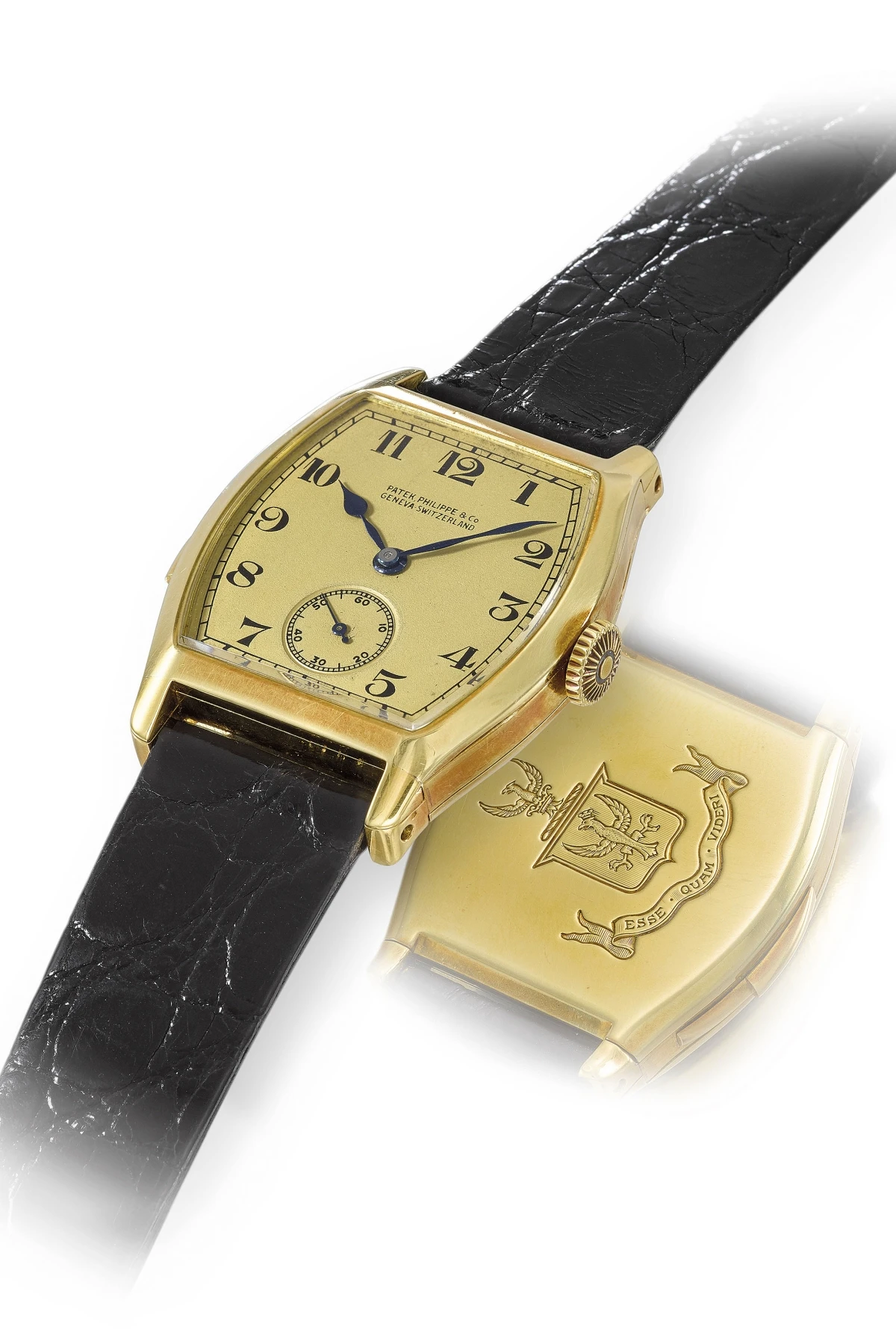
Few names in the annals of the Patek Philippe clientele carry as much weight as Henry Graves Jr. Born in 1868, Graves was an American banker and prolific patron of Patek, known for ambitious commissions like the Graves Supercomplication Pocket Watch. To date, this remains the second most expensive Patek Philippe ever sold at public auction.
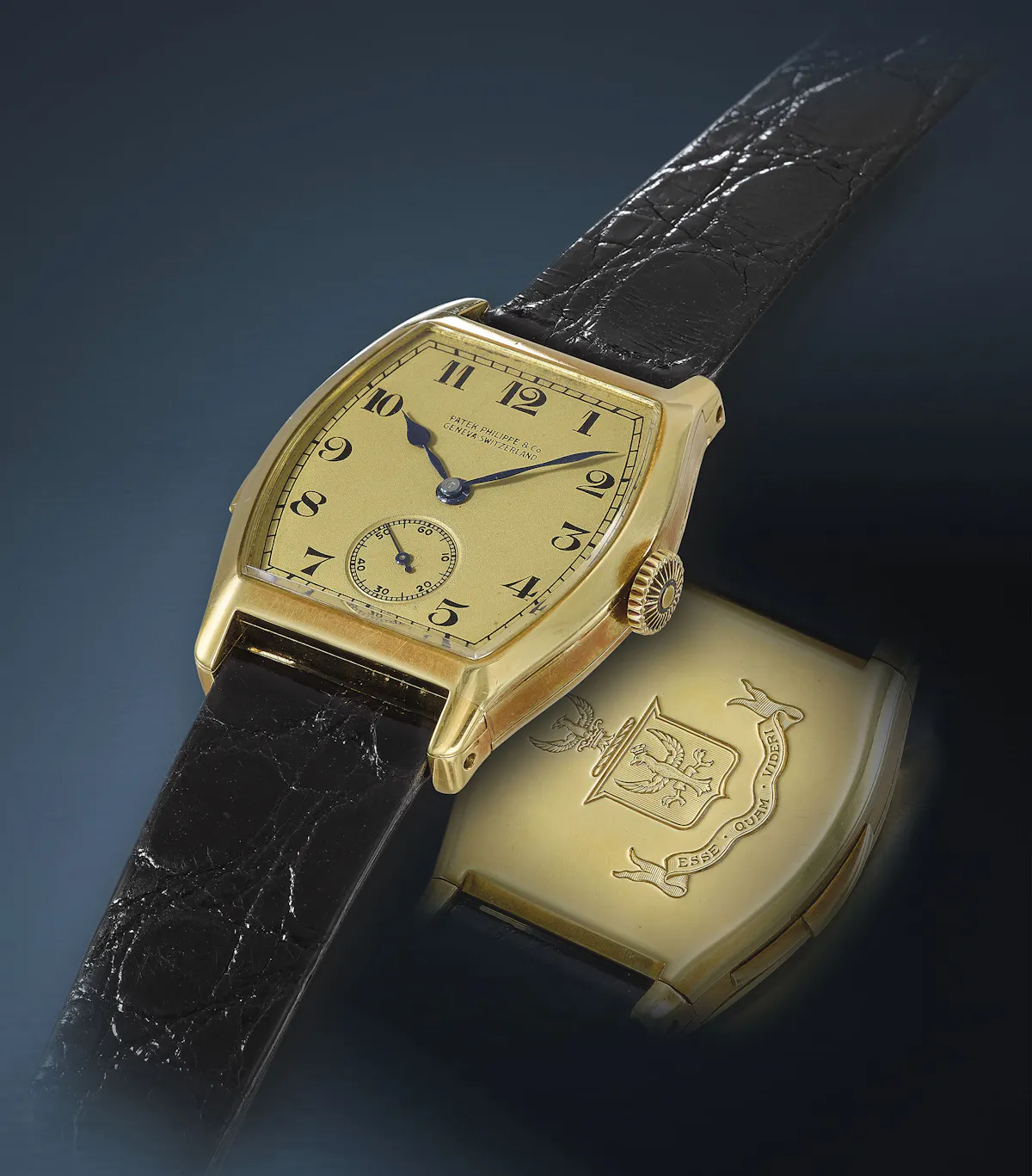
In the early 1920s, Patek Philippe started producing minute repeating wristwatches in shaped cases, in very small numbers. This was when Graves began collecting Patek, and to say that he took a liking to classic chiming complications would be an understatement. In 1928, he commissioned three minute repeating wristwatches – two with tonneaus and one in a distinctly cushion-shaped case.
The earliest of these was a tonneau shaped repeater in yellow gold, with a three-piece case featuring soldered lugs. The snap-on caseback has the Graves coat of arms and motto: “Esse Quam Videri” (from the Latin, “to be rather than to seem”). The dial base is also made from gold, with a matte finish and black champlevé enamel for all the fun details – Breguet numerals, chemin de fer, small seconds and the long, now-defunct “Patek Philippe & Co” signature.
Whilst the analagous platinum example resides at the Patek Philippe Museum, this one appears to remain in private hands. To be certain, I checked: on a recent visit to the museum in Geneva, it was nowhere to be seen. The last confirmed appearance was in 2019 at Christie’s, for a hammer price of 4.5 million Swiss Francs.
ESTIMATE: $10 million+
Introduced in 1951, Patek’s 2499 was the flagship non-repeater wristwatch from the Genevan manufacture, following on from the 1518. Produced over a span of nearly 35 years, it was predominantly cased in yellow gold, with few examples cased in pink gold. Cases were made initially by Vichet and Wenger, until production was shifted in-house to Atelier Reunis.
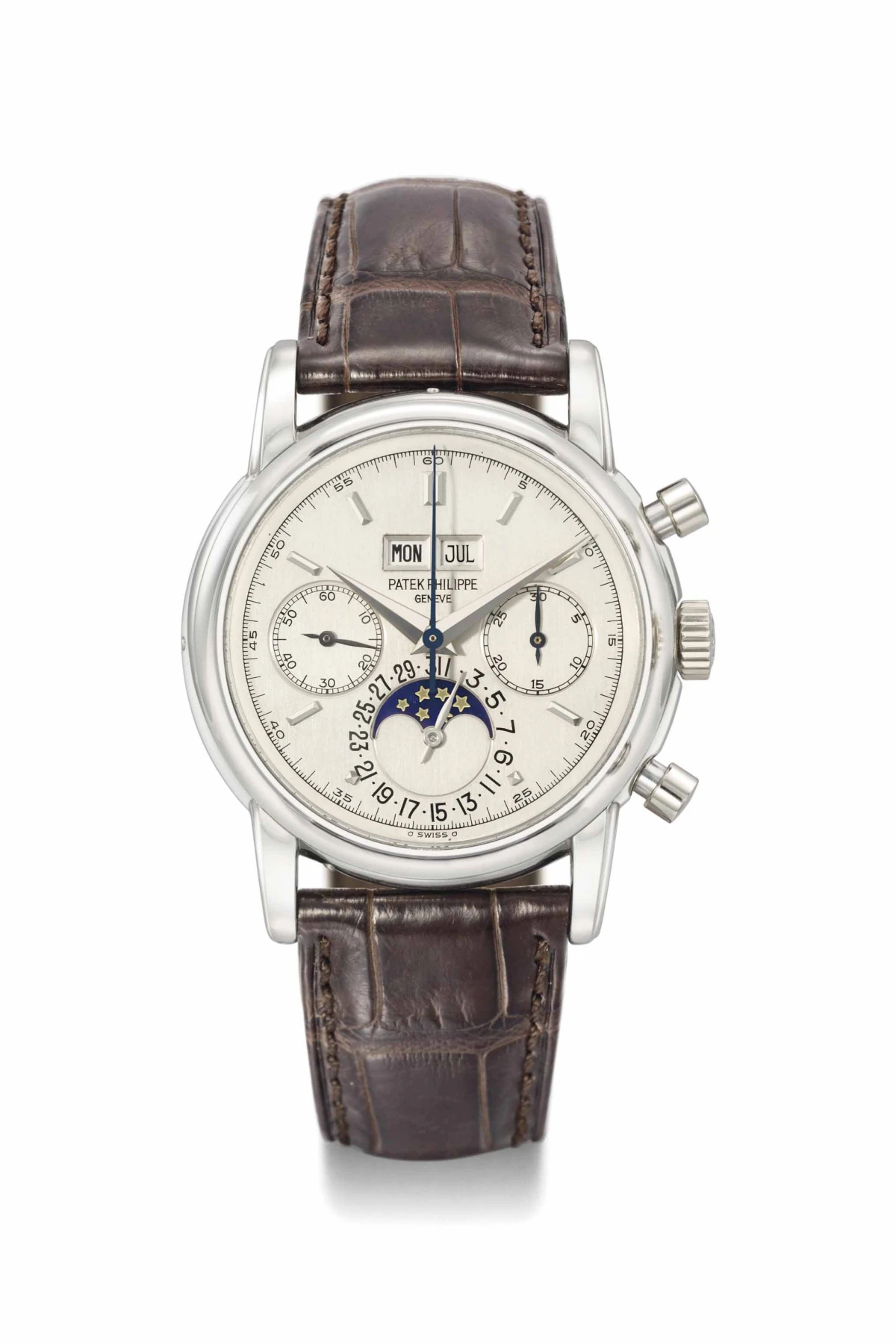
The final two watches in the reference’s storied history were made in 1987. Intriguingly, per the special request of Philippe Stern himself, these were cased in platinum – more than a year after the final yellow gold production model had been released. These were the only two examples cased in a white metal, making them a visually striking contrast to other 347 Ref. 2499s that had been made. Whilst one of them went straight into the Patek Philippe Museum, the other one was offered for sale at Antiquorum’s 1989 ‘The Art of Patek Philippe’ auction in Geneva – one of the most impressive line-ups of vintage Patek ever assembled into a public auction catalogue.
The watch later made its way to famed blues/rock guitarist Eric Clapton, who parted with it in 2012, offering it for public sale via Christie’s in Geneva. It sold for just under 3.5 million Swiss Francs.
ESTIMATE: US$25 million+