[001][30.09.24]

In this brief field guide, we trace the history of the Louis Cottier-invented complication and explain why its significance – both for Patek and horology-at-large – cannot be overstated.
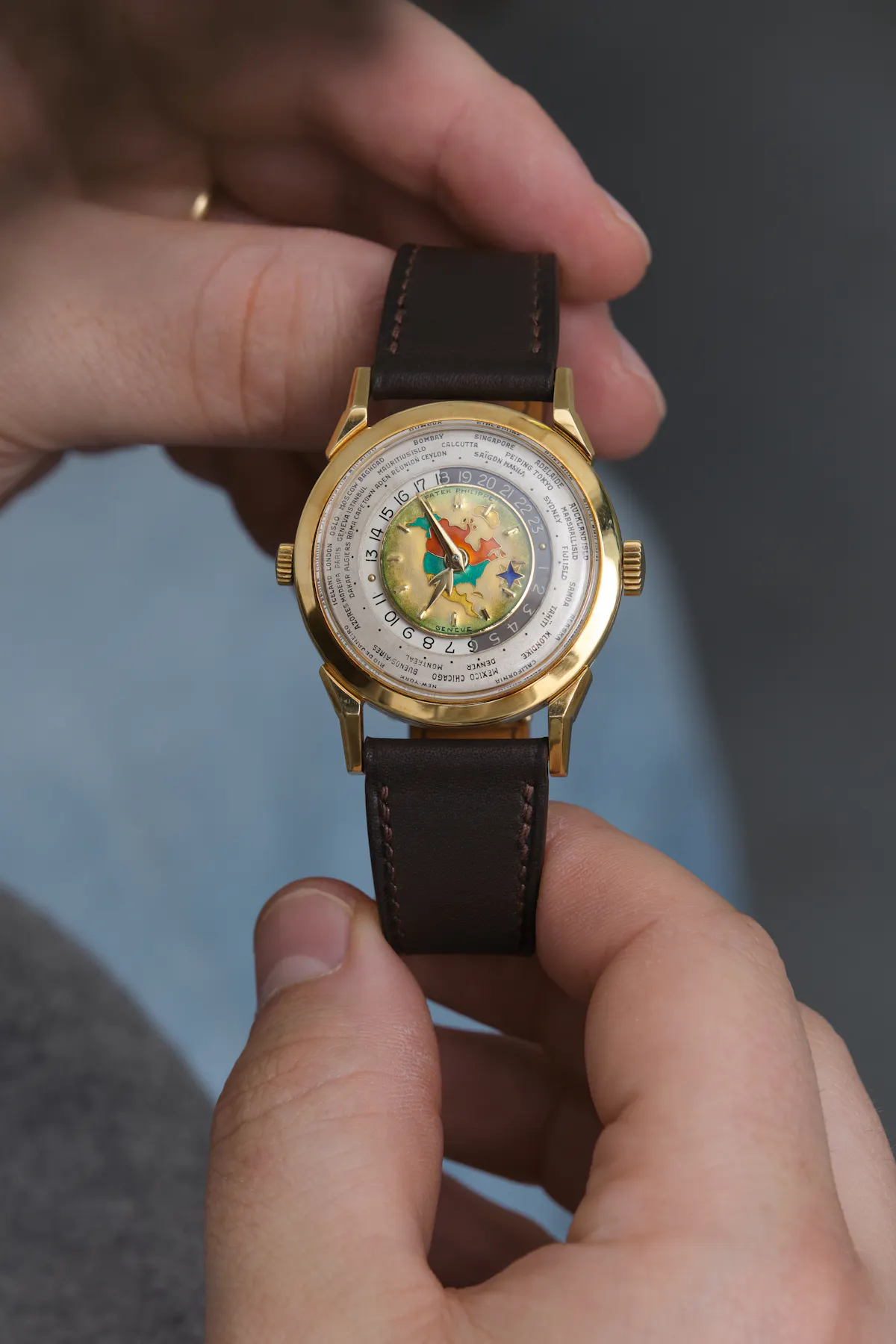
Mankind’s quest for precise timekeeping arguably reached its peak around the end of the 18th century, with the invention of reliable portable watches, accurate enough for ordinary people – those who could afford them, that is – to divide their day precisely. A quick glance was now enough to know the exact time, making it unbelievably easier to define working hours, arrange meetings, and ultimately conduct business.
Fast forward to the early 1900s, however, and telegraphs and telephones suddenly made the world much smaller: communications with different countries or even continents no longer required the lengthy process of sending letters that could take weeks for a reply. It was enough to pick up the receiver, or tap a lever to commune instantly with any corner of the globe. But how could you make sure that the person at the other end was awake and – ideally – at work?
A simple solution would have been to keep a chart of timezones at hand. But Swiss watchmaker Louis Cottier wasn’t one for the obvious. Instead, he saw a horological opportunity: to invent a World Time complication capable of showing the time in all time zones, in relation to the local time displayed using the hour and minute hands.
Cottier’s idea was straightforward and extremely ingenuous: he designed a movement with traditional 12-hour hands and an outer ring displaying time via a 24-hour scale. Around this, he placed a second ring inscribed with the names of cities from across the globe, grouped by time zone. The wearer could rotate the city disc to place their home town at 12 o’ clock, instantly knowing the exact time of virtually any other location.
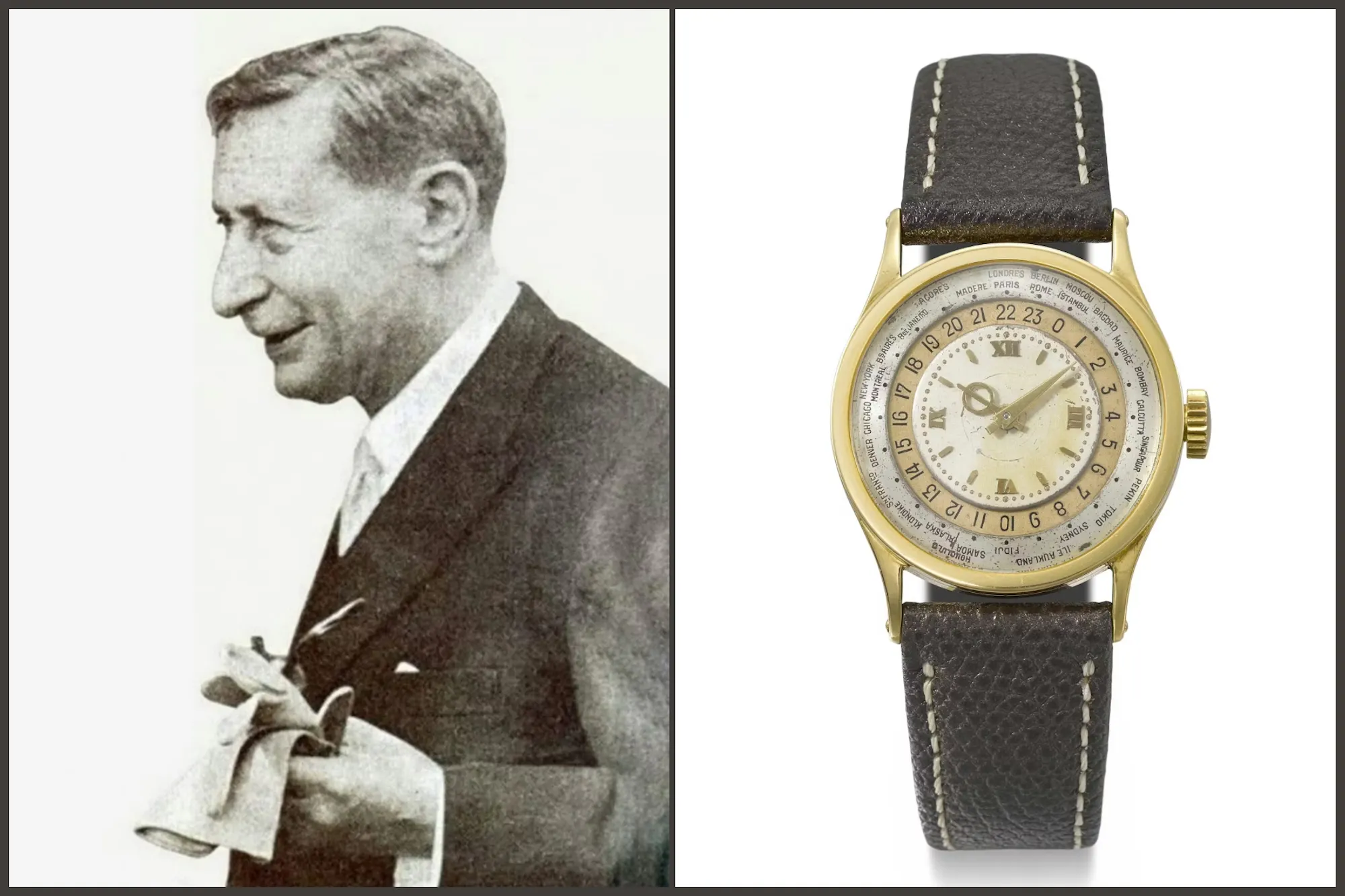
After manufacturing some prototypes on his own, as well as a pocket watch for Vacheron Constantin, the watchmaker was approached by Patek Philippe, who asked him to integrate this novel complication into a wristwatch. They supplied uncased 12-lignes movements as ébauches, which Cottier modified to include his 24-hour outer ring. At least two of these movements ended up in the prototype reference 96 HU (“Heures Universelles”), which bore no Patek Philippe signature on the dial and had a fixed disc showing 28 cities, possibly meant to be set on the owner’s home town.
The first World Timer sold by Patek was instead the unique reference 515HU, allegedly made at the request of a prominent client of the maison. Again, the cities around the dial are fixed – in part also because the peculiar rectangular case made adding a rotating ring impossible. The first appearance of a moveable city ring came with the reference 542 HU, featuring a bi-directional yellow-gold bezel adjustable by simple rotation. Only two examples were made, effectively making it a prototype – essentially identical to the legendary reference 1415 HU launched in 1939.
Officially the first serially produced World Timer wristwatch, the 1415HU was made in less than 115 pieces over 13 years. Most were cased in yellow gold, with the rest in pink gold; dials were silvered, doré, or in rarer cases, cloisonné enamel depicting maps of Europe or Eurasia. Two notable exceptions are the unique 1415 in platinum, auctioned for CHF $6 million in 2002, and the 1415-1, a unique World Timer-slash-Medical Chronograph produced in 1940.
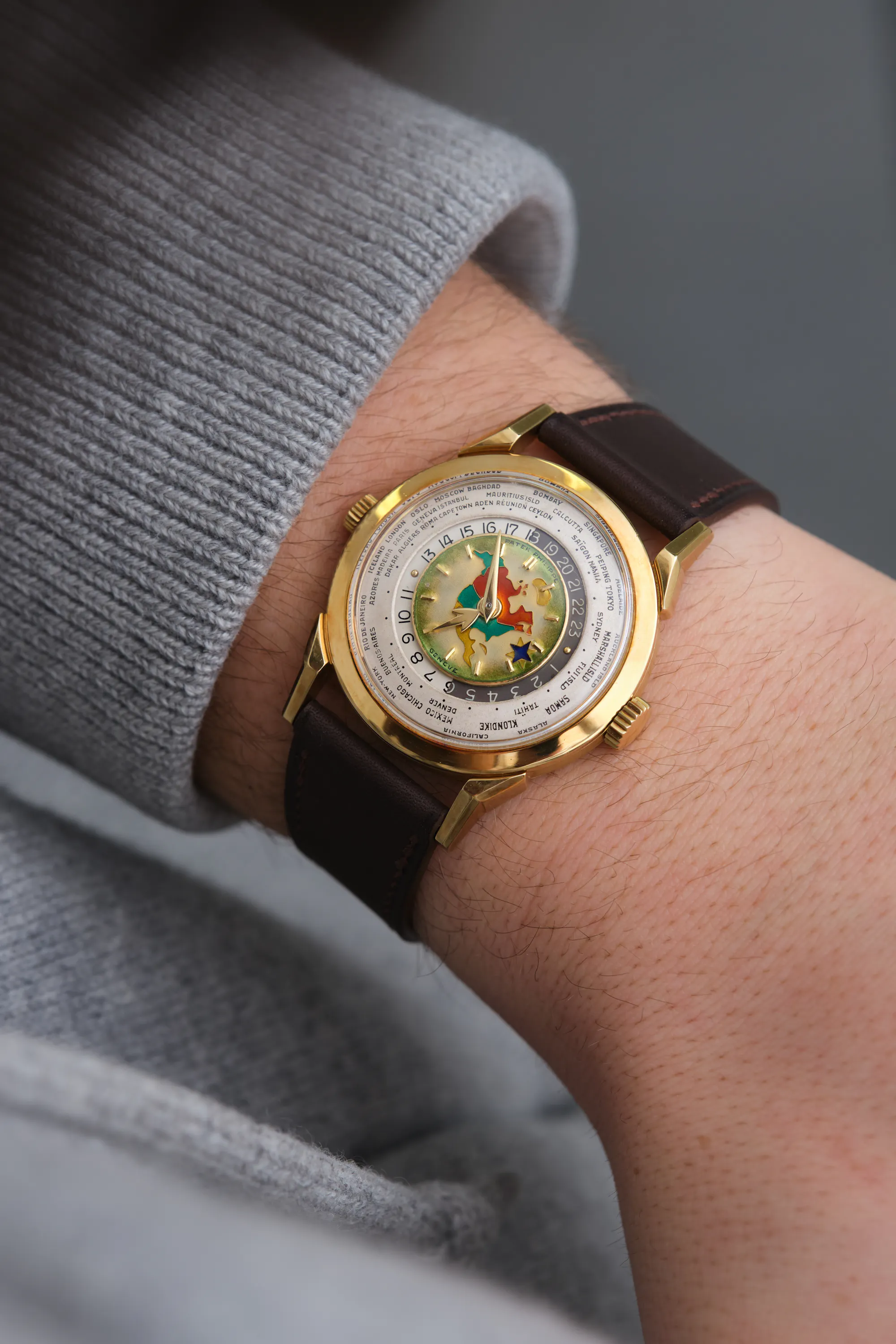
Now, the outer metal bezel on these watches was a clever and practical way to change the home city at 12 o’clock; however, it lacked the elegance of Cottier’s original designs: Patek addressed this in 1953 with the launch of the reference 2523. Its instantly recognisable design, with two symmetrical crowns, should be a giveaway as to how it works: the right hand crown winds and sets the watch, while the left one rotates the city disc. Yes, it really was that simple.
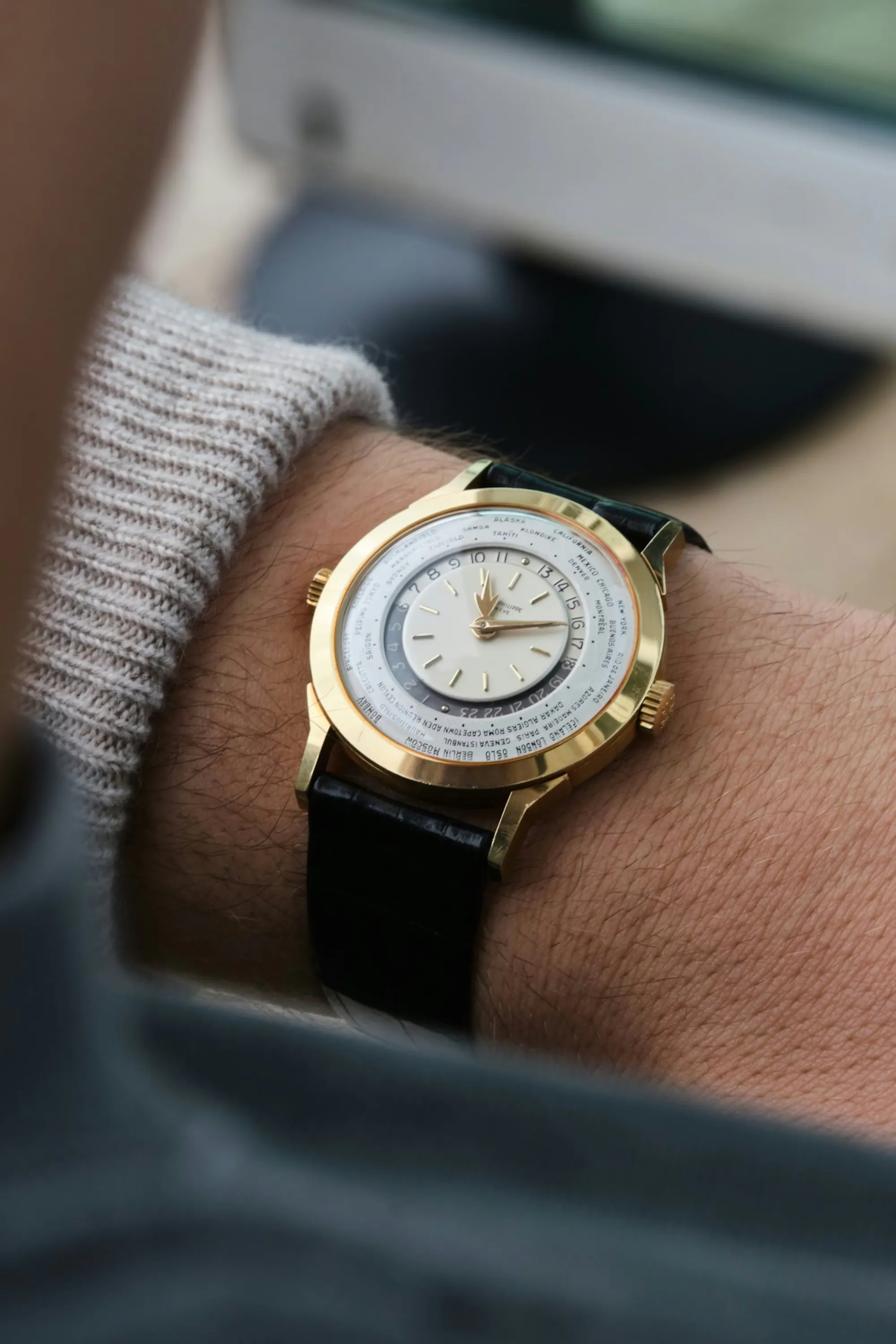
In spite of how it brought significant innovation to the lineage, the 2523 was not a success. The reference, later evolving into 2523-1, remained in production for about a decade, but total production figures barely made it past 25 units – an ultimate grail for collectors, especially in the enamel-dial versions.
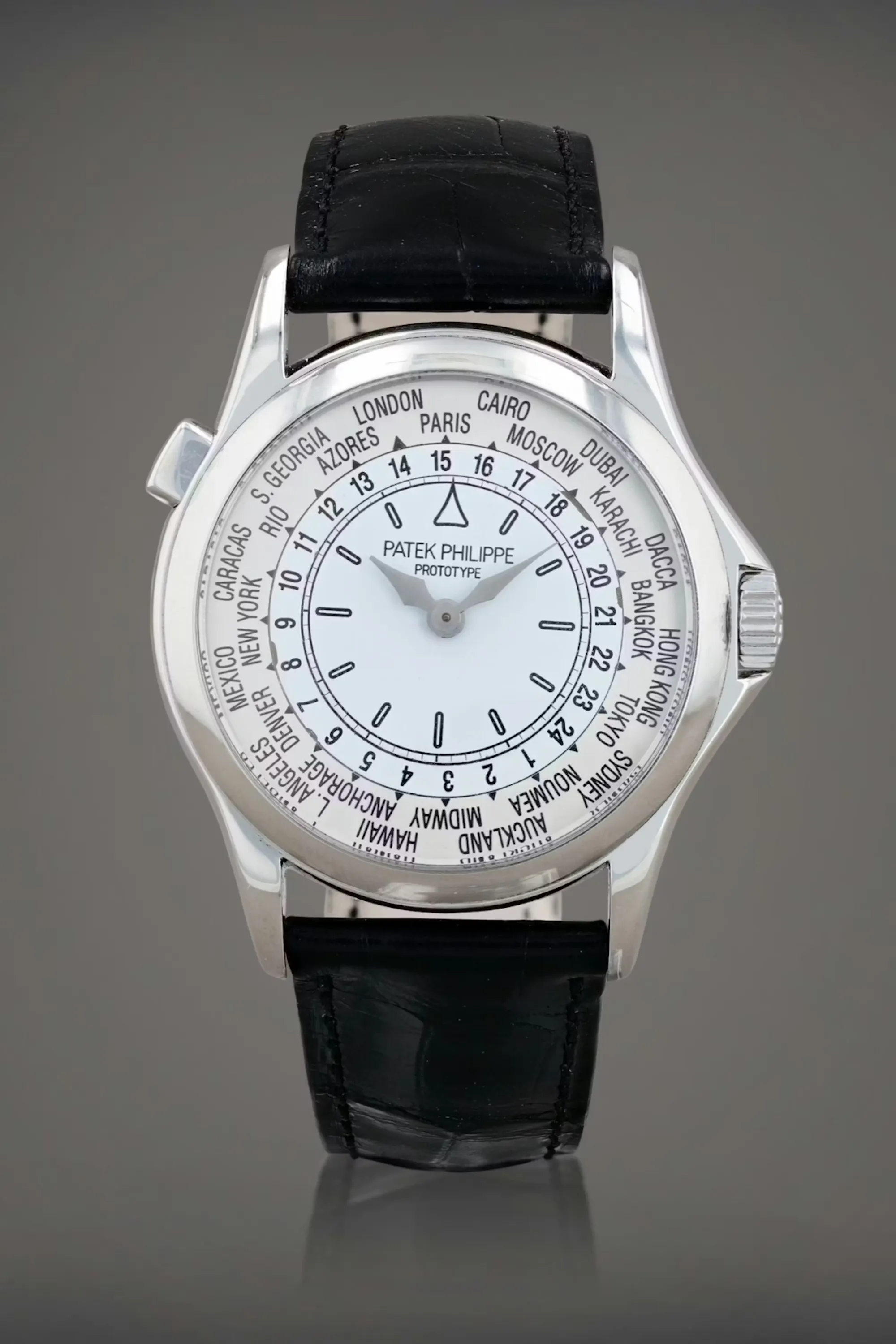
Following the 2523’s commercial disappointment, the Patek Philippe catalogue remained devoid of worldtimers until the new millennium. It was only in the year 2000, indeed, that the reference 5110 revived the complication with two notable upgrades: first, the automatic movement – the calibre 240 HU, based on Patek’s own calibre 240; and second, a pusher at 10 o’clock to advance the city ring in precise one-hour increments.
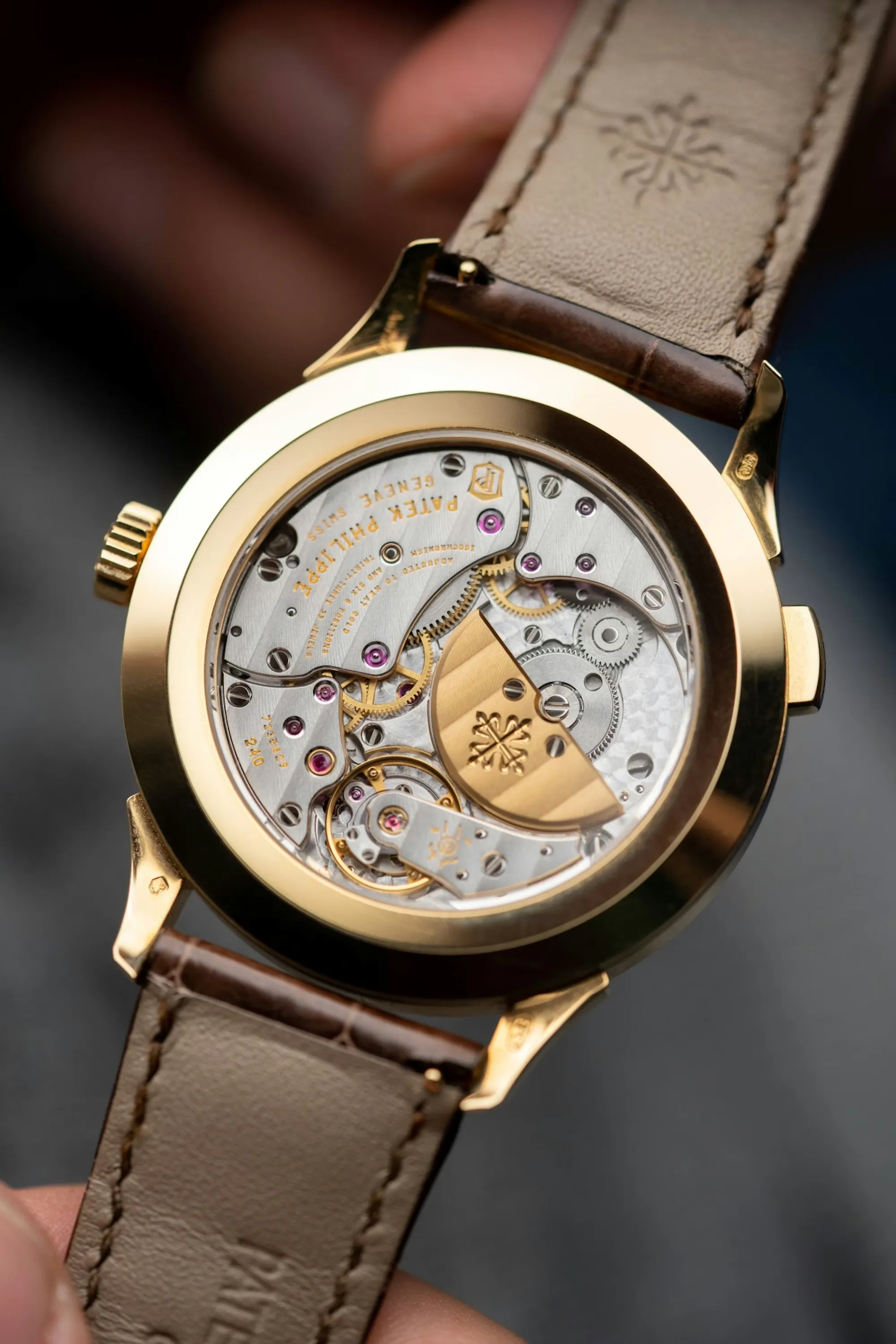
Perfectly sized at 37 mm, the watch was offered in all four precious metals and featured a guilloché dial in either white (for gold versions) or metallic blue (for platinum). The new automatic movement was displayed through a screw-down sapphire caseback. Two prototypes exist, in white gold with solid white and solid black dials.
Six years later, in 2006, the 5110 was replaced by the 5130. That change constituted more of a re-styling than a complete overhaul: at first glance, they can be hard to tell apart, if not for the hands – sword-shaped on the 5110 and circular (for the hours) on the 5130. The only other major difference is the diameter, increased to 39mm. Interestingly, the reference was also interpreted in several limited “City editions”, celebrating the brand’s Grand Exhibitions or anniversaries of historic retail partners.
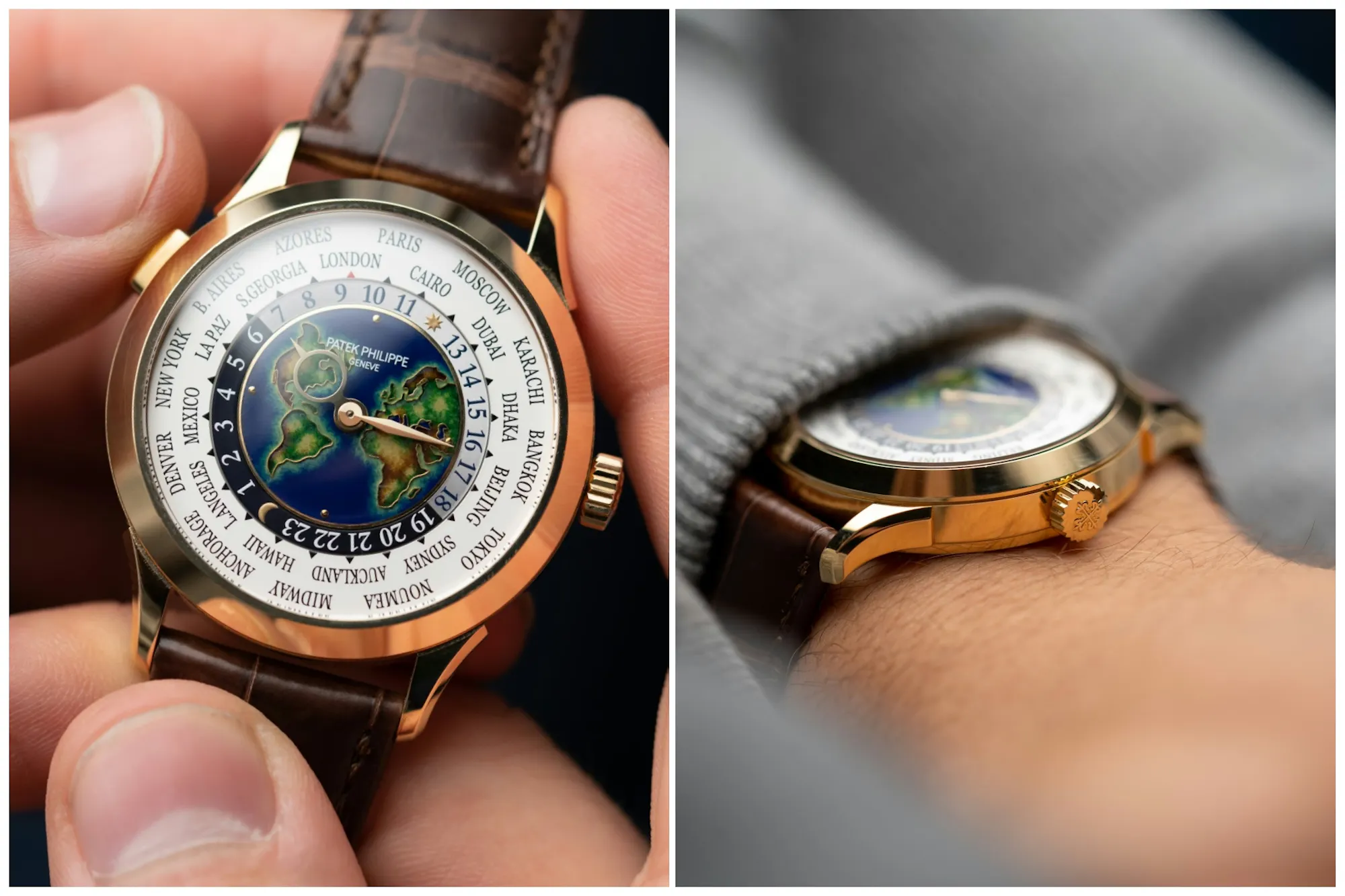
In 2008, the launch of the reference 5131 marked a full-circle moment: cloisonné enamel dials returned to the Patek Philippe Worldtimer. Several maps, beautifully rendered in deep, colourful grand feu enamel, reminded the collecting sphere that, at Patek Philippe, métiers d’arts were still alive and well.
The current World Timer, reference 5230, debuted in 2016. While it retains the same movement as its predecessor, the trusted 240HU, it is an entirely new watch, with sharp lines clearly paying homage to the much loved 2523. Once again, a sister reference with enamel dial – the 5231 – followed in 2019. The fact that the design has remained unchanged for almost a decade is a testament to its high level of execution and resilience to trends.
Finally, it wouldn’t be fair to end this overview without mentioning complications. Sure, a World Timer is already a complication, but Patek Philippe has never settled for the ordinary. Over the years, the brand has integrated different functions alongside the 24-timezone display, including a moonphase display elegantly carved in the center of the dial (ref. 5575 and 7175), a flyback chronograph (ref. 5930 and 5935) or the peripheral date (ref. 5330).
However, the pinnacle of the World Timer – and according to some, the absolute best modern Patek – is the ref. 5531, which pairs Louis Cottier’s complication with a minute repeater. The mesmerising dial, of course in grand feu enamel, depicts a steamboat cruising the Lac Leman: a loving reminder that, no matter how many timezones and cities there are around the globe, Geneva will always be home for Patek Philippe.