[001][10.09.26]

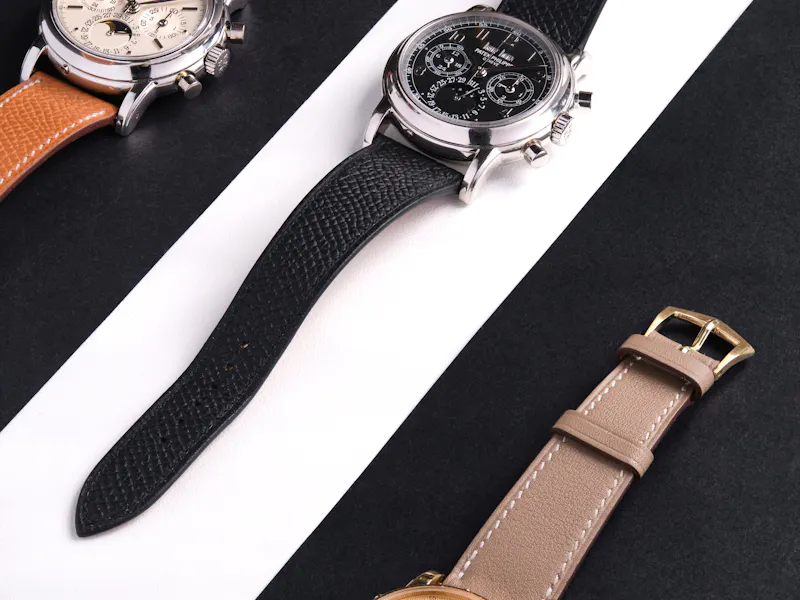
Throughout Patek’s rich history, the maison has worked with a myriad of manufacturers for bracelets. Now, they’re akin to a time portal: back to an era when the maison offered a greater level of customisation to clients in pursuit of the ultimate luxury.

It would be rude not to begin with Gay Frères: possibly the most prolific and important bracelet maker in horology throughout the 1900s. Founded in 1835 by Jean-Pierre Gay and Gaspard Tissot, Gay Frères became acclaimed for supplying the Holy Trinity with some of their most iconic watch bracelets. Clocked a vintage Patek with a bracelet? Chances are high it was made by Gay Frères.
Throughout the 1950s, Patek launched a series of consecutive Calatrava references which became ideal companions for elaborate bracelets – predominantly the 2526 in 1953, and the 2551 in 1954. A series of bracelets were offered as optional when purchasing a new Calatrava – ranging in style significantly, assigned a letter from the alphabet. Gay Frères was the primary supplier for nearly all of these bracelet types, with there being just one lettered style made exclusively by another manufacturer (see the section on Ponti Gennari below).

These bracelets were impressive, featuring advanced clasps with robust locking mechanisms, and a substantial amount of gold utilised in their construction. As a result, they were appropriately expensive additions. They can generally be identified by the presence of the ‘double P’ Patek logo on the external part of the folding clasp.
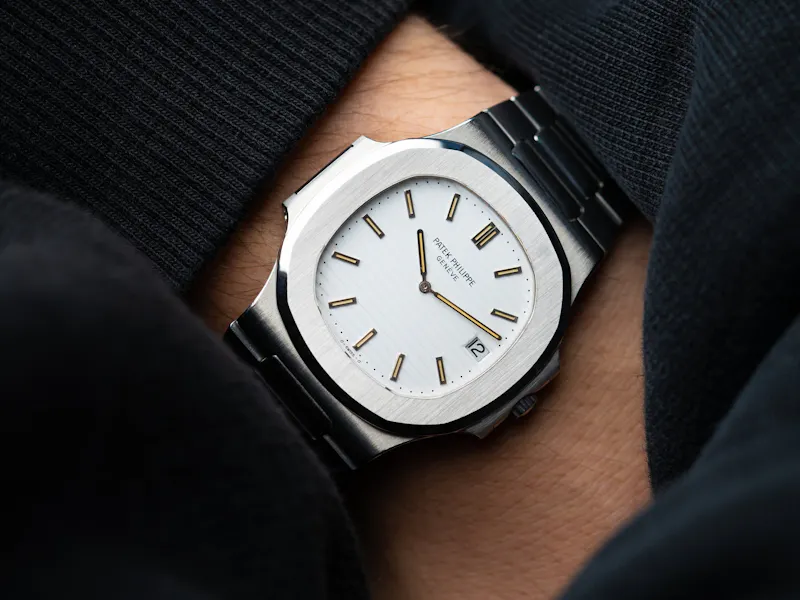
Whilst initially only known for producing bracelets in precious metals, when Patek launched the Nautilus in 1976, Gay Frères also became responsible for the production of bracelets for the first series (identifiable by the presence of the ‘/1’ reference number suffix), across stainless steel, yellow and white gold, and platinum.
The company also produced other bracelets for Patek, in a relatively less structured manner to the Calatrava or Nautilus collections, such as the beads-of-rice bracelet fitted to one of the four steel examples of the Ref. 1518.
Gay Frères was acquired by Rolex in 1998.

Founded in 1850 by the Ponti family, who were later joined by the Gennari clan in the early 20th century, Ponti Gennari was one of Patek’s more interesting suppliers – producing bracelets of extremely high quality through much of the 1900s.
A much scarcer sight on a Patek Philippe than Gay Frères, Ponti Gennari bracelets occupy a fairly specific niche. Instead of producing a wide array of styles, they focused on a smaller range of relatively elaborate designs.
Ponti Gennari were the suppliers responsible for the famed Type G bracelet, often referred to as a ‘Lobster’ or ‘Scallop’ bracelet. This was another one of numerous options that Patek offered clients at the point of delivery when collecting their new Calatrava reference 2526. Out of all the bracelet options Patek produced for the 2526, the Type G was undoubtedly the most elaborate and reportedly one of the more challenging to produce. Interestingly, it was also the only bracelet type which Ponti Gennari was entirely responsible for the production of: across yellow, pink and white gold, and even platinum.

Ponti Gennari also manufactured part of the Type O bracelet line. This style actually varied significantly, although its full range of aesthetics doesn’t appear to have been definitively documented anywhere. Some bracelets were produced with thinner vertical ribs, and therefore a greater number of them, whilst others were produced with fewer, thicker, vertical ribs.
The latter style appears to be marginally rarer, with Ponti Gennari producing those in white metal. It’s important to note that these weren’t two defined sets of sizes, but on a sliding scale.
Consequently, Gennari bracelets were known to be expensive: sometimes even more so than the watches to which they were fitted.
The company was acquired by Piaget in 1969.

Jean-Pierre Ecoffey was one of Patek Philippe’s most specialised bracelet makers, focusing on designs typified by fine links. Most of Ecoffey’s output for the maison consisted of chain-mail bracelets, or bracelets that felt more like a mesh than a series of links. Some even looked like one continuous block of metal: among the most challenging designs of all to craft.
The designs that Ecoffey produced for Patek were so elaborate that they were often integrated, or incorporated novel features in order to blur the look of the watch and bracelet together as one.
Take, for example, the florentine-style mesh bracelet made for reference 3448 (pictured below). It features purpose-made cut-outs at the point where the bracelet meets the lugs, allowing wearers to access the calendar pushers with minimal inconvenience.

Atelier Réunis was responsible for producing many cases and bracelets for Patek Philippe, so much so that in 1975 Patek chose to acquire the company outright: as its newly established in-house case and bracelet maker.
It wasn’t long before Gay Frères handed the baton over to the new in-house case and bracelet maker – beginning with bracelets for the 3700. Point in fact: by 1982, pretty much the entirety of the 3700 Nautilus’s external componentry, namely the case and bracelet, was manufactured by Réunis exclusively.
This change occurred around the conclusion of the first series of 3700 production (‘/1’), and the start of the second series (‘/11’). Clasps were also produced in-house, as Atelier Réunis had purchased the renowned clasp maker Orflex in 1963: 12 years prior to its own takeover by Patek.

The new in-house bracelets featured a greater taper, narrowing to 14mm at the clasp, as opposed to the previous 16mm. Research indicates that this pronounced taper allowed Patek to recycle its bracelet concept, and standardise production for links and clasps across three different Nautilus references: 3700, 3800 and 3900.
Despite having had its own highly specialised in-house bracelet maker for over five decades, Patek still chooses to outsource various bracelets to other manufacturers, even in the modern era.

[ Bracelet Makers ] | [ Hallmark/Poinçon ] | [ Location ] | [ Company Registered ] | [ Notable References Supplied ] |
|---|---|---|---|---|
Gay Frères |
| Geneva | 08/09/1934 |
|
Ponti Gennari |
| Geneva | 01/07/1934 |
|
Jean-Pierre Ecoffey |
| Geneva | 21/06/1946 |
|
Atelier Réunis + Orflex |
| Geneva |
|
|

[ Bracelet Type ] | [ Style Notes ] | [ Bracelet Supplier(s) ] | [ Metals Known ] | [ References Fitted ] |
|---|---|---|---|---|
A | N/A | Gay Frères |
| 2526 |
B | Basketweave | Gay Frères |
| 2526 |
C | Herringbone | Gay Frères |
| 2526 |
D | Brick (smooth) | Gay Frères |
|
|
D (Guilloché) | Brick (guilloché) | Gay Frères |
|
|
F | N/A | Gay Frères |
|
|
G | Scallop/lobster | Ponti Gennari |
| 2526 |
I | N/A | Gay Frères | Yellow gold |
|
K | N/A | Gay Frères |
|
|
N | N/A | Gay Frères |
|
|
O | Ribbed |
|
|
|
P | N/A | Gay Frères |
|
|