[001][10.04.25]
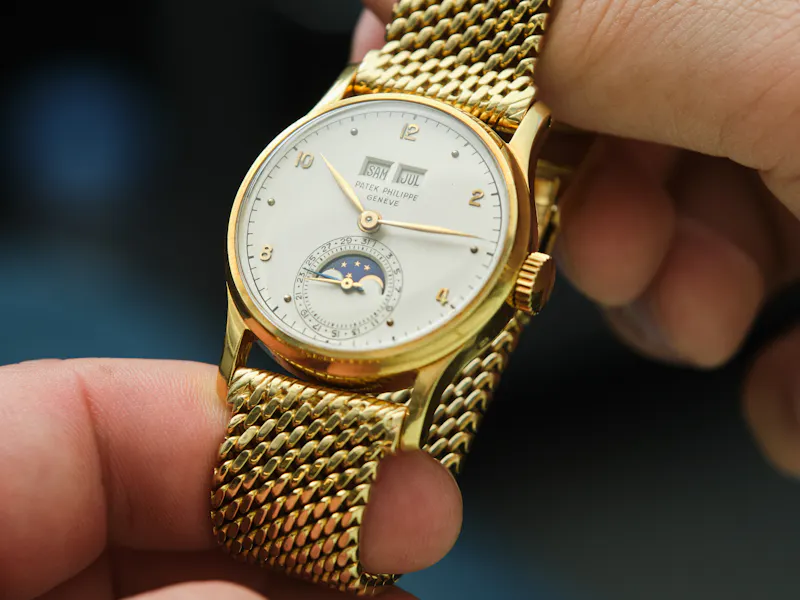
Our Journal Editor revisits a quartet of The Calatrava’s watches that remain lodged firmly in his brain - from auction world legends to era-defining perpetual calendars.
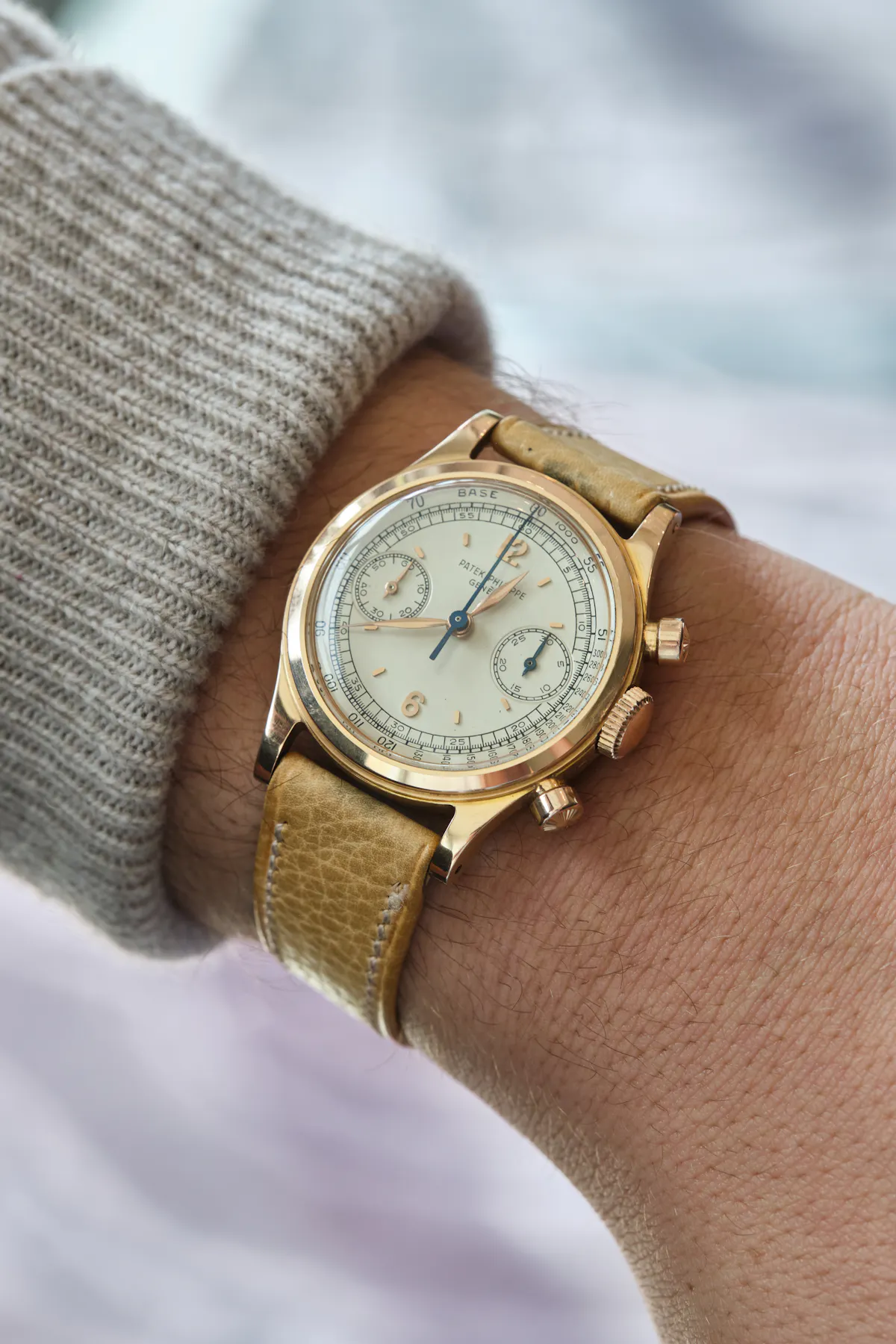
A close relative of Patek’s (arguably even more important) Ref. 130 chronograph, the Ref. 1463 is a macho evolution of the former reference’s aesthetic - leading many to connect it with the birth of “gentleman adventurer” type watches.
One can see where people have gotten that notion. Nicknamed Tasti Tondi (“round buttons”) by Italian collectors, the Ref. 1463 introduced a number of design features which were unusual for Swiss watchmakers during the mid-20th century. As its pseudonym suggests, the most well-known of these are the watch’s large ‘pump’ chronograph pushers. These were accompanied by a case measuring 35mm - positively yoked for the era.
Alongside the Ref. 1563, this combination of features made the 1463 Patek’s first waterproof chronograph wristwatch. The design language (particularly in examples where the dial is without chemin de fer) has aged incredibly well. Thanks to the work of Borgel, who Patek engaged as its casemaker, the 1463 is also one of a few mid-century wristwatches that lives up to declarations of water resistance.
The good news for collectors is that it was produced in relatively sizable quantities before its discontinuation circa 1965. Scholarly consensus is that, over the course of three decades, 741 individual pieces were made. Of these, those in yellow gold (406 total) are by far the most common - followed in chronological order by steel (190) and pink gold (145).
The steel models, in particular, were used to showcase all five of the Ref. 1463’s known dial variations: such as the well-trod combo of batons and Arabic/Roman numerals; a full scale of Breguet numerals; and the much more obscure sector dial.
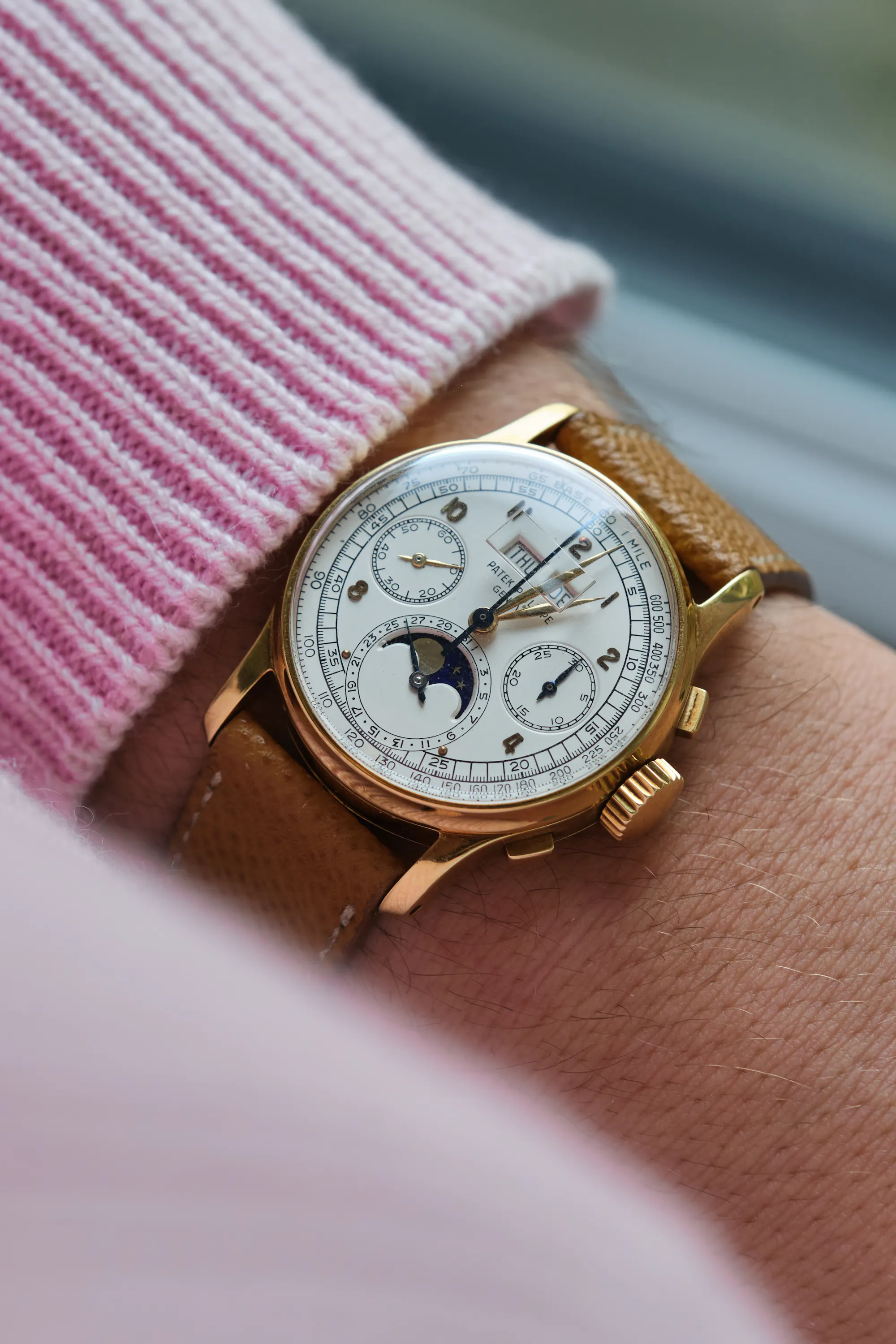
Literally every other reference we’ve chosen to cover lives up to the idea of ‘desirability’ because it is - in spite of Patek’s median price of admission - something you can theoretically obtain on the open market. Unless, of course, we’re talking about the Ref. 1518.
It’s no exaggeration to say that this particular Patek is of seismic importance to the entire Swiss watch industry: the first watch with a chronograph and perpetual calendar to be put into serial production (between 1941-1954).
Introduced at the height of WWII, one can think of the Ref. 1518 as the ‘mother tree’ of chronograph-calendars at Patek Philippe. Even the brand’s modern and neo-vintage references, like the 5970 and 3940 respectively, derive their proportions and informational layout from it; and when you start looking beyond Patek to other brands (we won’t name names) the influence of the 1518’s design becomes apparent.
Most research indicates that over the course of its 13-year lifespan, Patek made 281 examples of the 1518: in yellow gold, pink gold, and stainless steel. As you’d expect of the brand’s practice during this era, the latter metal is by far the rarest, with a mere four examples known.
Of these, the only steel 1518 currently not spoken for can be found at Monaco Legend. We urge you to check out our short video with Andrea Parmegiani, the auction’s house resident Watch Specialist, if you haven’t yet done so.
Rich Fordon, over at Hodinkee, wrote a great breaking news piece about this steel 1518 going on sale. But if you want cliffnotes: vintage enthusiasts have singled out this particular example for being in excellent condition; it’s one of a handful of 1518s (ditto in steel) originally sold on a matching bracelet; and, Monaco Legend has opted to offer it at private sale, somewhere “in excess” of $20 million.
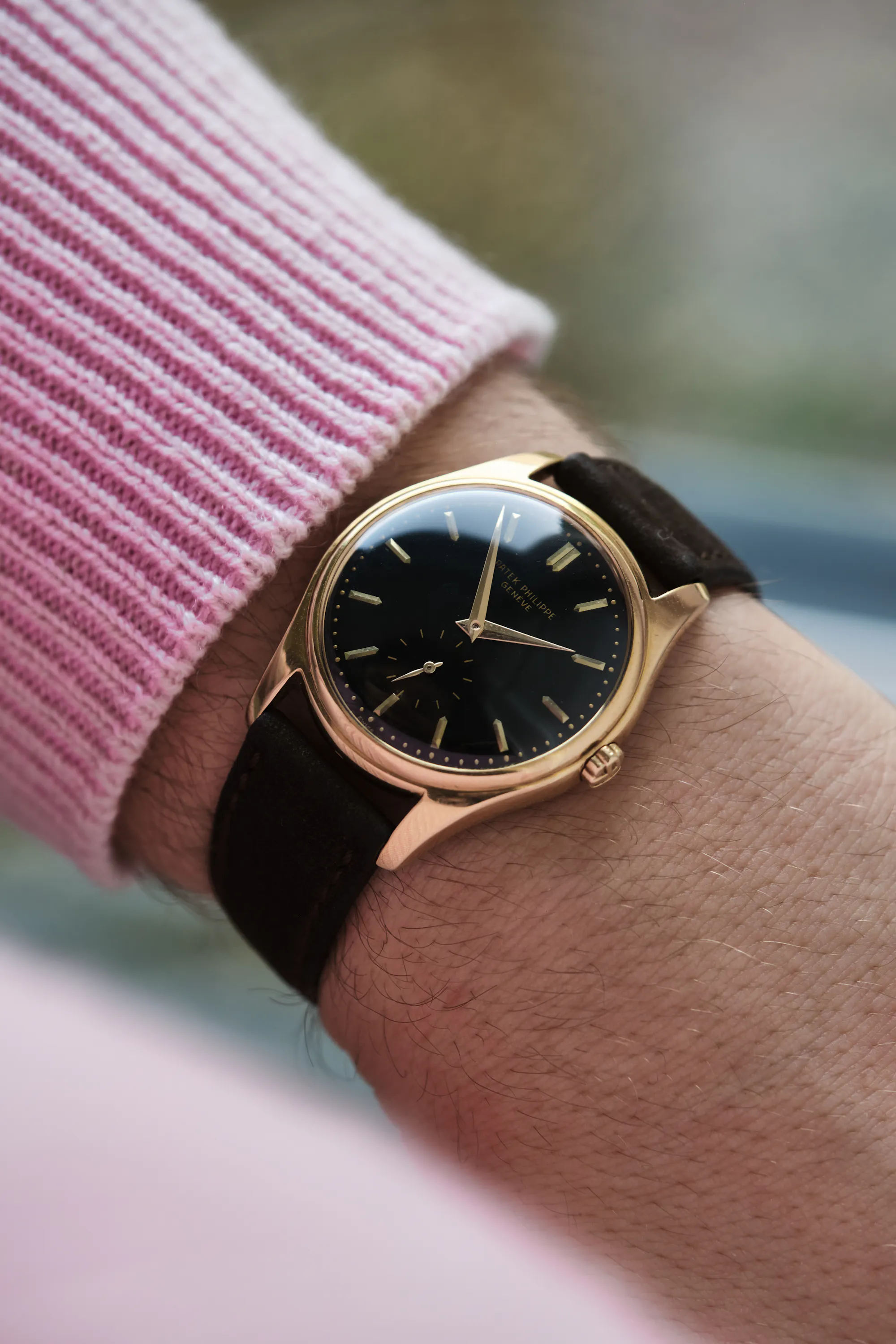
It goes without saying that if you’re the kind of Patek obsessive who collects watches on the basis of ‘historicity’ and ‘cultural significance’, the 2526 is a one that’s already crossed your radar. Notable, in Patek’s own mythology, for being the first self-winding watch the brand ever produced, it was fitted with a water-resistant screwback case and powered by the Calibre 12-600 AT.
Ironically, this movement benefited from a 20-year patent protection Rolex had previously emplaced on automatic wristwatch technology. When Patek was finally free to let loose in 1952, it did so with a much more refined proposition in the form of the 12-600 AT.
Despite the solid caseback - remember how the Maison wanted this watch to be water-resistant? - the movement inside was decorated with guilloché and a logo in engraved relief. Through the 1950s, this arguably made Patek the first brand to embrace the importance of decorative movement finishing.
At the same time, mainstream popularity of the 2526 has mounted steadily. The watch’s value currently sits in the top end of the five-figure range (USD), and its status continues to be burnished by impressive results at auction. Most recently: the sale of the first 2526 ever made (a.k.a the ‘J.B. Champion’) by Sotheby’s Hong Kong, for a hammer price of $732,690.
Even stripped of all this rich historical context, the 2526 is just a really really lovely object to wear. Its design embodies Patek’s identity - particularly in the mid-20th century - as an artisanal watchmaker. In the metal, this all comes across instantly: through the twice-baked enamel dial, ‘lapped’ indices, timeless 36mm proportions and crown signed with the now-signature ‘double P’ logo.
Most estimates put total production at about 2,880 pieces across four series. Combined with the fact the 2526 was cased in all four of the ‘noble’ metals, and you have the foundations of a reference with meaningfully deep collecting opportunities.
Cognoscenti bang on about the ‘Serpico Y Laino’ examples (often originally sold on matching bracelets), or those 2526s fitted with a factory-issue black enamel dial. All worthy of grail status, though, to our mind, even the ‘garden variety’ execution - combining eggshell enamel and a case in yellow gold - is a thing of near unsurpassable beauty.
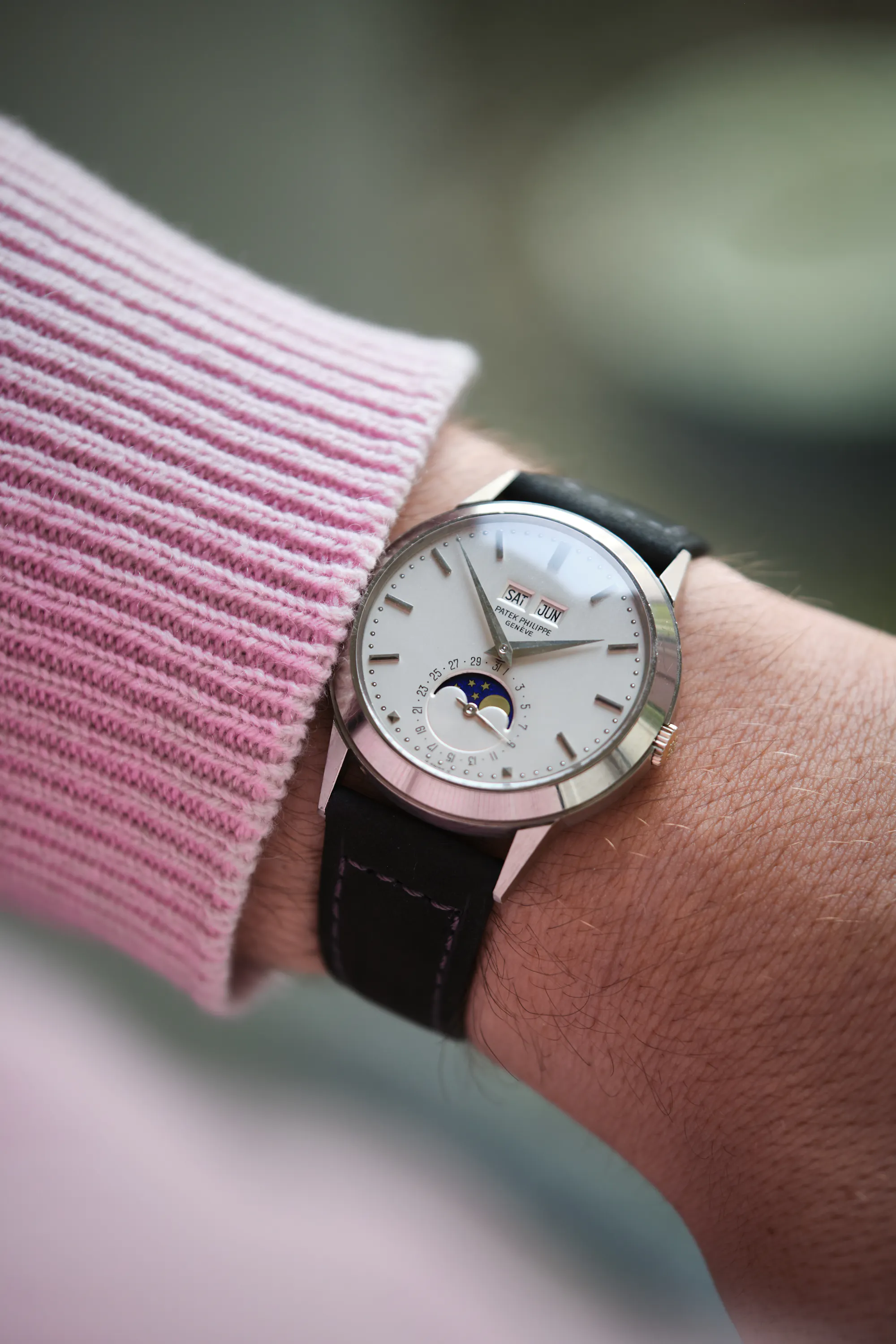
By the mid-1950s, Patek was already building a reputation for its expertise in perpetual calendar watchmaking; with such notable achievements in the field as the manually wound 2497 and aforementioned 1518. Yet even by these impressive standards, the Ref. 3448 is a uniquely important slice of Patek’s history - and one which elicits continued interest from collectors and scholars in the 21st century.
To get the cliffnotes out of the way: this reference is most significant for being the first self-winding perpetual calendar offered by the Maison. In addition, you’ll often hear it referred to in the Italian collecting community as a padellone (‘large frying pan’) on account of the wide rounded case shape.
While Patek definitely made it in more significant numbers than any of the combined calendar/chronograph watches of the period, the Ref. 3448 is by no means a pedestrian acquisition. Research suggests a total of 586 examples, cased in all of the ‘noble’ metals, with more than 75% of this total volume in yellow gold.
Fortunately, 3448s do come up at auction with some degree of frequency each season. Yet even the typical variations tend to command consistently serious prices. For instance: one example, in yellow gold with a ‘third series’ dial, sold at Phillips last November for CHF$165,100, reaching past its high estimate.
As always, condition and rarity have an outsized role to play, but if we’re taking a more holistic view something must be said for the 3448’s wearability. Our friend Marcello De Marco describes the 37mm case architecture as something which “could have been designed yesterday”: a comment, echoed by industry icons like Mr. Jean-Claude Biver, which no doubt has something to do with the 3448’s timeless beautiful details and its intuitive in-line calendar display.