[001][15.12.22]

Our Italy-based contributor weighs in on the merits of the archival extract and why the information contained within is so desirable – up to a point.
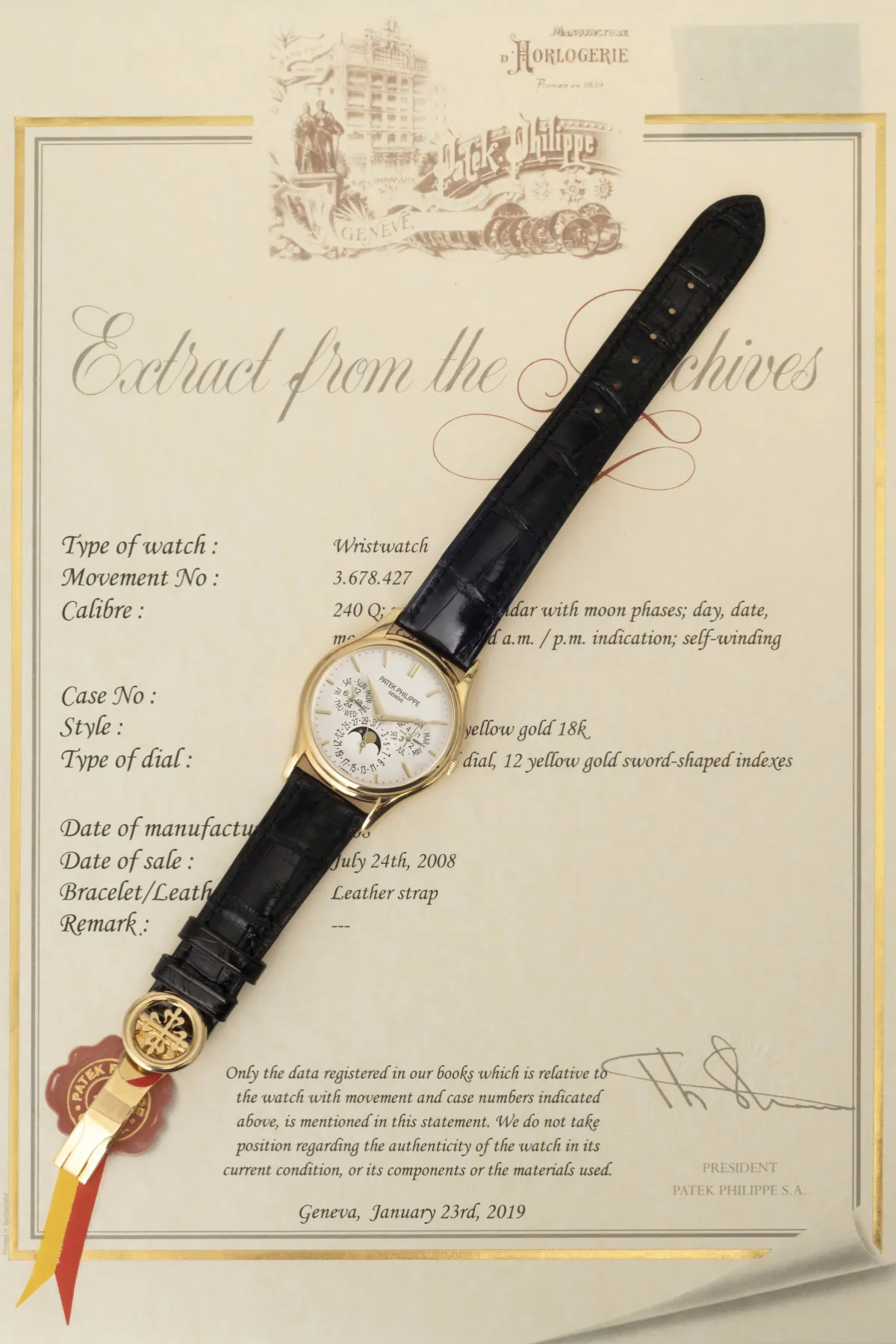
The design, manufacture, and maintenance of timekeepers obviously involves precision and an extraordinary attention to detail. That might explain why many of the world’s foremost watch brands keep precise records of almost every watch they’ve ever assembled and subsequently sold – ideally going all the way back to their inception. But how do these so-called ‘Archival Extracts’ work?
More importantly: to what extent can they be trusted?
The greatest pride for a watch maison, nowadays, is the credibility to claim your watch is entirely built “in-house” – meaning every step of the manufacturing process, from machining gears and cams to milling and polishing the case, from printing the dial to fine-tuning the assembled movement, takes place under one single roof.
Until two or three decades ago, however, things used to work very differently. Across Switzerland, there were skilled casemakers (each identified by its very own Poinçon de Maitre), workshops devoted uniquely to manufacturing dials, and so on. This arrangement was so commonplace through most of the 19th and early 20th centuries that it even has its own French name – établissage.
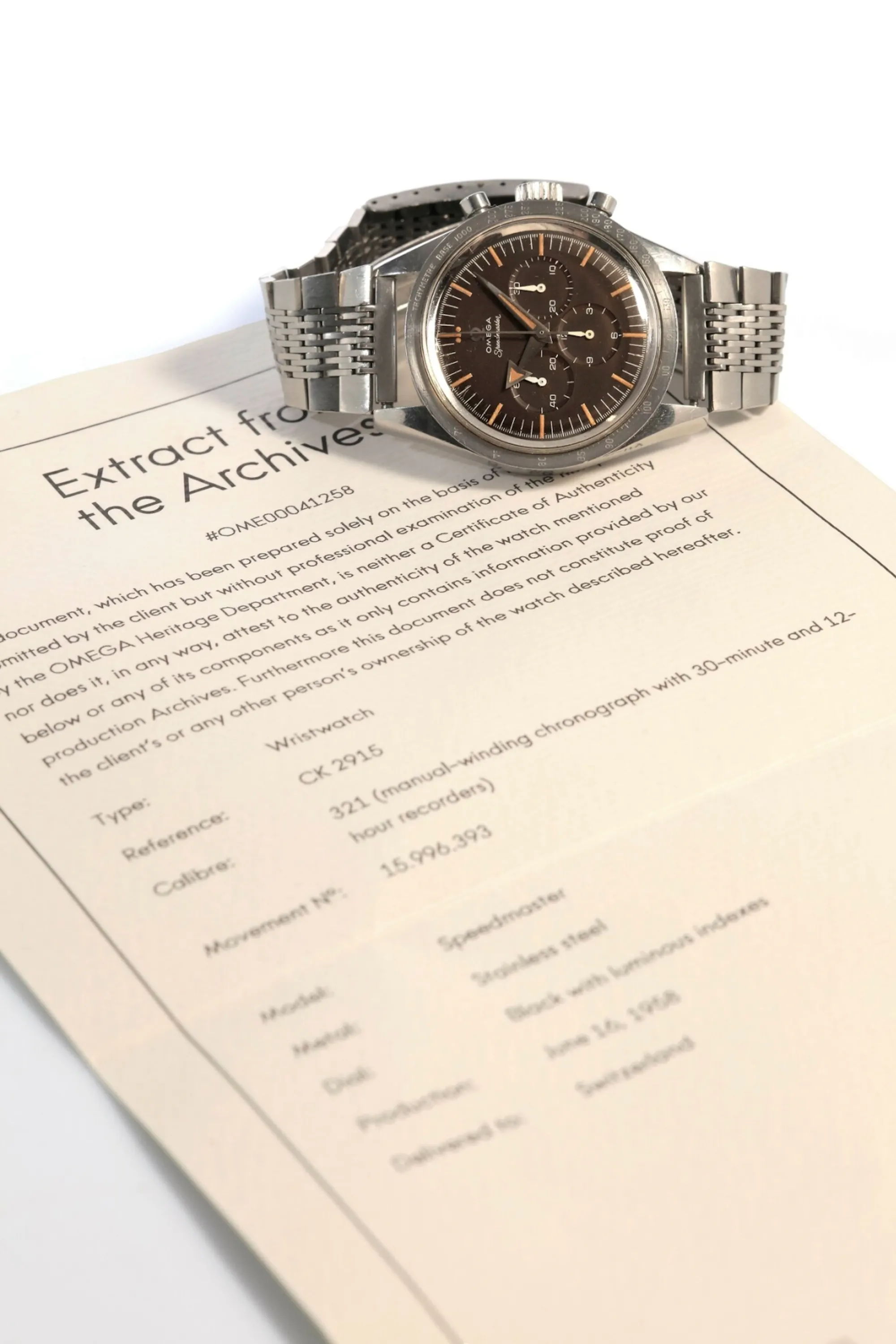
Traditionally, virtually every noteworthy watch brand of the last 100-plus years, from Omega to Cartier, would coordinate with multiple different suppliers to obtain components for their own watches. Naturally, these were all manufactured according to precise design and quality requirements.
Therefore, every watch was the outcome of a collaborative effort. Maisons needed to keep track of what components were supplied to them, and by whom. The easiest way to do this was to assign individual serial numbers to every movement, case, and sometimes even dial, that came into the brands’ workshops for assembly. Together, these details – manually and painstakingly recorded – would tell a watch’s whole backstory and thus provide an invaluable mechanism for validating its authenticity.
In theory, a document that records in writing the exact configuration of a watch at the time it left its place of assembly should be able to confirm its originality, or failing that, at least help collectors work out whether it has been altered, refinished or tampered with in some way. However, as most seasoned collectors learn – one way or another – what is specified in an extract is often less important than the information that isn’t.
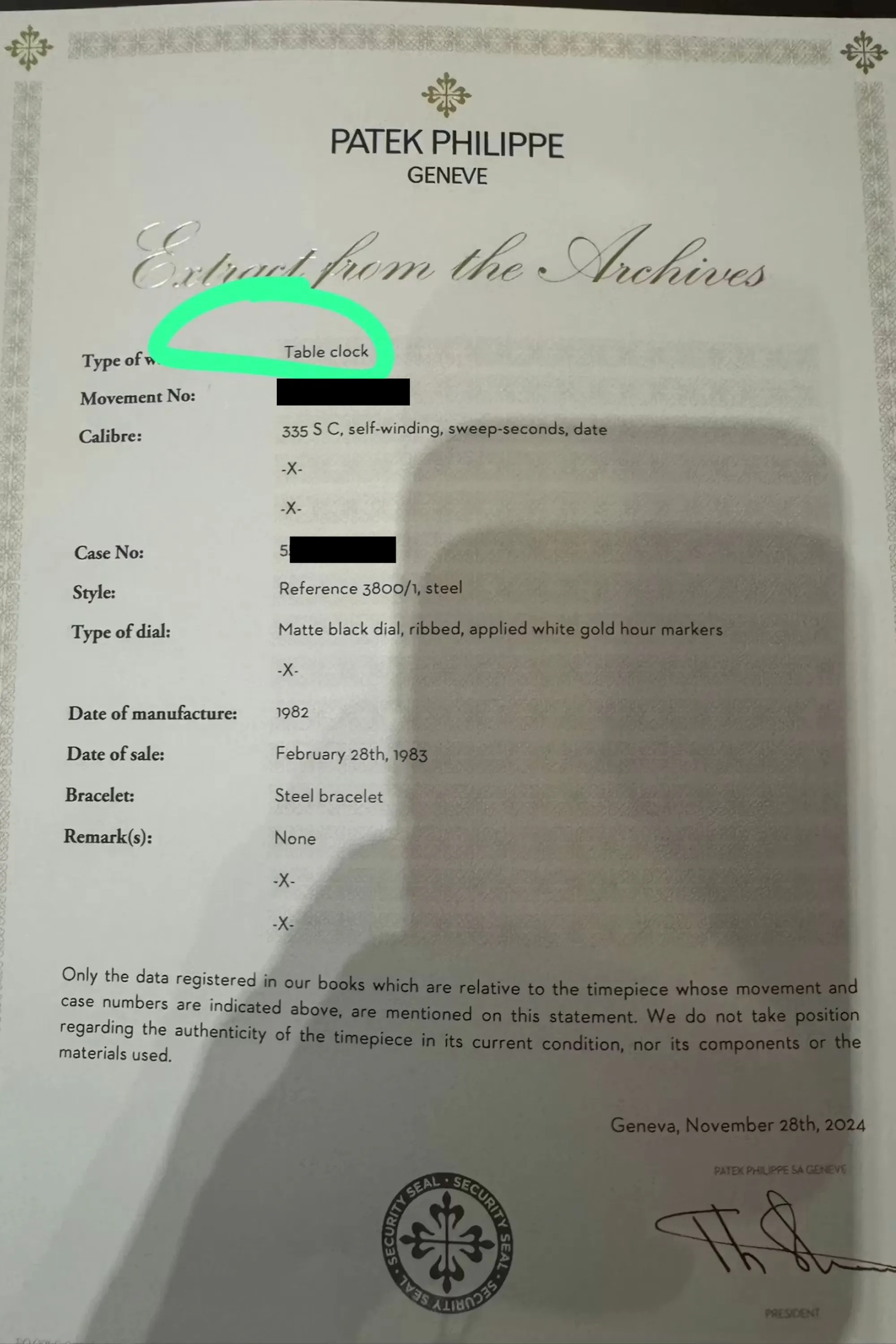
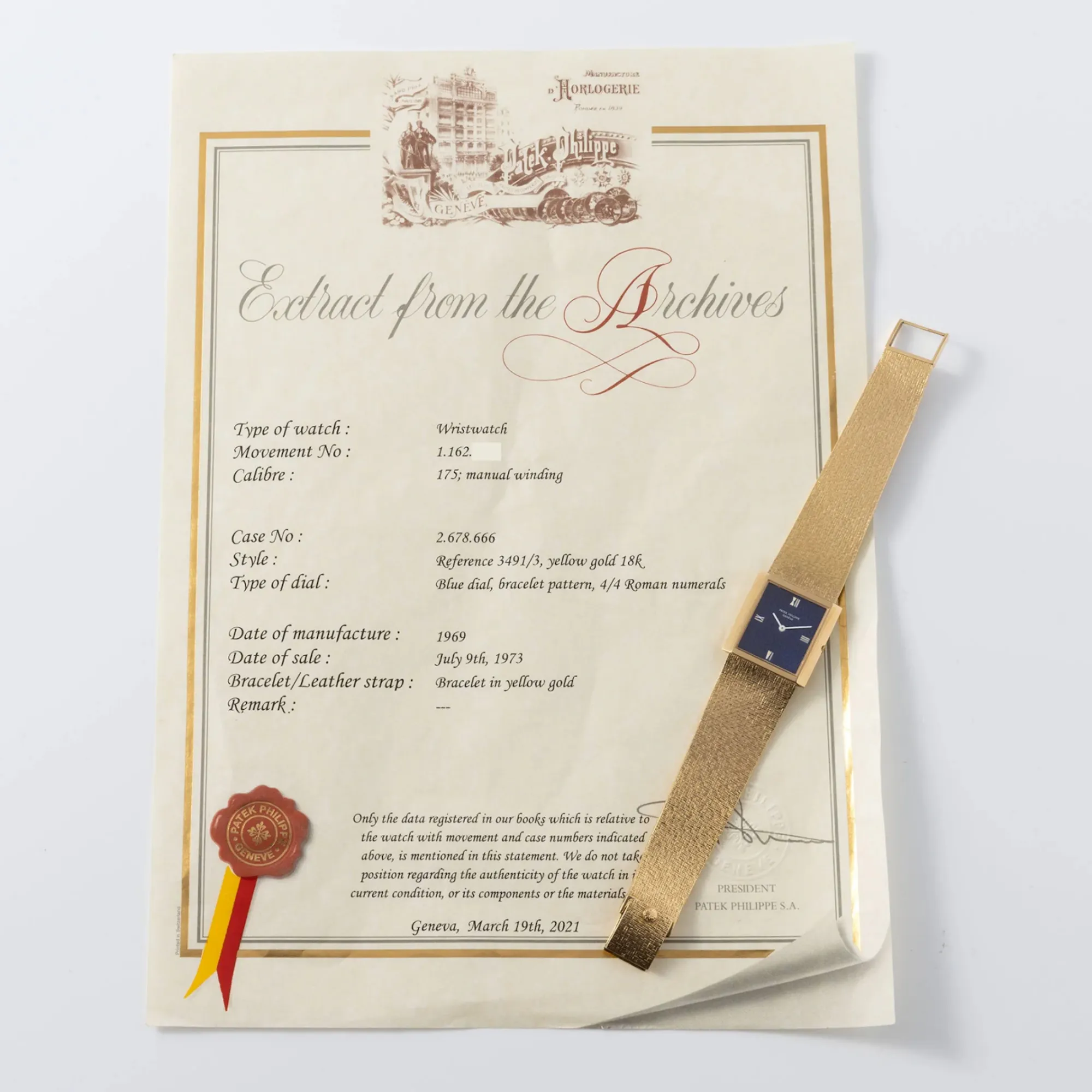
Let’s take, for example, Patek Philippe – arguably the brand most associated with archival extracts. The maison’s documents are famously comprehensive: covering details like movement, case, and dial; along with the specific date of manufacture and sale. On occasion, the brand’s archives department even includes information about the known service history of a specific timepiece.
Where things get more interesting however is when you realise the degree of detail in these extracts can vary significantly from watch to watch – because the brand’s records are compiled by different people, and the information deemed by them to be relevant has changed throughout the decades.
A hypothetical: when comparing three different examples of the Ref. 1463 ‘Tasti Tondi’, each of the corresponding extracts reads as follows.
Obviously the first thing a prospective buyer would do is check the details of the extract against those of the watch itself – nobody would buy example 1 if it was sporting a tachymeter. But what if example 3’s tachymetre was also accompanied by a black dial, with the latter detail omitted on paper?
You might argue that the innate rarity of a black-dialled 1463 means that such a watch would instantly be the subject of intense scrutiny. But that argument holds less water when you start discussing references like the widespread Ref. 96 Calatrava. Made in dozens of configurations over a 40-year period, a slight variation in dial colour or hour marker shape can spell a 9x uptick in value. A malicious dealer could easily obtain an extract and, with the help of a skilled “restorer”, tweak everything not explicitly catalogued in the document to their own advantage.
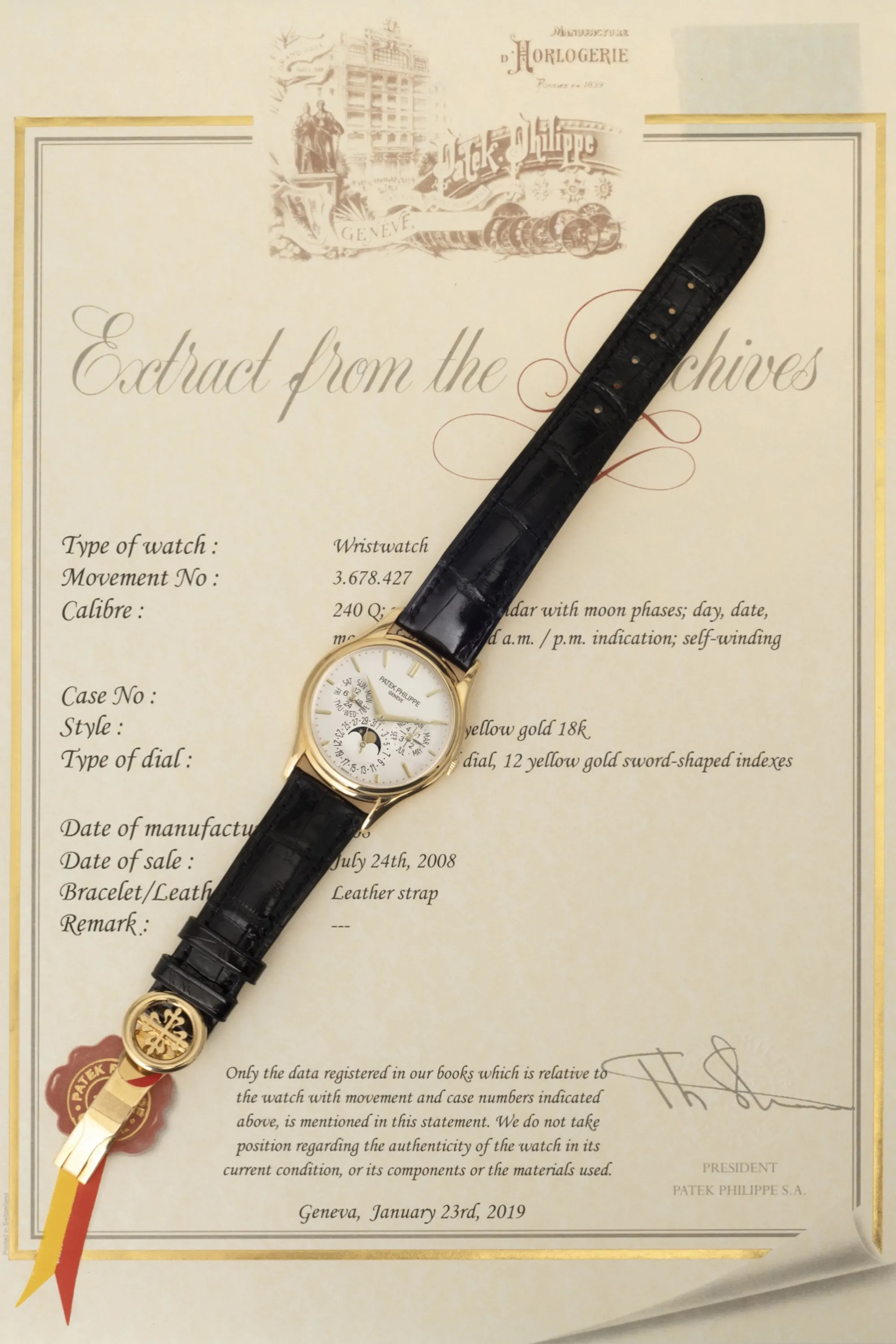
None of this is to say that archival extracts aren’t important. Under the right conditions, they’re able to raise the market price of a watch by up to 20%. At the same time however, heed the old proverb about all that glitters not necessarily being gold. The tell which reveals a dodgy extract is seldom going to be as dramatic as a black-dial 1463. Other times, it could be something way subtler – that even the trained eye may overlook.
Believe what an extract says, but don’t forget to do your due diligence and inspect a watch thoroughly and extensively before buying it. Most important of all: find yourself a dealer you can trust!
[ A Checklist ] |
|---|
(1) Make sure all the obvious details that have been written down (e.g. reference, complication(s), case material) match the watch in front of you |
(2) Verify that the serial numbers, for both case and movement, match the extract. |
(3) If a receipt of original sale is included, confirm its details against the information in the extract |
(4) Pay special attention to any remarks left by the manufacturer at time of original sale, or during routine service. |
(5) Do not treat the omission of a particular detail of your watch in the extract as proof of its authenticity. Always do additional research. |