[001][16.05.22]
Our Journal Editor offers a flyover view of all the minute details that connect and contrast Patek’s mighty bi-compax chronographs of the ‘30s and ‘40s.
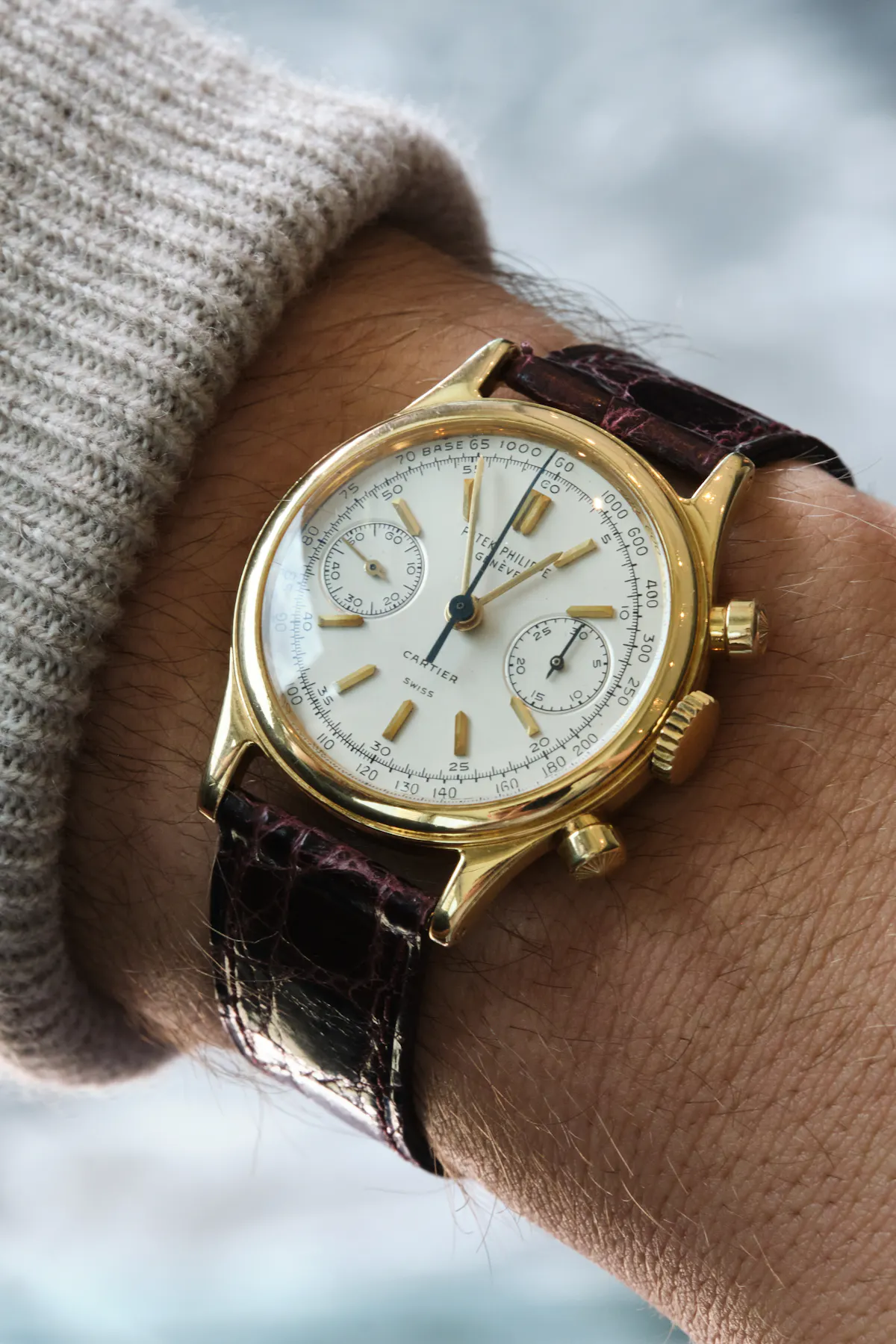
At the pointiest end of the Patek-sphere, collectors tend to reserve their plaudits for watches that speak to the brand’s simultaneous mastery over both chronograph and calendar display. You know the pieces we mean: raised enamel signature 2499s, any of the (previously underrated) 3970s from that reference’s fourth series, and so forth.
Naturally, this rampant favouritism toward calendar-chronos is for good reason; but it has often come at the expense of Patek’s midsize, two-register (‘bicompax’) chronographs — designs which, to our thinking, exemplify the adventuring spirit that permeated through pop culture for much of the 20th century.
Before steel divers with overengineered water resistance — which have since come to symbolise a kind of mass delusion among the lanyard-and-gilet class — there was the bi-compax chronograph wristwatch. Variously a potent symbol of scientific progress, military efficiency, and motorsport; it also happens to represent a particularly interesting chapter in Patek’s history circa 1950.
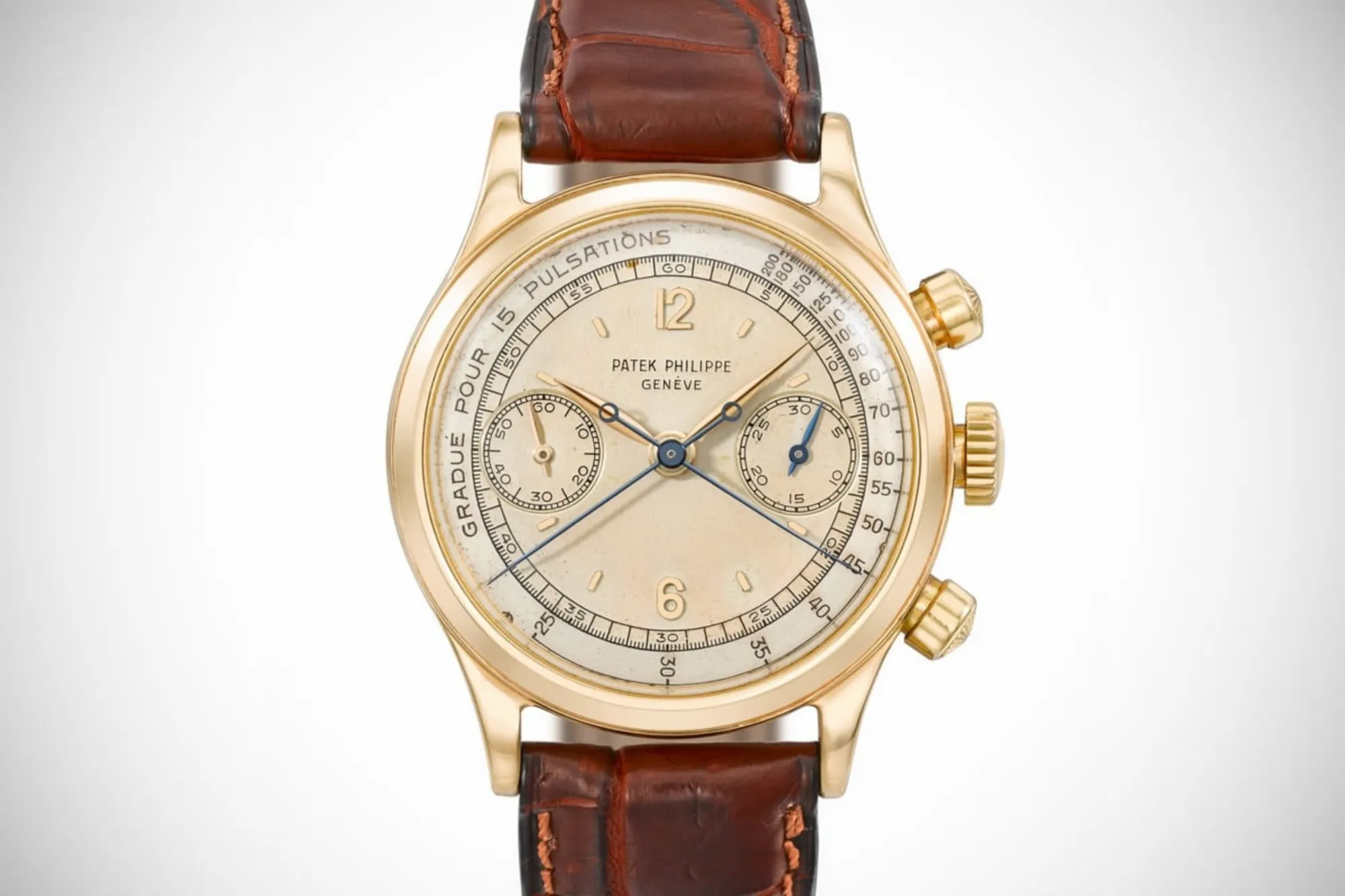
Over a six-year period between 1934-1940, the maison would commence production of four notable chronographs. Each one is individually distinct from the next (most obviously in size and production volume) yet they also tell a story of mutual influence and evolution: think elegant dials, Valjoux-based movements, and the crucial ‘3 & 9’ chronograph display.
In the interest of clarity, we’ll omit discussion of references 1436 and 1563 (a.k.a the rattrapantes) so as to focus on the core, single-action chronograph. And, as ever, if you’re new to the often super-specific universe of midcentury Patek chronos — or simply in the mood for a refresher — feel free to consult our index below:
[ Reference ] | [ Years of Production ] | [ Production Volumes ] | [ Case Diameter ] | [ Signature Feature ] |
|---|---|---|---|---|
130 | 1936-1964 | 1,500 | 33mm | Most varied reference. Made on rare occasions as monopusher |
533 | 1937-1957 | 350 | 33mm | Flat bezel |
530 | 1937-1962 | 140 | 36.5mm | Large case, transitional model |
1463 | 1940-1969 | ~741 | 35mm | Waterproof, 'Tasti Tondi' pushers |
There’ve been a lot of dramatic declarations about the Ref. 130 over the years, but what is inarguable is that if you’re a fan of Patek chronos of the ‘40s and ‘50s — or indeed, mid-century Swiss chronographs in general — this reference is of undeniable significance, regardless of how you feel about market performance or wearability.
In continuous production until the mid-’60s, it exemplifies one of Patek’s earliest marriages of chronograph functionality with the clean, restrained proportions of the Calatrava (Ref. 96).
As you’d expect, a granular breakdown of production numbers from this era is difficult, but of around 1,500 pieces over the reference’s lifespan, the vast majority of 130s were made in yellow gold — followed by pink gold and stainless steel (in ascending order of rarity).
Specialists have remarked on the sheer range of variation to be found within this reference: best exemplified in the bizarre revelation that the Ref. 130 began life as a monopusher, powered by a 13” ébauche Patek sourced from Victorin Piguet.
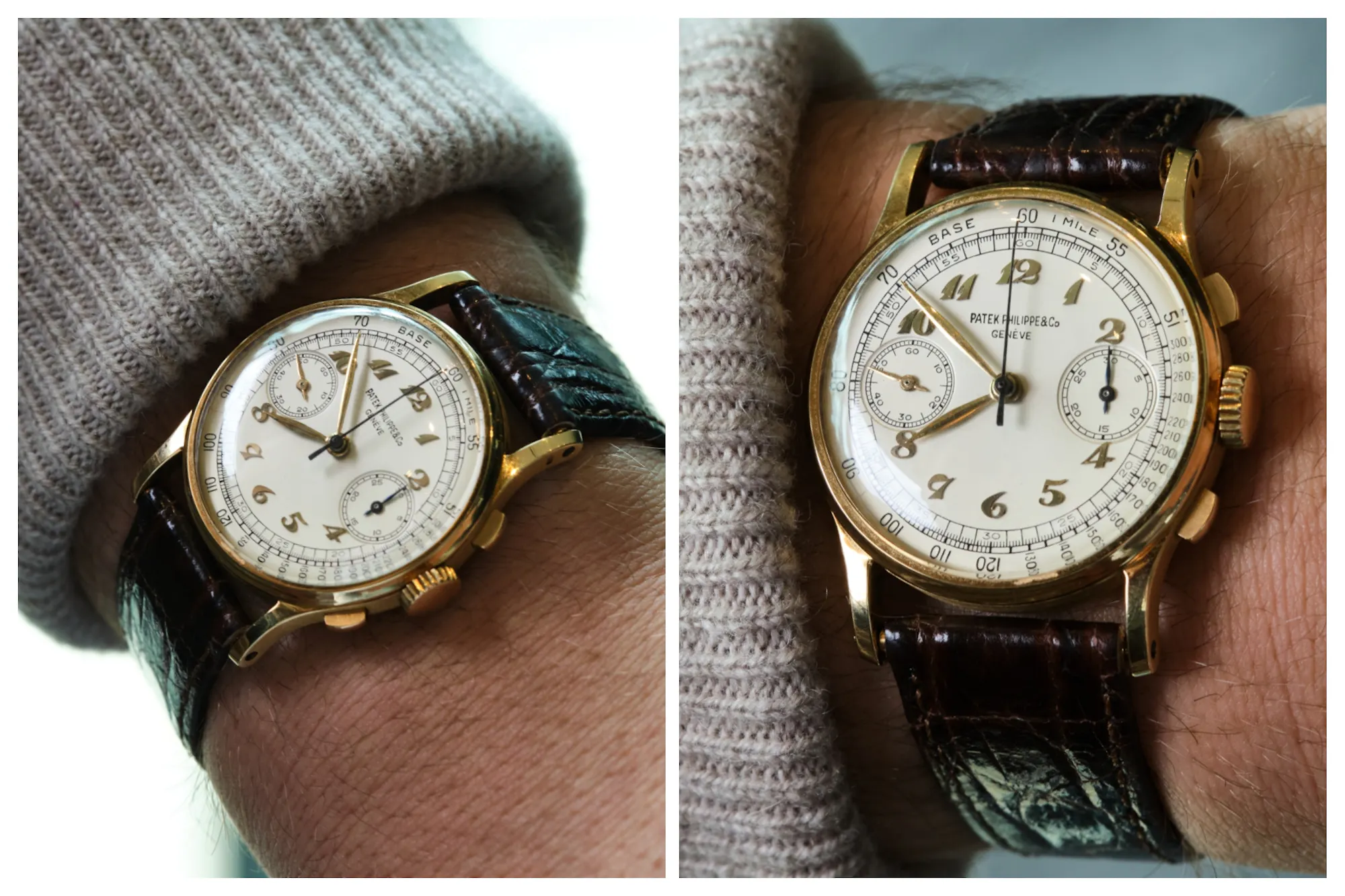
Even when collectors confine themselves to an examination of ‘regular’ 130s, these chronographs were made in more than half a dozen variations — once you factor in the presence of different hands, indexes, informational scales and rare “bi-metallic” (two-tone) configurations.
Some of the most well-known dial configurations for the Ref. 130 are as follows:
Unlike the small number of Ref. 130s in the monopusher configuration, these watches are powered by calibre 13-130 which, as one can plainly see, is also the inspiration for the reference at large.
Sized at 13 ligne (i.e. 29.5mm), this Patek-fied take on the famed Valjoux 23 was a real ‘Cinderella’s slipper’ moment for the brand: enabling it to produce an impressively compact 33mm chronograph. Evidently, a feat modern brands still struggle with today.
A close relative of the Ref. 130, the 533 entered into production soon after the former and was made for a continuous period of around 20 years.
As with Patek’s other chronographs in this era: of the 350 watches made, the majority were cased in pink gold and yellow gold. To date, no stainless steel examples have been sold publicly.
The most effective way to identify the Ref. 533 is via a side-by-side comparison with the 130. The former features longer, thinner lugs; the same Calatrava-inspired 33mm case; in addition to a flat bezel contrasting with the shape of the 130’s.
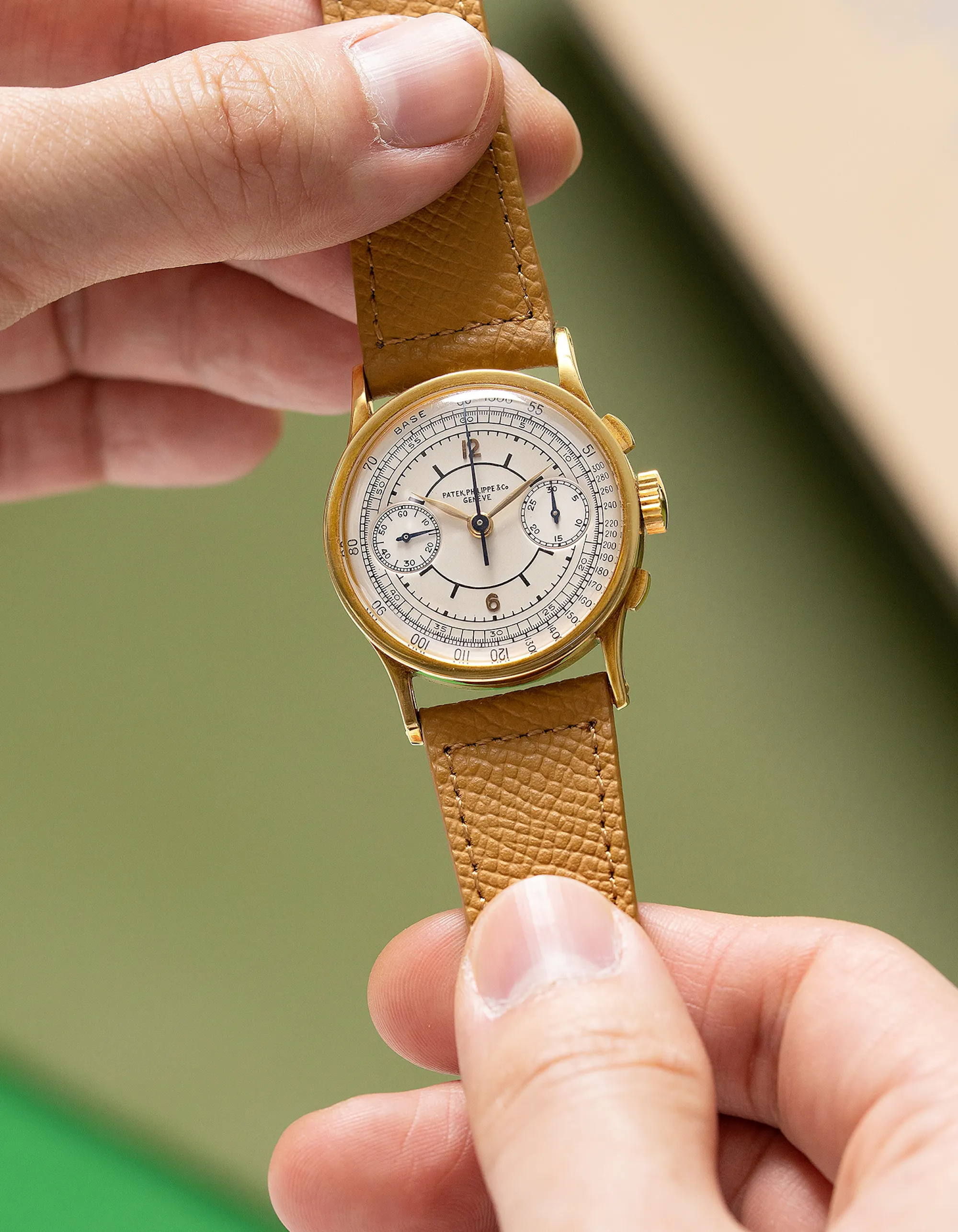
The most effective way to identify the Ref. 533 is via a side-by-side comparison with the 130. The former features longer, thinner lugs; the same Calatrava-inspired 33mm case; in addition to a flat bezel contrasting with the shape of the 130’s.
Continuing with a comparison between the two timepieces, the 533’s total production is equal only to about a fifth of the Ref. 130: making the former, on average, a more expensive watch in the auction space and secondary market.
As with its elder sibling, the 533 was made in an array of dial configurations - usually involving some combination of dot/baton indices and Arabic/Roman numerals. To date, the best performing examples have tended to feature the tachymetre/sector dial combo. Most recently: a Ref. 533 in yellow gold, sold by Phillips Hong Kong this May for HK$1,333,500.
Technically launched the same year as the above 533, the Ref. 530 is best described as the ‘big brother’ of the 130: owing to its 36.5mm diameter case, sizing that proved to be way ahead of its time.
Of the 140 watches which make up this reference, 85 that have been identified are cased in yellow gold. There are also a handful that exist in pink gold (14), with an even smaller number in steel (10).
As you’d expect of a chronograph derived from the 130’s lineage, the Ref. 530 is available with a wide array of dial options. Examples with a full scale of Breguet numerals are especially prized. Even going back 4-5 years, it wasn’t uncommon to see 530s in this configuration pulling down in excess of $400,000 at auction (such as the pink gold version offered via Monaco Legend Group in late 2019).
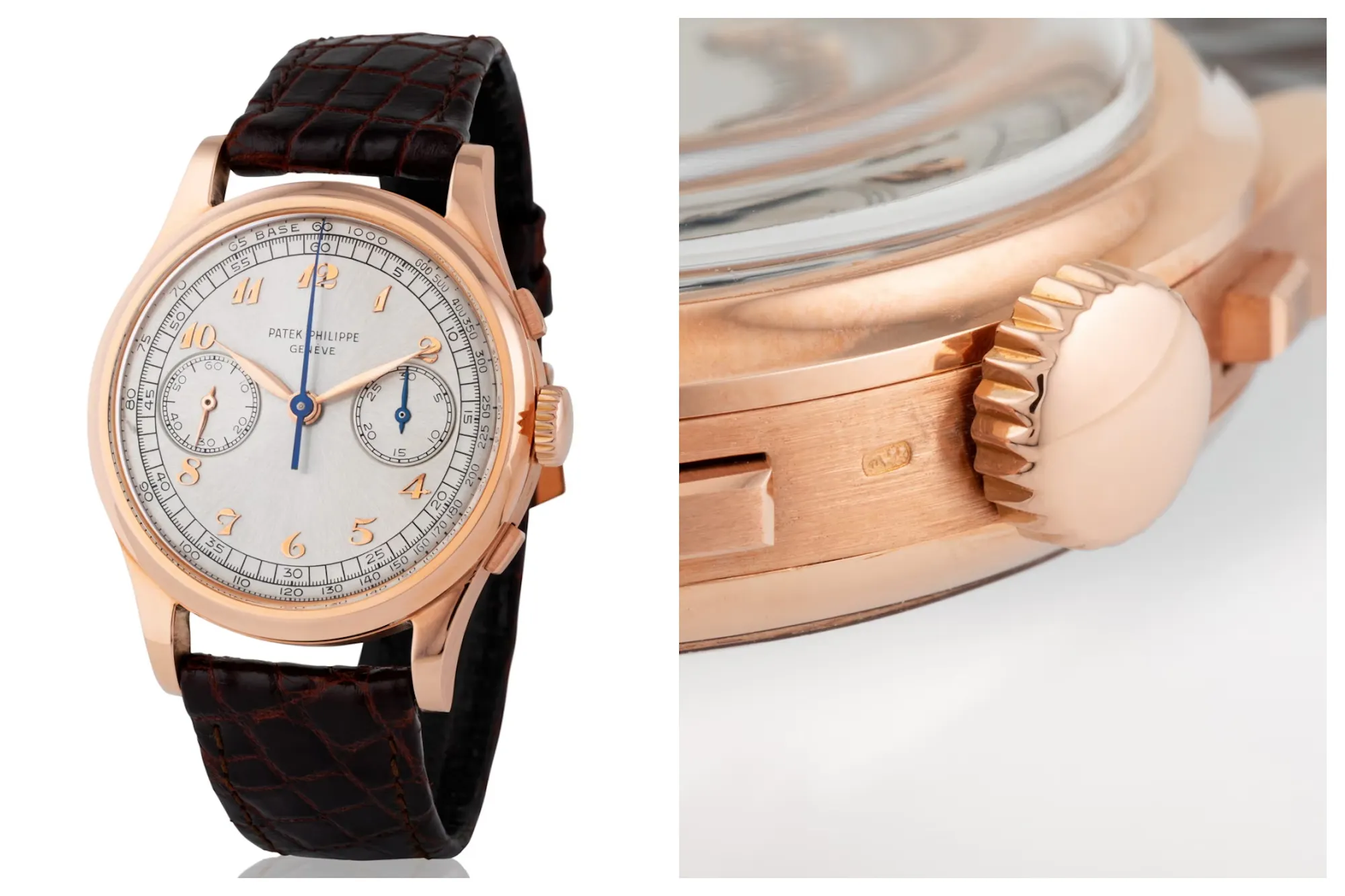
One aspect of intrigue that is unique to the Ref. 530, however, is the fact that this ‘oversized’ mid-century chronograph actually shares a reference number with a simple, time-only Calatrava. What these two otherwise unrelated watches have in common is that a portion of both were made with cases supplied by Georges Croisier: the famed Genevan casemaker who pioneered the invention of ‘Staybrite’ steel, and whose work is usually signed with the ‘Key No. 5’ hallmark.
In situations where Croisier’s hallmark is perhaps difficult to make out, the work of the master casemaker can be confirmed by measuring the lug-to-lug distance on any given Ref. 530. Croisier-made cases possess an interlug width of 21.5mm - two millimetres bigger than what you’ll find on cases made by Patek.
If purists of the reference are to be believed, this gives the 530 a more sporty and robust look than its 33mm counterparts: an idea that Patek naturally worked to refine, with the unveiling of the Ref. 1463 (otherwise known as the ‘Tasti Tondi’).
A lot has been said in #Watchland about the historicity of the Ref. 1463 - especially in the overarching context of how chronographs at Patek have evolved over the last century. Its introduction of water resistance and popularity within the Italian collecting community (also responsible for coining the nickname, ‘Tasti Tondi’) are both topics that have been discussed at length. And yet, it's difficult to overstate the particular cultural shift the 1463 captured: not just among Patek’s clientele, but in Western society.
In a previous article for UNEKUAL, I described this reference as one of the forefathers of “‘gentleman adventurer’ type watches”. And once you begin to dig more deeply into the individual design codes of the 1463, this split persona - made up of both rugged and fanciful qualities - is revealed.
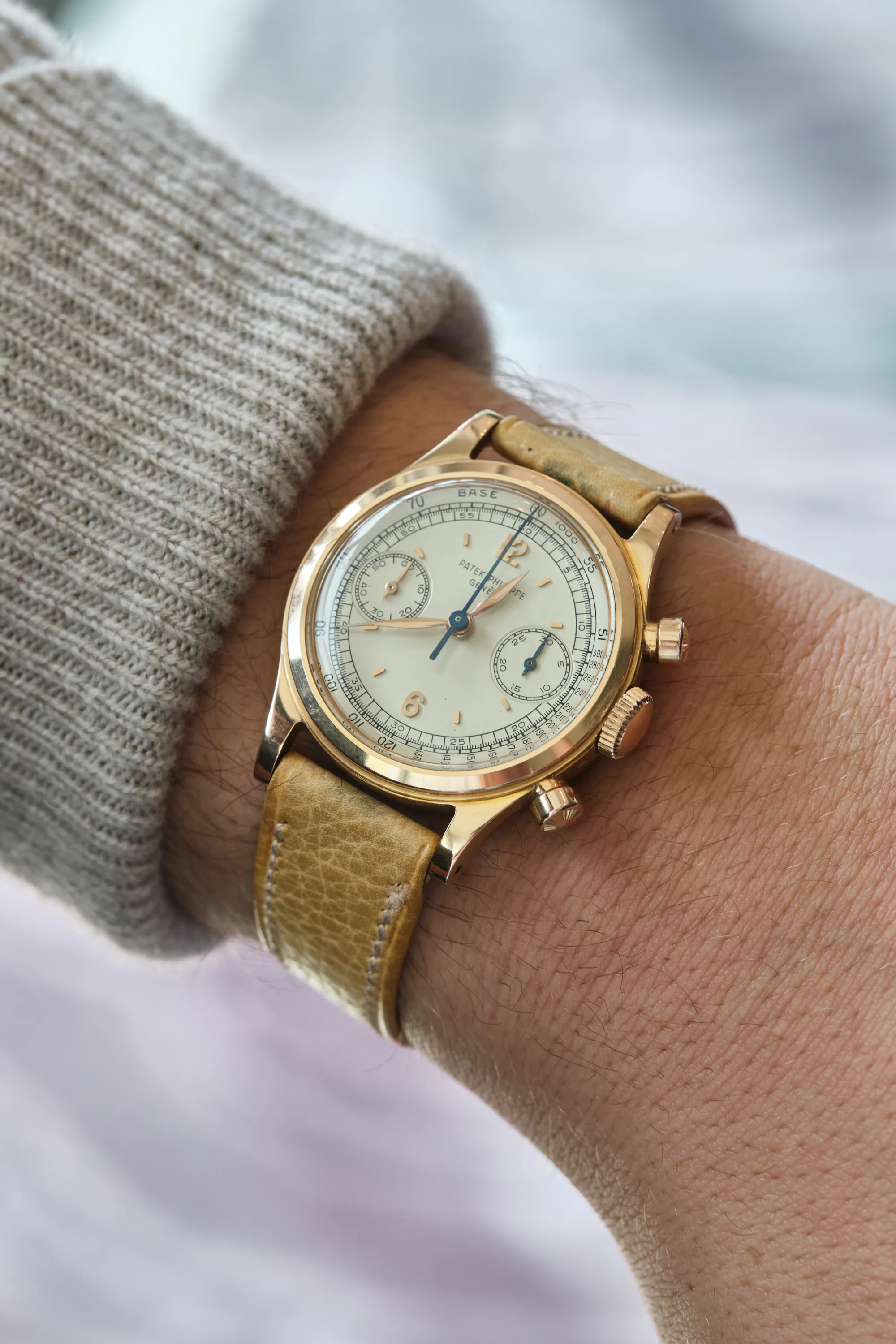
The watch’s protective crystal features a large, pronounced dome; the chronograph pushers at 2 and 4 o’clock sport a mushroom cap shape, engraved with sunray motifs; and the bezel has a much thicker intermediate step than what you’ll find in the Ref. 130.
In conjunction with the decagonal screwdown caseback (references 130, 533, and 530 all used snap-on versions), these details come together in one package that feels like it could be feasibly worn in an open-top GT, under a skisuit or - perhaps least excitingly - lounging by the hotel pool.
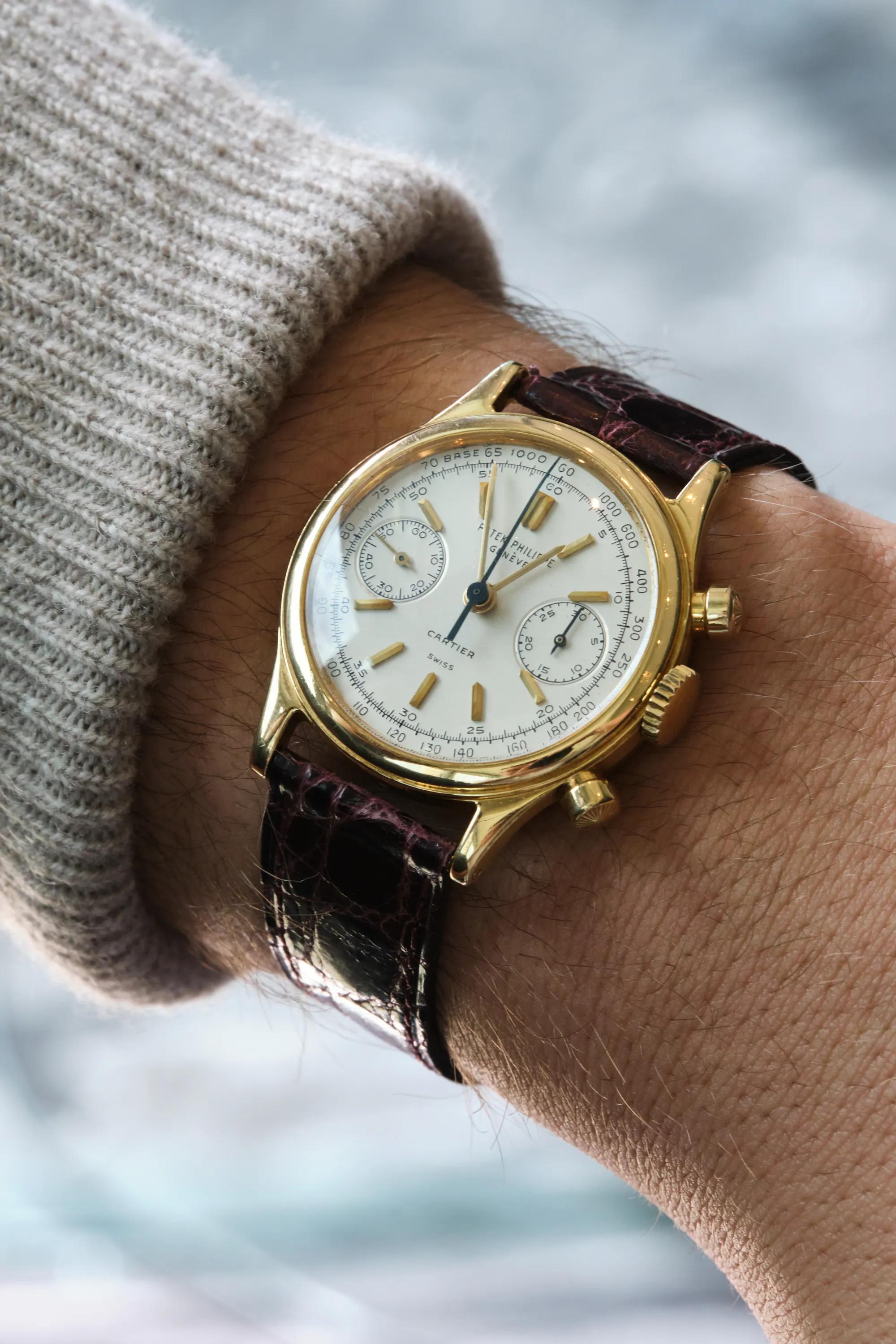
In a breakdown that should feel familiar to readers by now, the assumption is that the lion’s share of Tasti Tondis were cased in yellow gold (~400), with increasingly smaller volumes in steel (~190) and pink gold (~145) respectively. For the latter two metals, it’s important that we don’t conflate those total volumes with the examples that have come up for sale.
Ergo, only 30-40% of the whole production run of steel and pink gold 1463s is being traded publicly: a sign - at least by my interpretation - that many more examples remain firmly in private hands who are in no hurry to offload them. Then again, if any of said watches look like this, we certainly get that reluctance.