[001][12.06.24]
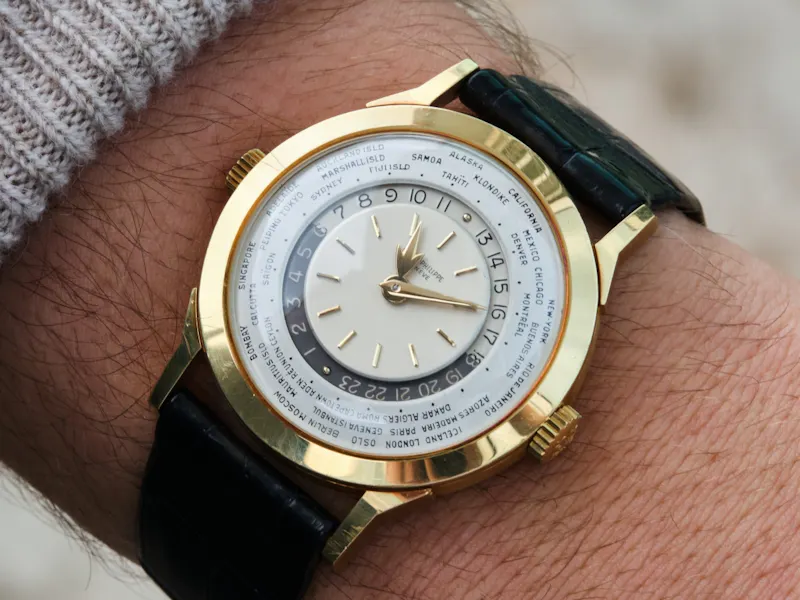
As one of the oldest, most vaunted names in watchmaking, it’s no surprise that Patek Philippe is responsible for its fair share of crucial horological inventions. Let’s talk about ‘em.
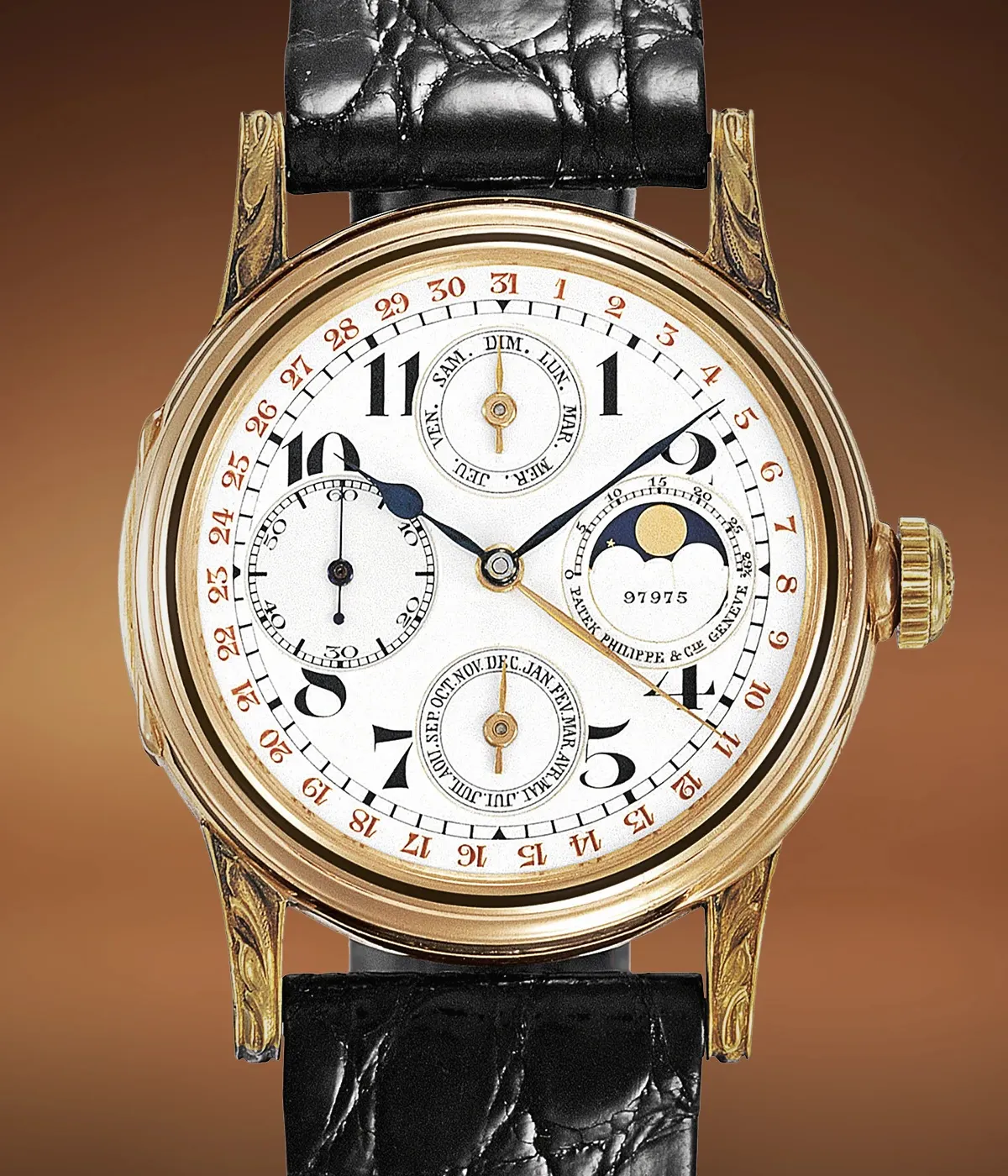
Founded as Patek, Czapek & Cie in 1839, the story of Patek Philippe really began to gain traction some six years later, when Pole Antoni Patek and Czech Franciszek Czapek dissolved their pocket watch-making business. The latter went on to form Czapek & Cie (revived in 2011), while the former employed French horologist Adrien Philippe. The duo bet big on Philippe’s patented keyless winding and hand-setting system that went on to receive worldwide acclaim, forming Patek & Cie. in 1845, before the name would become a tad more familiar in 1851 — with Patek, Philippe & Cie.
Developments like that of a crown are ones we take for granted these days, but they paved the way for watches as we now know them, whether that’s a simple Calatrava or a mesmerising Grand Complication. In light of that, let’s take a closer look at the advancements that made Patek Philippe the brand it is today.
By the beginning of the 20th century, Patek Philippe has become a household name, renowned for its craftsmanship and fiercely desired the world over — the story of the Gondolo clubs and Patek’s impact on South America is just one example. Partly influenced by WWI, the 20th century brought a change to the way people interacted with watches, as they began moving from pockets onto wrists. As horological tastemakers of the era, Patek Philippe was at the forefront of this, working hard to adapt their smallest pocket watch movements and develop wristwatch-specific ones.
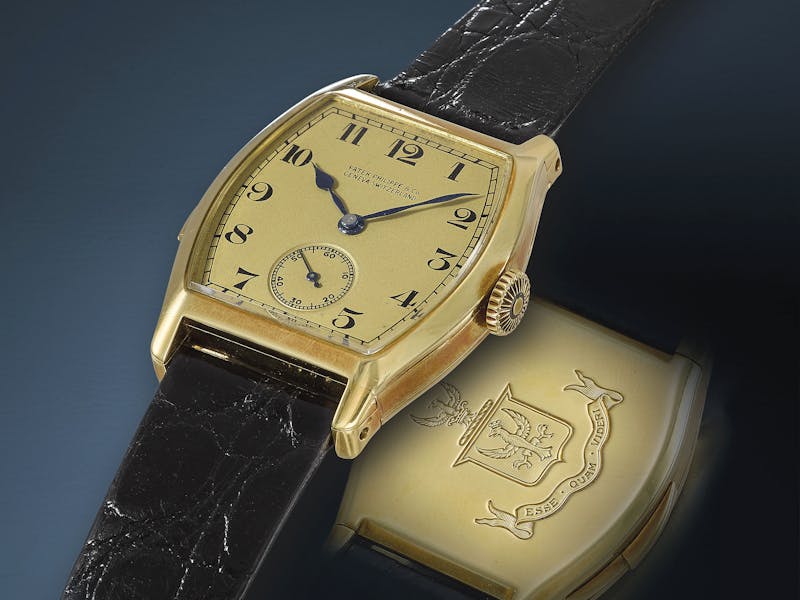
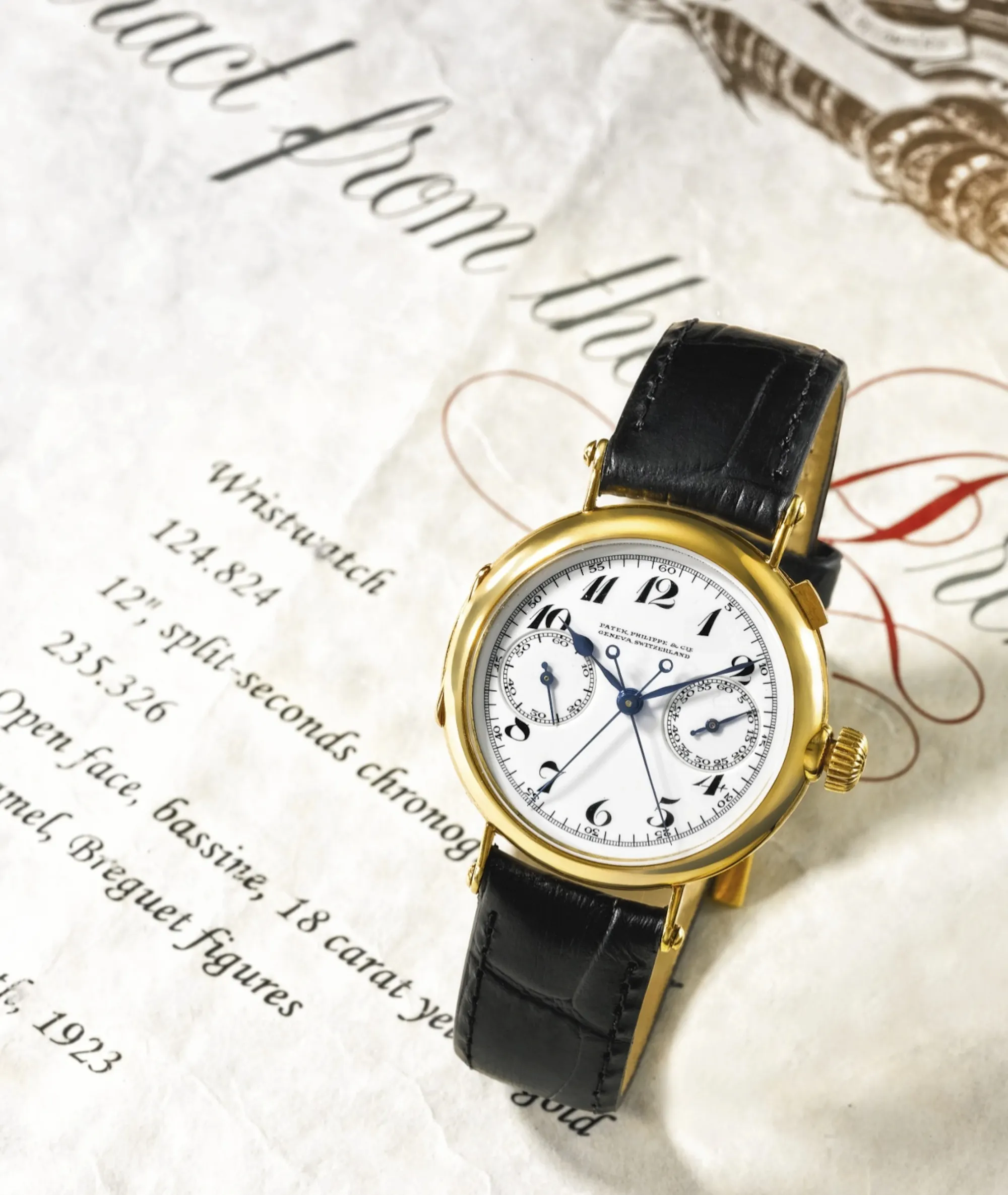
While the brand had produced complicated wristwatches before, in 1923 they introduced a first — the No. 124 824 — a specially-commissioned split-seconds wristwatch, and the first of its kind. Its gold case carried the hallmarks of early wristwatch design, with its hinged caseback and housing a white enamel dial, while the split-seconds mechanism was operated by a pusher near the top right lug and the crown, courtesy of a modified Victorin Piguet movement. If you’re wondering just how important this watch actually is, it was bought most recently at Sotheby’s in 2014 for nearly US$3 million — by Patek’s own museum team, no less.
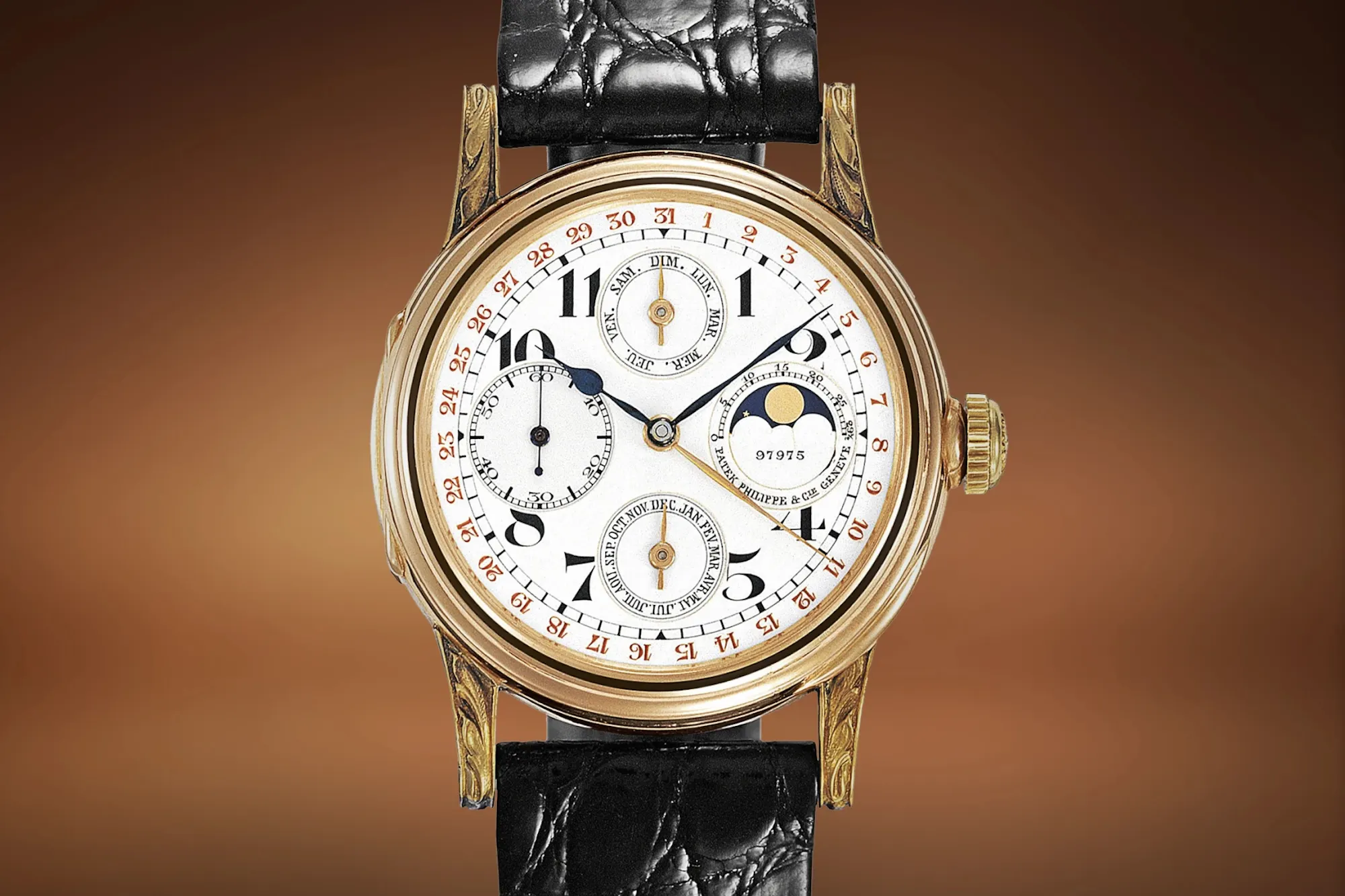
Just two years after the 124 824, Patek Philippe unveiled the No. 97 975, a complicated wristwatch that would go on to become synonymous with the brand’s future identity. This was, of course, the very first perpetual calendar wristwatch in a hand-engraved, 34.4mm case; yet again powered by a Victorin Piguet ébauche originally intended to be fitted into a pendant watch as early as 1898. The enamel dial features oversized printed numerals, with separate sub-dials for the running seconds, moonphase, day, and month, while a gilded central hand points the date around the dial’s circumference. Outrageously, the calendar indications featured instantaneous jumps, an engineering feat seldom seen even today.
The 97 975 was sold two years after its completion to American Thomas Emery (a collector who also owned a sterling silver Patek Presse-Papier desk clock, one of three known). It was subsequently acquired by the Patek museum in Geneva, where it resides today.
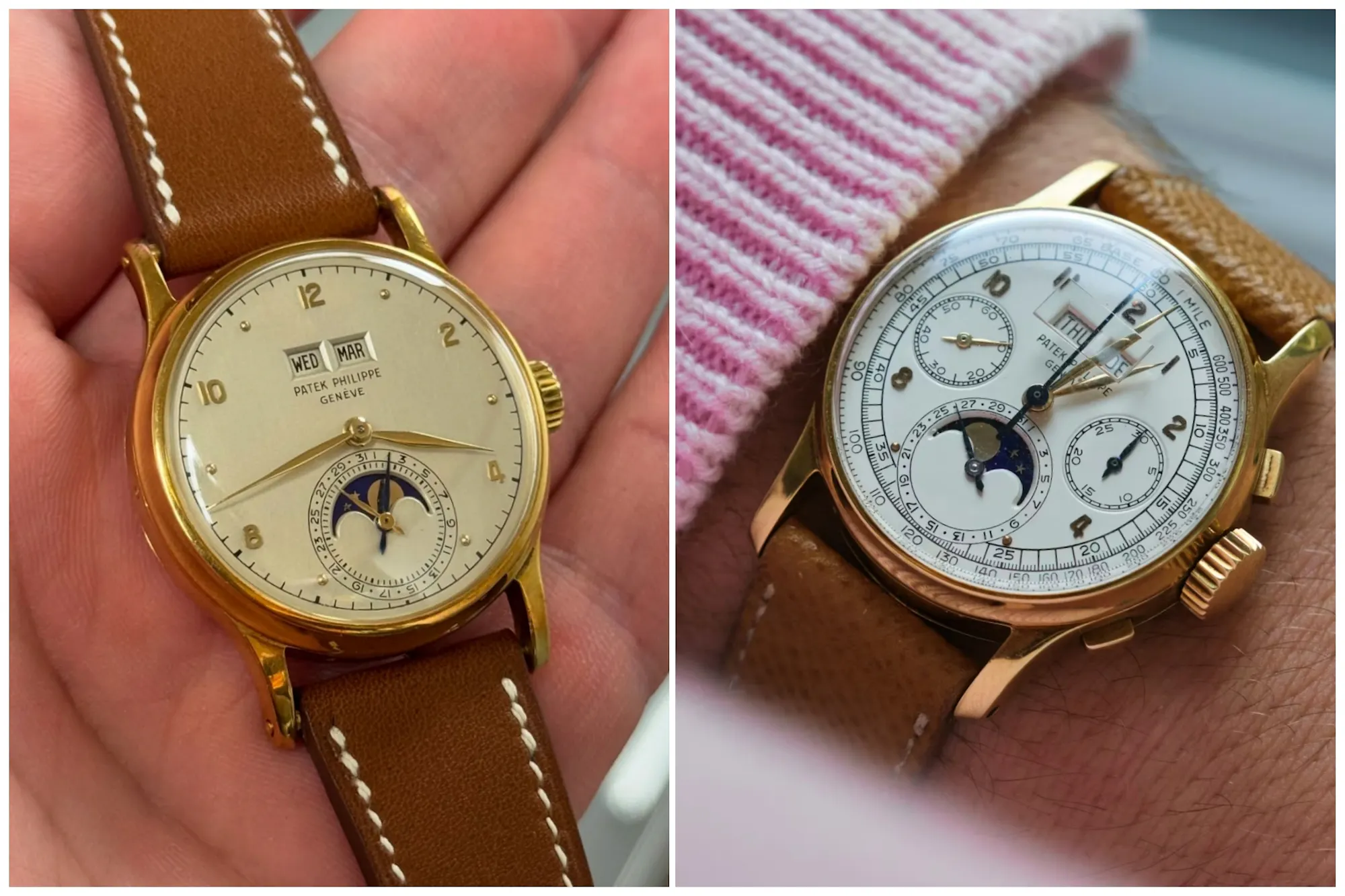
It took another 16 years after the 97 975 for Patek Philippe to reveal the results of their development of perpetual calendars, taking this meaningful step with two references: the 1526 and the 1518. The former is the less complicated, QP-only variant of its chronograph-equipped sibling, but both are significant for being the first serially produced perpetual calendar wristwatches, ever. With both references’ production runs numbering in the 200s, their Vichet-made cases housed different movements. The 1526 sported a Victorin Piguet QP module atop the brand’s first in-house calibre, the 12-120, and with instantaneous change, while the 1518 opted for a Patek Philippe-modified and decorated Valjoux ébauche.
In current collecting circles, the Ref. 1518 is often cited as the ultimate grail for any serious Patek Philippe enthusiast, but the 1526, which is actually more rare, hasn’t captured the collecting zeitgeist — though with 1518 prices steadily rising, we think it’s only a matter of time.
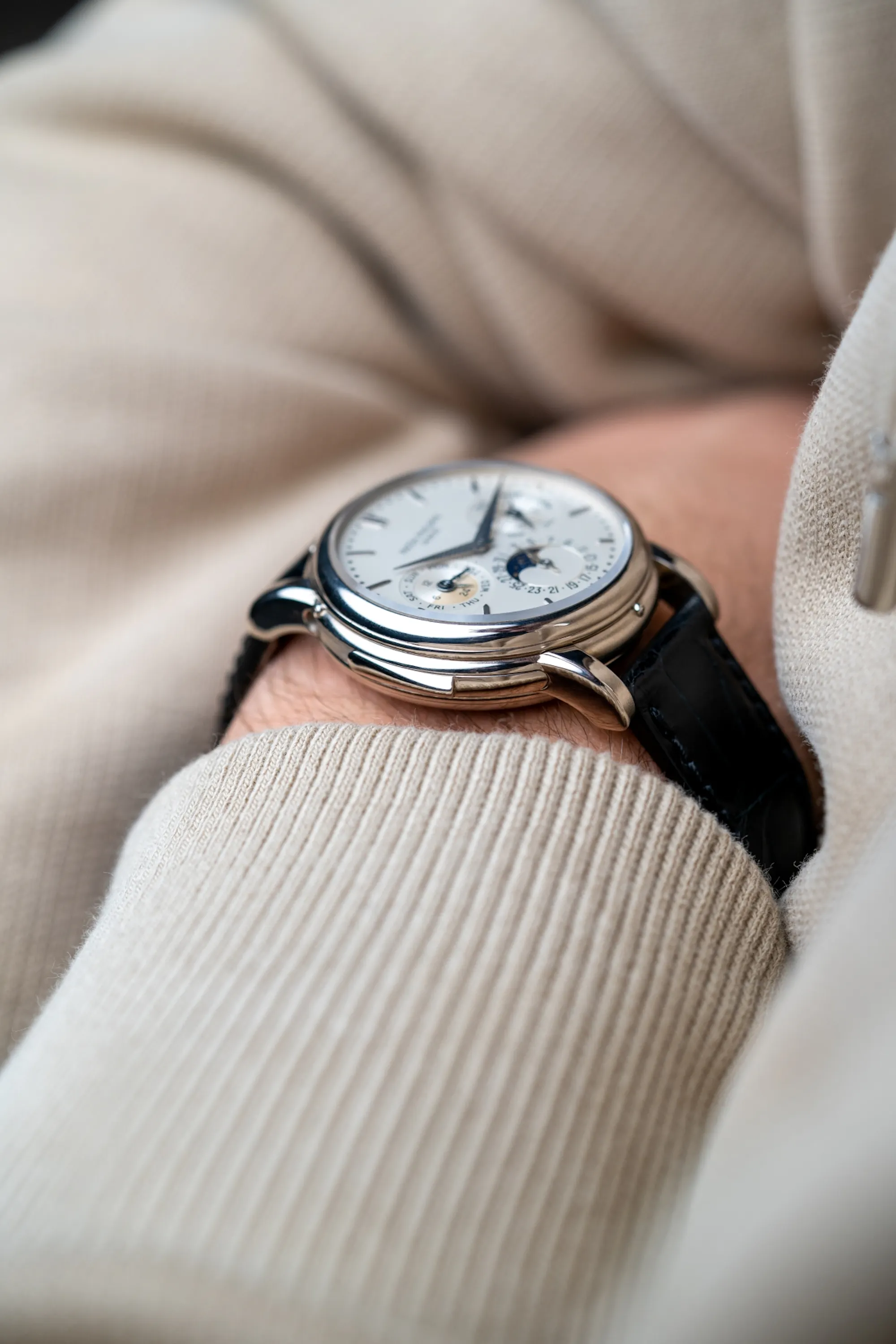
Released as part of Patek Philippe’s 150th anniversary celebrations, the Ref. 3974 was not only the brand’s first in-house repeater, but also incorporated a perpetual calendar mechanism as well as automatic winding. The R 27 calibre featured a micro-rotor construction making sure the cases remained eminently wearable, and in combination with those aforementioned complications, made it one of the more complicated wristwatches of its time.
Two other things certainly helped it attain its status among the vintage cognoscenti; the wonderfully considered dial design that remains uncluttered despite the watch’s high overall degree of complication; and the cases, whose crisp chime sound was the work of Jean-Pierre Hagmann. Note however that, out of the ~160 pieces produced, only half sported lugs marked with that all-important ‘JHP’ insignia.
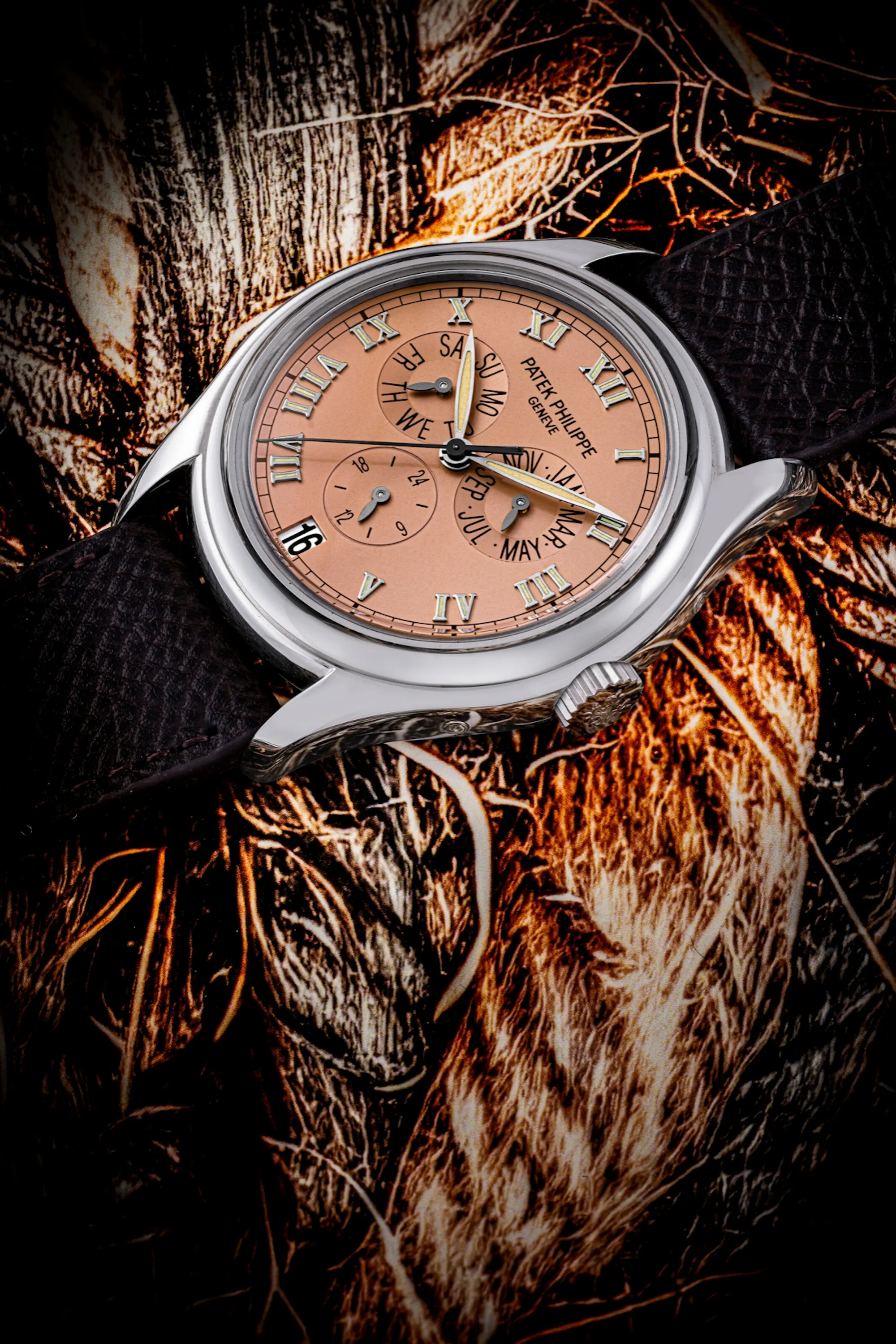
While senior to me by a couple of years, understanding Patek Philippe’s reasoning for investing in the development of a movement that’s less complicated than the perpetual calendar they had already perfected is not that difficult to understand.
The 1996 release of the world’s first annual calendar coincided with an odd time for watchmaking, as the brands that had survived the torrid times of the Quartz Revolution had to find new ways to market their products in a climate of recent economic downturn (i.e. the early 1990s). Sure, the reasoning for the Ref. 5035’s release may not be as glamorous as the other entries on this list, which were all pursuits of horological perfectionism, but that made it no less important or clever.
Capable of tracking 30 and 31-day months and only needing adjustment at the end of February, the 315 S QA calibre that powered the 5035 was mechanically much simpler than a perpetual calendar, employing a 24-hour wheel with two fingers for the two set month lengths. Granted, the initial dial designs were similar to the slightly awkward Ref. 5070 and its closely-set sub-dials, but that would quickly change over the next few years, culminating in 2006 with the stunning Ref. 5396.