[001][30.09.24]

When it comes to Calatravas, very little can top the 2526. The first self-winding Patek Philippe, encased in Baumgartner’s finest metal work, topped with a Grand Feu enamel dial. Cake, icing, cherry – this reference has it all.
In 1953, Patek Philippe released the Calatrava Ref. 2526, the first self-winding watch in the catalogue. With it, arrived a new era of modern manufacturing for the maison. The 2526 was produced in yellow, pink and white gold, alongside platinum, in a total production of around 3000 units over a 7-year period (ending in 1960).
Of those 3,000, there are a handful of extremely notable editions – we’ve taken the liberty of cataloguing them below.
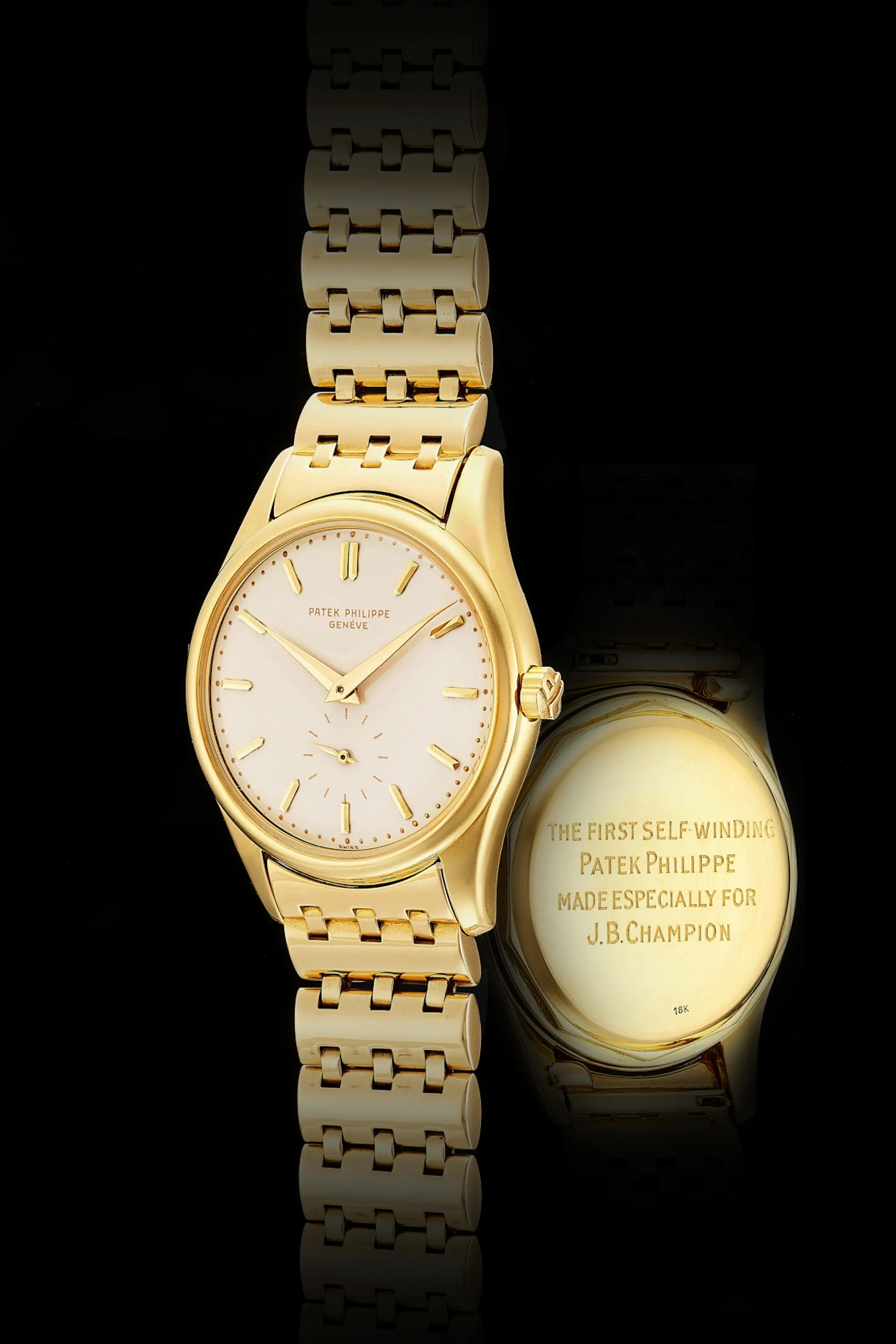
If there’s one crown jewel in the entire 2526 lineage, it’s definitely this Calatrava – bearing movement number 760,000. Simply put: this was the very first unit manufactured, in turn making it the very first self-winding (i.e. automatic) wristwatch period from Patek. It was produced in 1952 and sold to Joe Ben Champion Jr, a.k.a. “J.B. Champion”.
This particular 2526 is cased in yellow gold, with a caseback engraving that reads: “THE FIRST SELF-WINDING PATEK PHILIPPE MADE ESPECIALLY FOR J.B.CHAMPION”. It was supplied on a matching yellow gold bracelet, which appears – based on numerous (albeit unconfirmed) reports – to have been produced by Ponti Gennari. For auction hunters, it’s important to note that this period-correct bracelet actually differs from the one fitted to the watch when it first appeared at auction – likely produced by Gay Frères.
Champion’s personal 2526 is handily the rarest and most sought after example of the reference out there. That status is reflected in its performance at auction: currently, the second most valuable 2526 ever sold publicly, fetching US$730,000 at Sotheby’s in 2024. As for the No. 1 spot? We’ll come to that further down in the article…
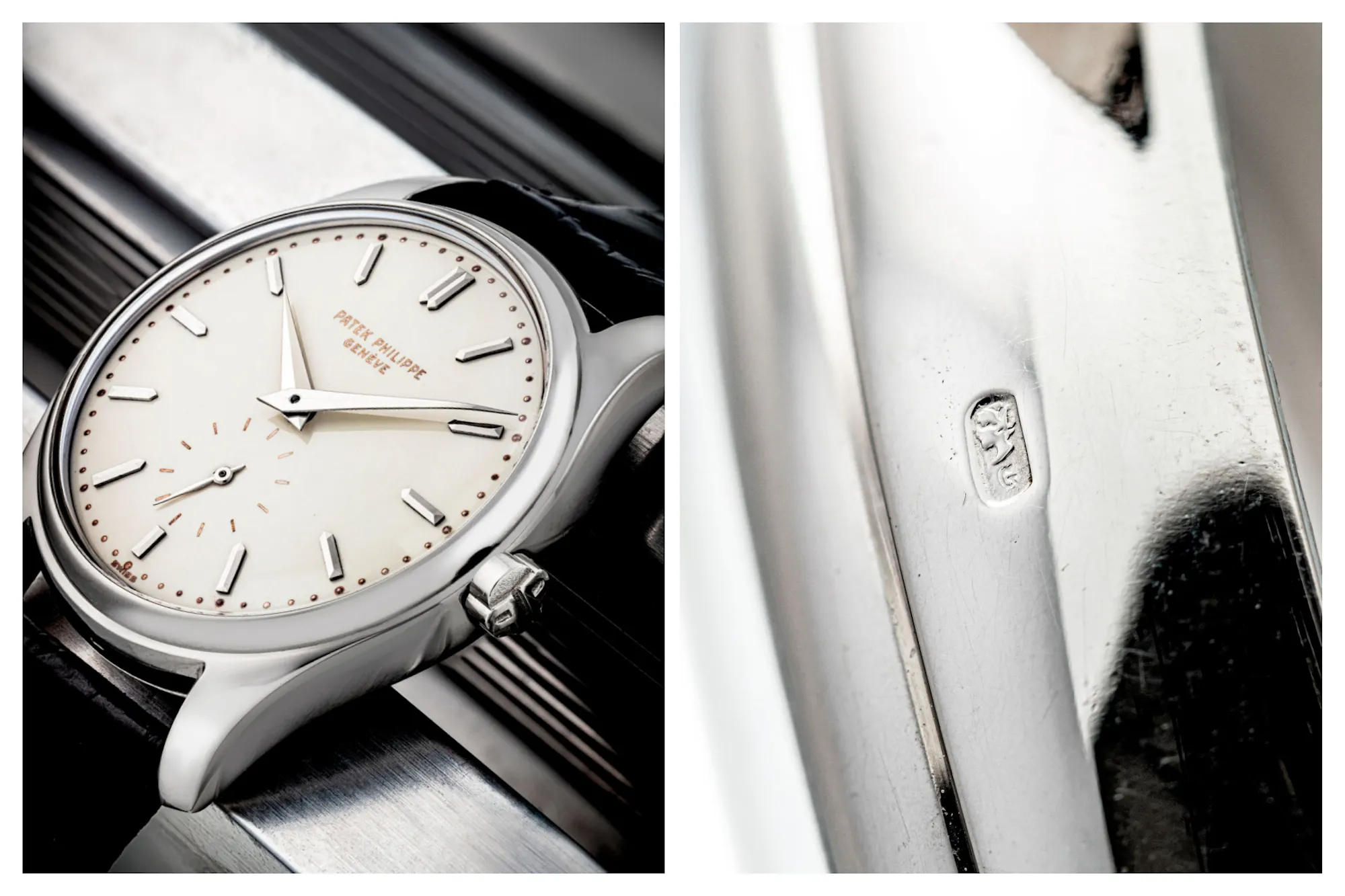
Next we move onto the most visually striking iterations of the 2526, certainly for their day and age. White precious metals such as gold and platinum have become a regular part of 21st century production, yet that wasn’t always the case. As rare as pink gold was, in the context of mid-20th century luxury watchmaking, precious white metals were even rarer.
Across the entire lifespan of the 2526, only around 20 examples are known to have been produced in white gold; with a similar figure (i.e. 24-25) for platinum. Many of these strayed from the traditional enamel dials usually seen on the archetypal yellow gold 2526; instead featuring metal dials, often decorated with diamond indexes. Of the total number of white metal 2526s, an even smaller proportion are known to possess enamel dials – bona fide unicorns, the existence of which has been confirmed by Patek’s archives team.
To date, the best-performing white metal 2526 fetched just shy of US$500,000 at Christie’s in 2020: combining a white gold case with enamel dial.
[ Metal ] | [ Units Manufactured ] | [ Total Auction Appearances (since 1989) ] | [ Period of Production ] |
|---|---|---|---|
White gold | ~20 | 21 | 1955-1960 |
Platinum | ~25 | 17 | 1954-1956 |
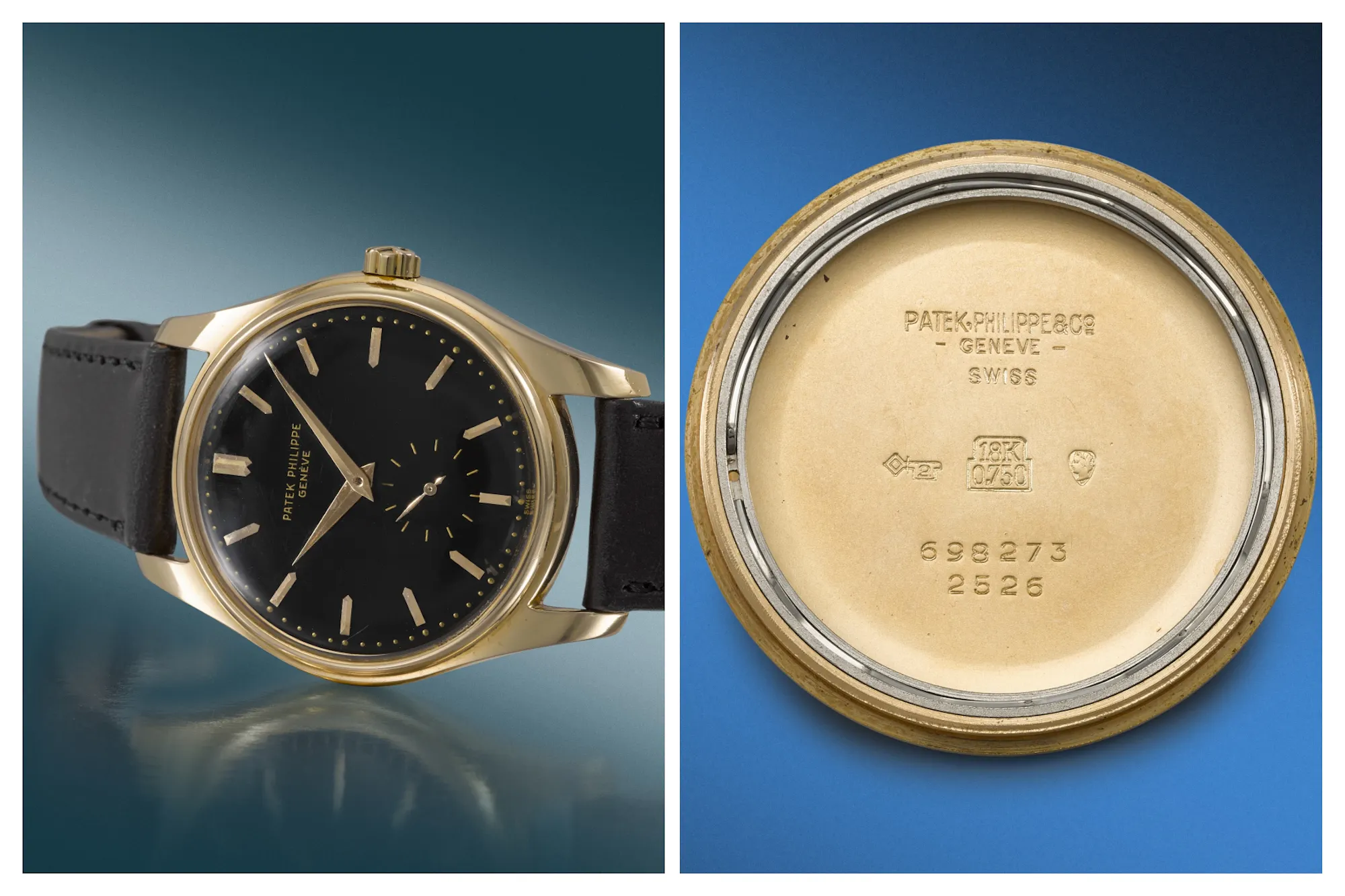
Another of the 2526’s rarest subspecies is that of the black dial. Produced across yellow, pink and white gold cases, only around 8 are known to have been produced in the latter metal. Of these, there have been just six appearances since 1989 – making them a substantially rarer sight than yellow gold, examples of which have appeared 25 times over the same period. A platinum example is known to exist, yet to date, never surfaced at auction.
The best-performing 2526 of all time was one of the 8 produced in pink gold, selling for about US$ 750,000 at Christie’s in 2024.
[ Metal ] | [ Manufactured ] | [ Total Auction Appearances (since 1989) ] | [ Period of Production ] |
|---|---|---|---|
Yellow gold | ~30 | 25 | 1953-1957 |
Pink gold | ~8 | 6 | 1955-1957 |
White gold | ~1 | 1 | 1957 |
Platinum | ~1 | 0 | N/A |
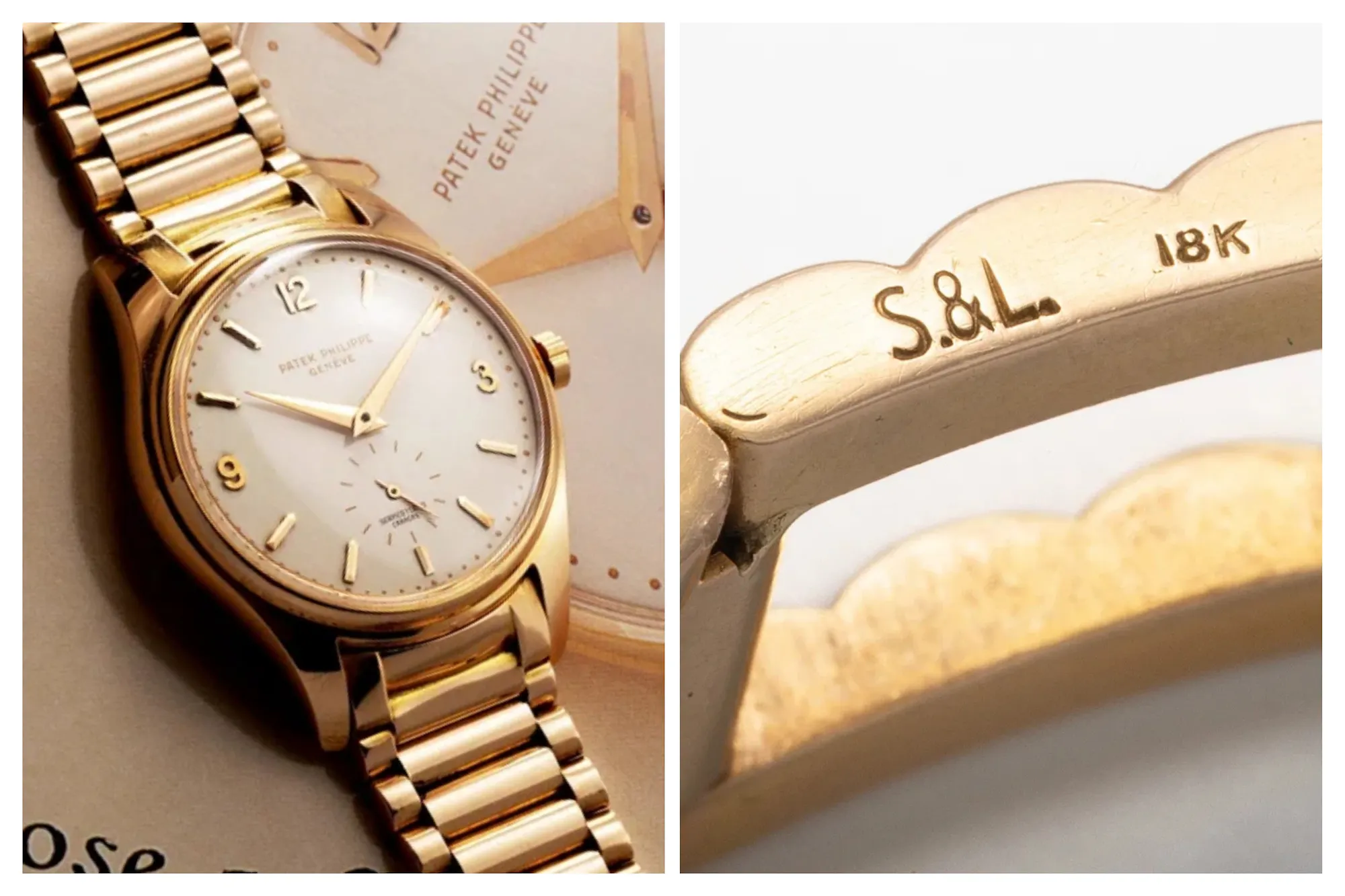
Despite the well-documented difficulties of treating enamel as a canvas for decorative art, retail signatures appear relatively frequently across watches in the reference.
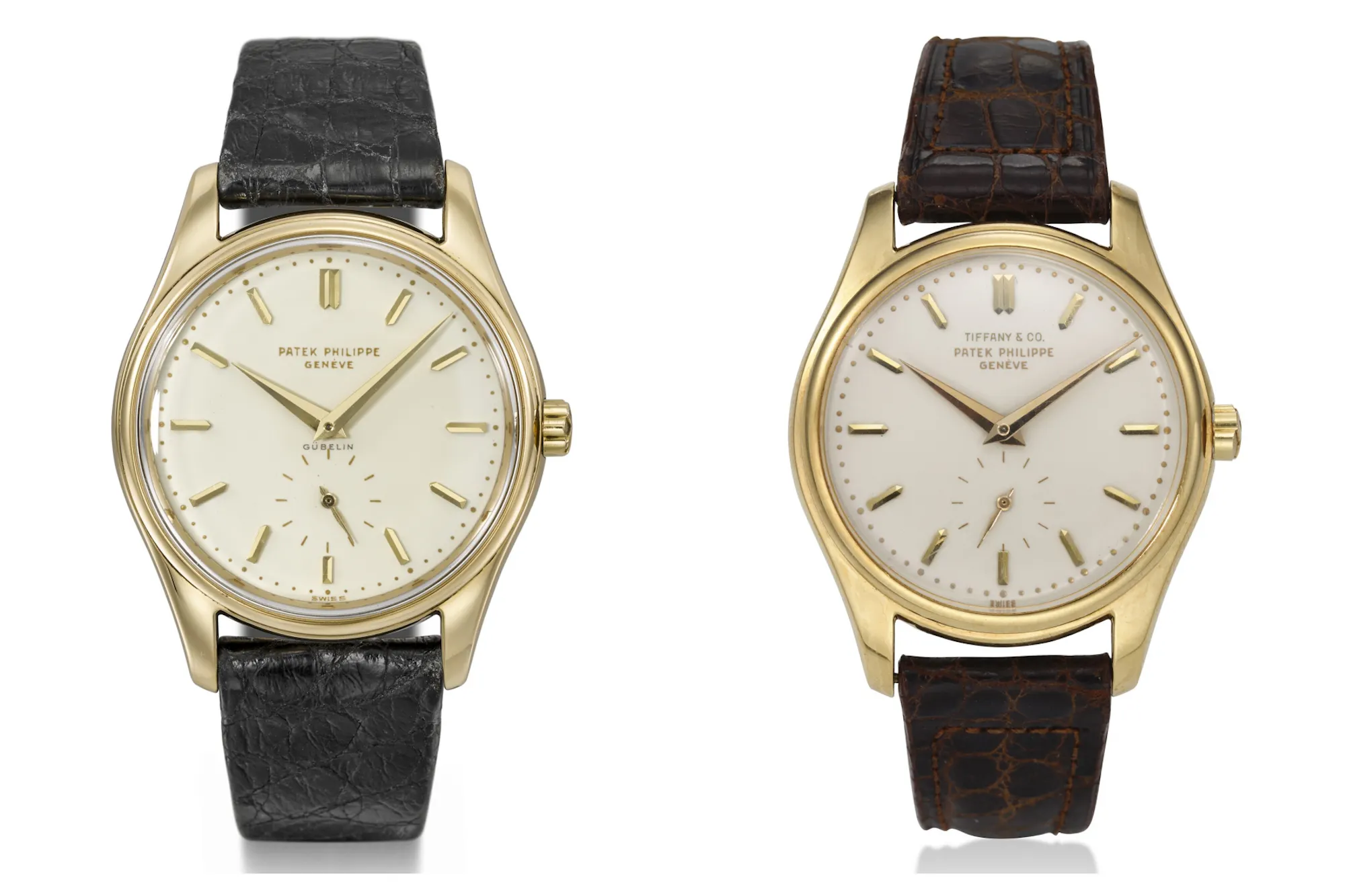
Throughout the 1950s when the 2526 was being produced, the era was replete with a range of eclectic retailers – all with their own respective signature. The index we’ve put together below illustrates the sheer scope of Patek’s international retail network, even in the mid-20th century.
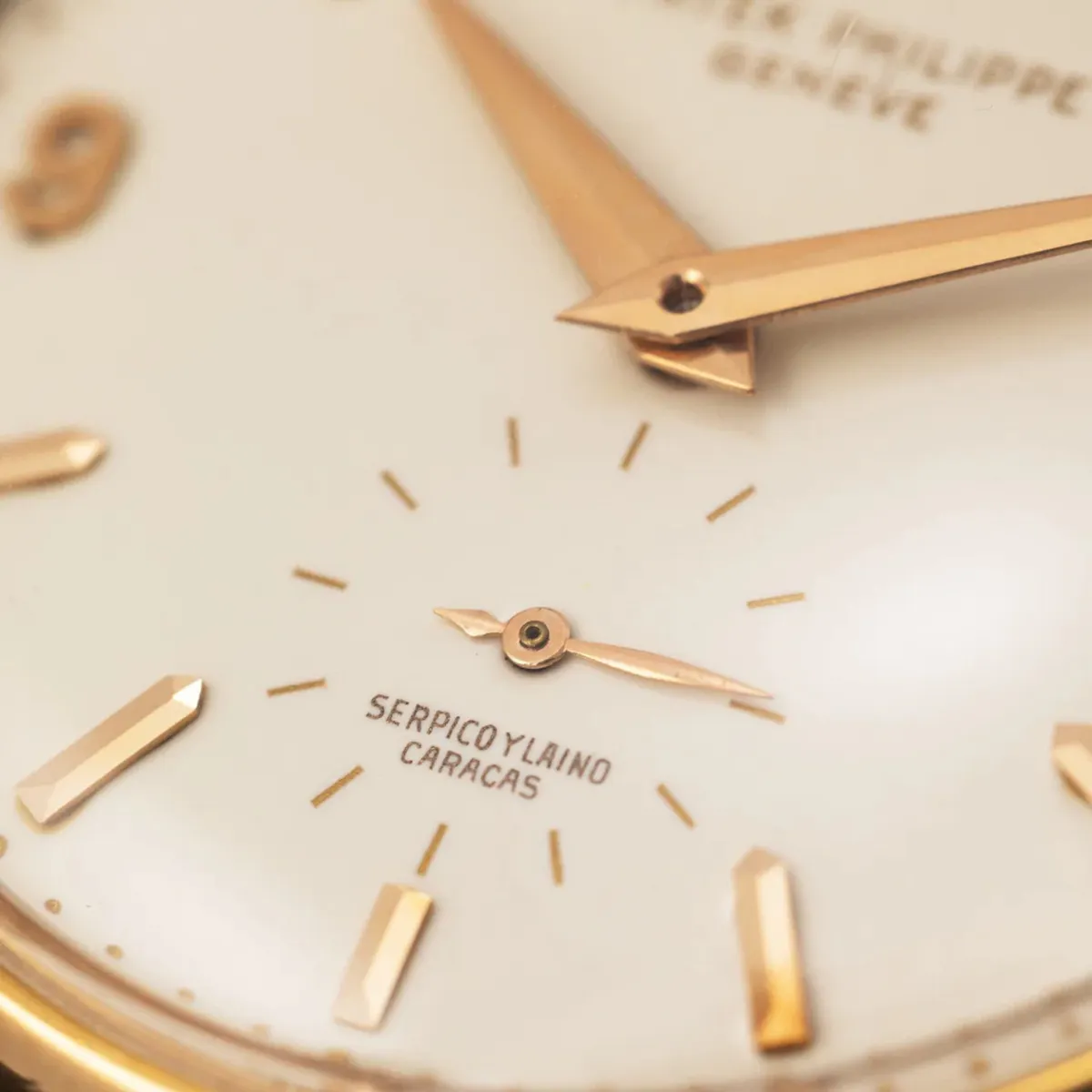
Notably, the largest number of retailer-signed 2526s were in South America: with a notable number going to Serpico Y Laino in Caracas, Venezuela. These Calatravas retailed by Serpico were often ‘triple signed’: meaning they bore the company’s signature not just on the dial, but in the form of hallmarks (engraved “S&L”) on the relevant watch’s case and bracelet as well.
Another interesting quirk is the inconsistent placement of the dial signature. Many of these retailer-signed 2526s had the purveyor’s name positioned directly under the 12 o’clock position; others, inside the small seconds at 6 o’clock. A number, somewhat intriguingly, had the retailer signature beneath the cannon pinion – where part of the name could be obscured depending on the time.
[ Retailer Signature ] | [ Location of Retailer ] | [ Total Auction Appearances (since 1989) ] | [ Period of Production ] |
|---|---|---|---|
Serpico Y Laino Caracas | Venezuela | 31 | 1954-1958 |
Gübelin | Geneva, Switzerland | 16 | 1954-1960 |
Tiffany & Co. | United States | 8 | 1952-1960 |
Freccero | Uruguay | 4 | 1954-1955 |
Hausmann & Co | Rome, Italy | 4 | 1954-1958 |
Cuervo Y Sobrinos | Cuba | 3 | 1955-1956 |
Trucchi | Naples, Italy | 2 | 1955 |
Shreve Crump & Low | United States | 1 | 1955 |
Gobbi Milano | Milan, Italy | 1 | 1954 |
Beyer Switzerland | Zurich, Switzerland | 1 | 1960 |
Given the 2526’s overall production numbers, collectors have documented a varied range of dial executions over the years: including those with Breguet numerals; diamond-set indices; and a mixture of baton indices and Arabic numerals.
The most noteworthy, and certainly distinctive, of these is the so-called ‘Golden Rule’ series. Allegedly commissioned by Lyndon B. Johnson during his tenure as U.S. Senator for Texas, the dials of these 2526s feature an applique, running in a ring between the 7 and 5 o’clock position that reads “do unto others as you would have them do unto you”. An unconfirmed number include a further Tiffany & Co signature, while others do not. In 2024, the most notable example sold for close to US$200,000 at Phillips Geneva.