[001][09.02.23]

With its Hagmann-made case and deep bench of dial-specific collecting options, Patek’s inaugural self-winding minute repeater is more than just a masterclass in fine watchmaking.
Patek’s renowned calendar-chronograph references, like the 1518 and subsequent 2499, have a tendency to overshadow most discussions about the Maison’s track record of complicated, historical watchmaking.
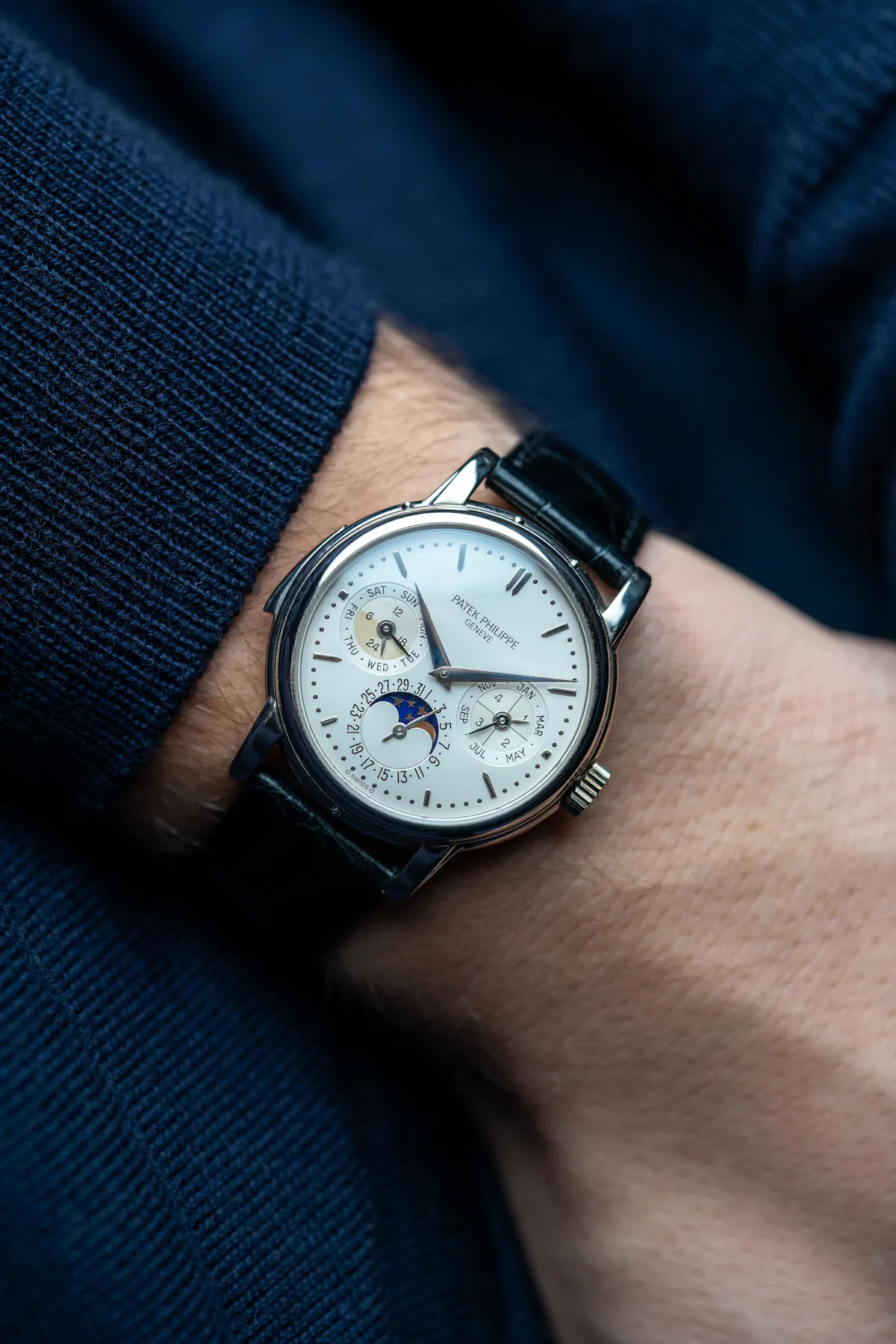
But if we were to extend that conversation out to rare Patek timepieces in the neo-vintage era, it’s as valuable talking about the Ref. 3974: a watch a few historians have referred to as “the epitome of the brand’s technical and design prowess in the late 20th century”.
Yet another of former Patek president Philippe Stern’s strategic passion projects - which he helped bring to marwket merely four years after the arrival of the 3940 and 3970 - the logline you’ll often hear repeated about the 3974 is how it was “the world’s most complicated wristwatch” upon launch.
Released in 1989 as part of wider coordinated celebrations for Patek’s 150th anniversary the 3974 combined a perpetual calendar display, minute repeater, and automatic movement. That technically also made it the world’s first self-winding repeater watch.
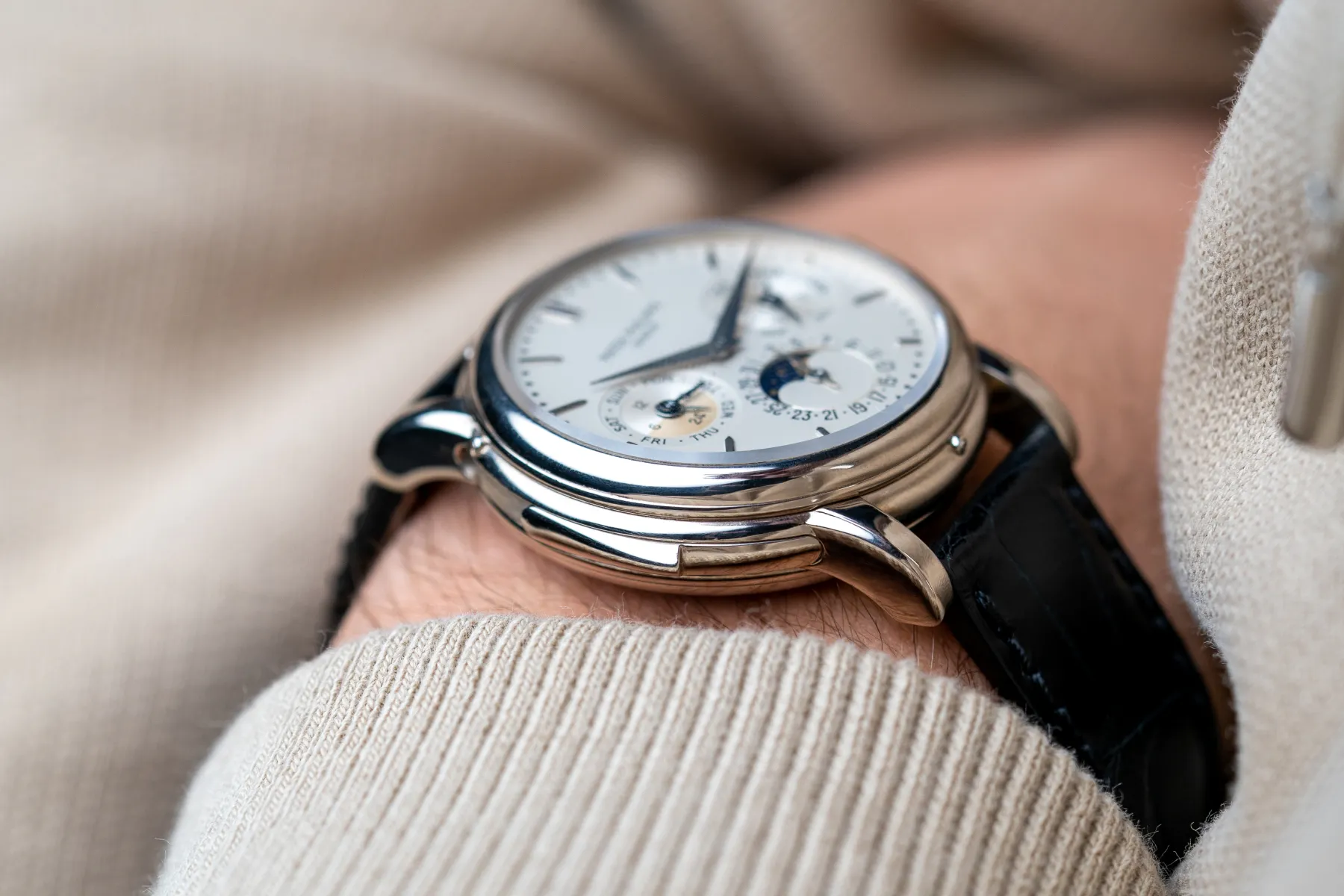
In keeping with the mastery that the brand had demonstrated in its creation of chronograph-calendars, the 3974 did not bring this impressive degree of horological firepower to bear at the cost of wearability. Even today, the 6.8mm thickness of the Calibre R 27 Q makes for a form factor no chunkier than the average modern-day iPhone - a feat Stern’s watchmakers achieved by favouring a ‘sunken’ architecture for the micro-rotor.
Despite the significance of such technical achievements, for many an experienced vintage collector, that’s not even the aspect about the 3974 that is the most appealing. Among fanatical devotees of casemaking (an ancient handcraft imperiled by CAD and, increasingly, generative AI) these calendar-repeater watches are prized for their direct connection to Jean-Pierre Hagmann.
There’s an entire standalone article worth writing about Hagmann’s life and legendary career at some point in the near future. For now, let’s just say that any 3974 Hagmann laid his hands on commands a hefty premium.
As a free agent, the “King of Casemakers” developed some truly iconic housings for more than a dozen renowned Swiss marques (everybody from Franck Muller to Rexhep Rexhepi). At UNEKUAL, it’s his multi-decade tenure working with Patek which gets us most excited.
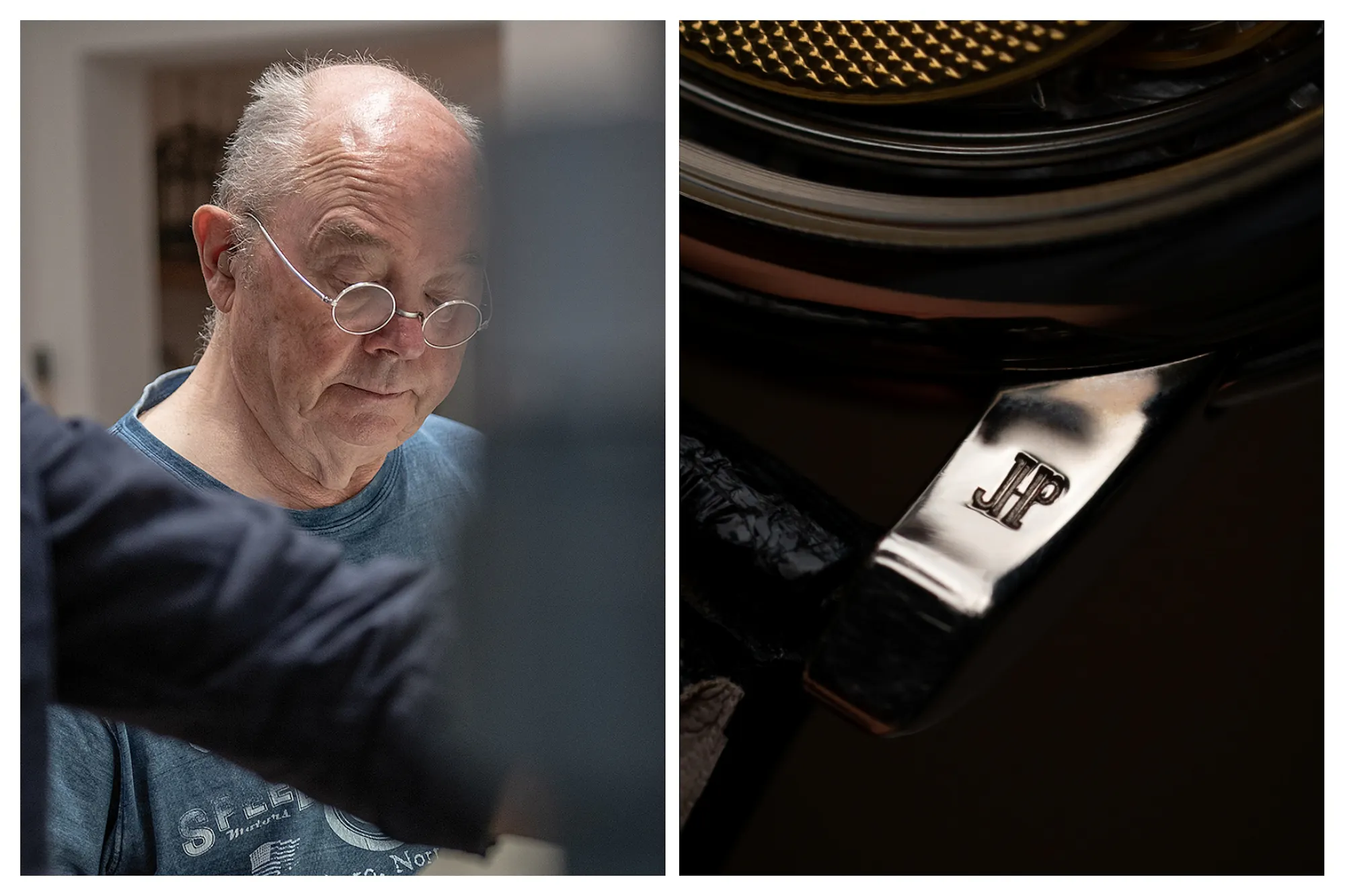
In the early ‘90s, the challenges of building a perpetual calendar that could also house a clear, sonorous chiming mechanism caused the brand to turn to Hagmann. Of 500 minute repeater cases he crafted for Patek, it’s important to remember that only 80 were assigned to the production of the 3974 - making it the rarest chiming reference Hagmann worked on, adjacent to the 5029.
Naturally, as case-obsessed collectors already know, a 3974 with Hagmann provenance can be identified by looking for the “JHP” hallmark: a small, but unmistakable detail that appears beneath the case’s lower right lug. On occasion, it’s also engraved on the inside of the solid caseback: a component that should accompany any meticulously preserved ‘full set’ 3974 purchased in the first instance at retail.
Even accounting for Hagmann’s output of 80 cases, the 3974’s production numbers are exceptionally low. One need only compare a similarly collectible reference dating to the mid-’80s (3940 perchance?) to conclude that the number of well-preserved 3974s in circulation is that much smaller.
Most estimates put the total volume - produced over an 11-year period - at 160 pieces. Tania Edwards over at Collectability concludes 12 of these were produced in white gold; 15 in rose gold; 20 in platinum; with the vast majority in yellow gold. The latter metal is often seen, in auction catalogues and marketing material, fitted with a silvered dial: in possession of Patek’s quintessentially clean combination of dauphine-style hands and applied baton markers.
[ METAL ] | [ White Gold ] | [ Rose Gold ] | [ Platinum ] | [ Yellow Gold ] |
|---|---|---|---|---|
NUMBER OF UNITS | 12 | 15 | 20 | ~113 |
CASEMAKER | Hagmann | Hagmann | Hagmann | Hagmann/Ateliers Réunis |
Despite its ubiquity, the silvered dial isn’t the only option Patek used over the lifespan of the 3974. In the process of researching this article alone, I noted about half a dozen variations (by no means exhaustive!) which are as follows:
Of these, the lacquered black dial fitted with a combination of dot indexes and Breguet numerals is seldom seen - made especially, as indicated by its unusual ‘Calatrava Cross’ logo at 12 o’clock, to commemorate Patek’s 150th anniversary.
The presence of this particular special-order dial significantly impacts the overall desirability of any given 3974 - even if it’s among the 100+ examples Patek cased up in yellow gold.
To date, Phillips is the only auction house to offer a 3974 with the rare ‘Calatrava Cross’ logo dial publicly: firstly, in Geneva in 2016; then again in Hong Kong in 2022. By the time of its second appearance at auction, it had realised a value of $2,498,239 - up almost 50% within six years.
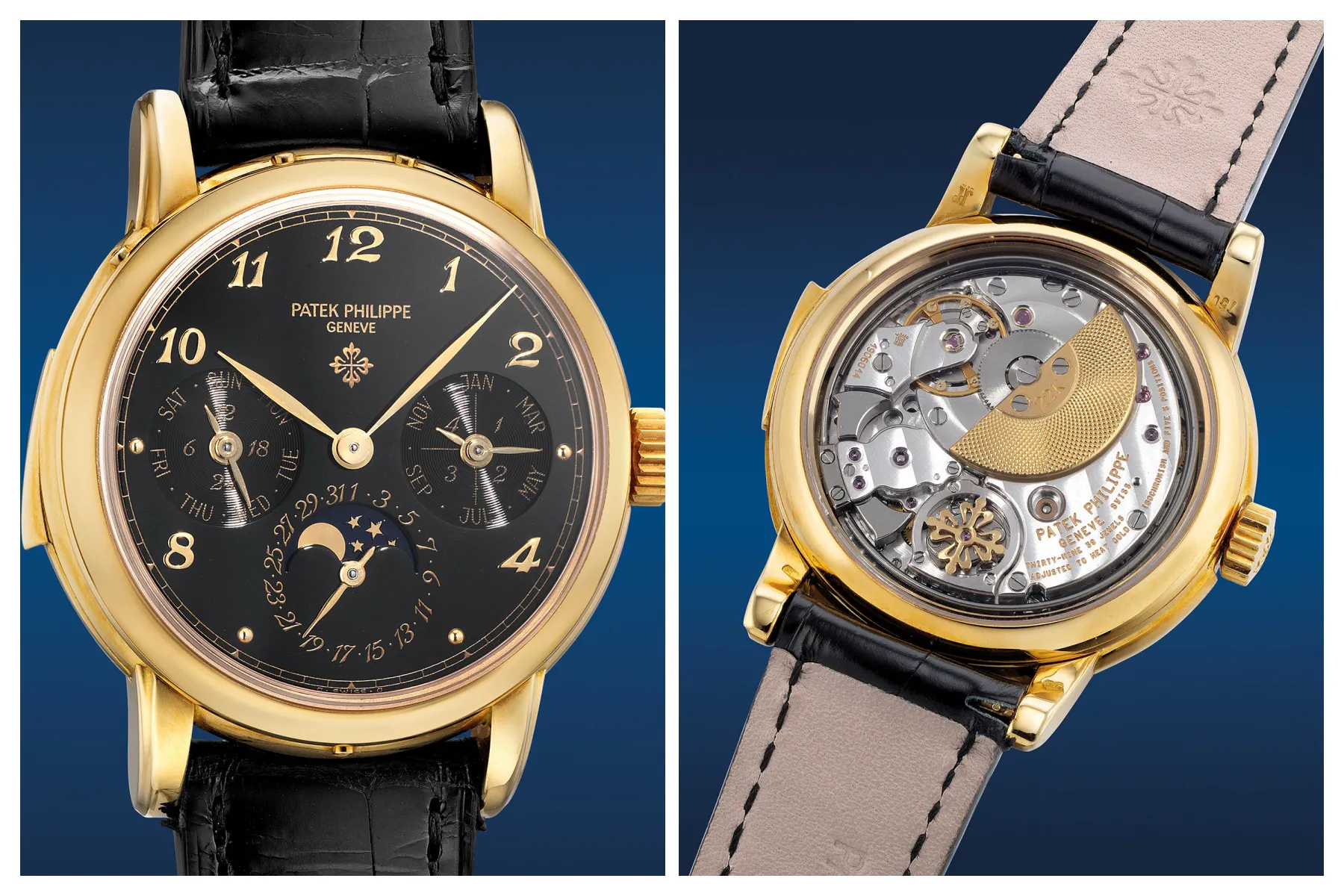
This one insane tidbit shouldn’t distract from the fact that the 3974 is the epitome of horological excellence - regardless of the exact dial configuration favoured by individual collectors. Its triple-register display and 36mm size evoke the well-ordered elegance of the 3940; and much like that watch, the 3974 was among the first important complications to benefit from Patek’s then-new approach to modern serialised watchmaking.
The fruits of that labour - be it superior isochronism or a sturdy exhibition caseback through which you can actually enjoy the minute repeater - all coalesce into something that’s collectible, and moreover wearable. How many vintage chiming watches can claim the same?