[001][09.04.26]
Cloisonné enamel maps. A movement signed with the mark of its groundbreaking maker. Fewer than 60 examples ever produced. If we’re talking rare vintage Patek, the Ref. 2523 is certifiably a unicorn.
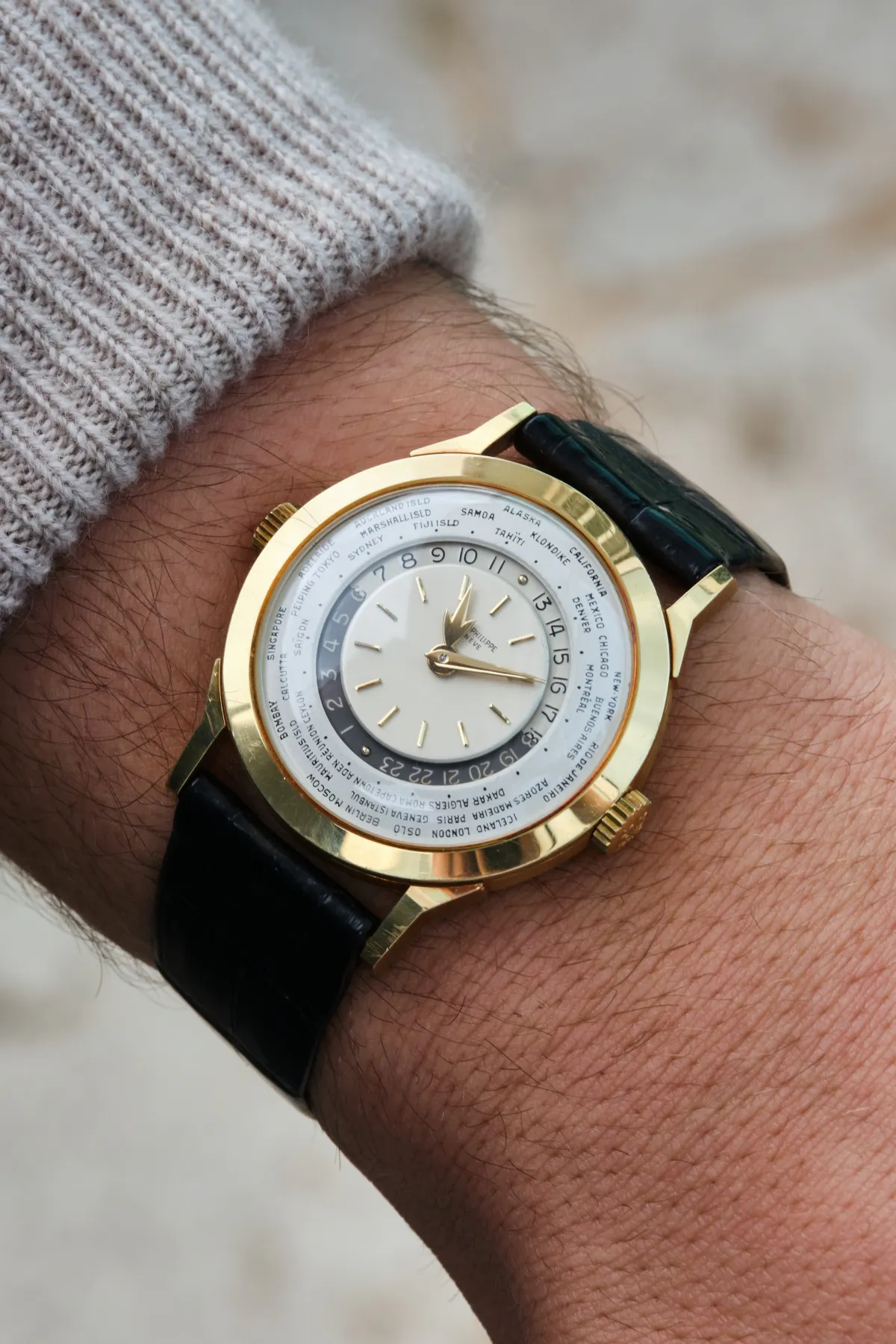
Patek Philippe has long been famous for the world time complication, a fascinating invention which has allowed its wearers to easily check the time in a plethora of different cities at any one moment. Over the last 90 years or so, this complication has grown into an iconic part of the ever-expanding Patek collection, presenting itself in an array of different styles and formats.
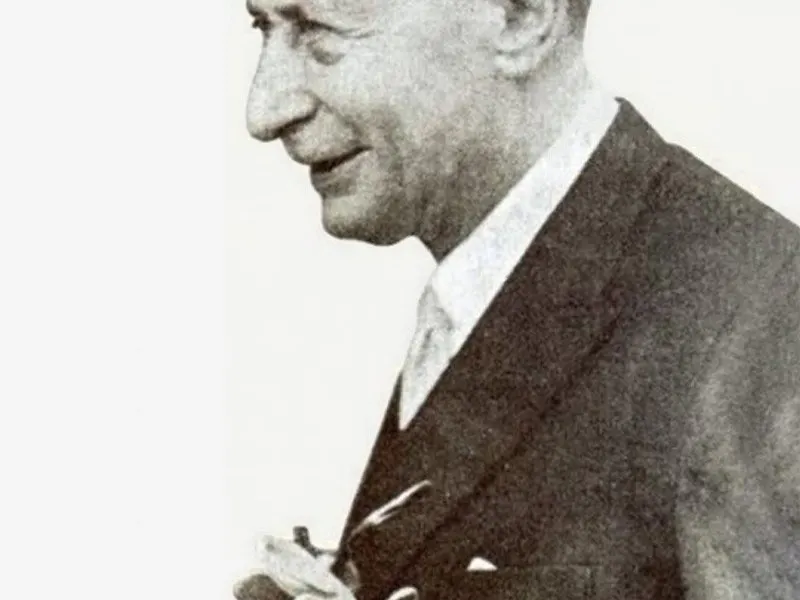
The world time complication is intractably associated with Patek, despite being produced by other manufacturers as well. Yet it wasn’t actually Patek that invented the complication – that achievement belongs to a gentleman named Louis Cottier, a Swiss watchmaker born in 1894 to a watchmaker father in Geneva. Cottier studied at Ecole d’Horologie in Geneva, before going on to work for Jaeger. Fun fact: he was a peer during that time of Edouard Wenger’s, who went on to become one of the most important casemakers for Patek Philippe, identified by the ‘Key Number 1’ hallmark.
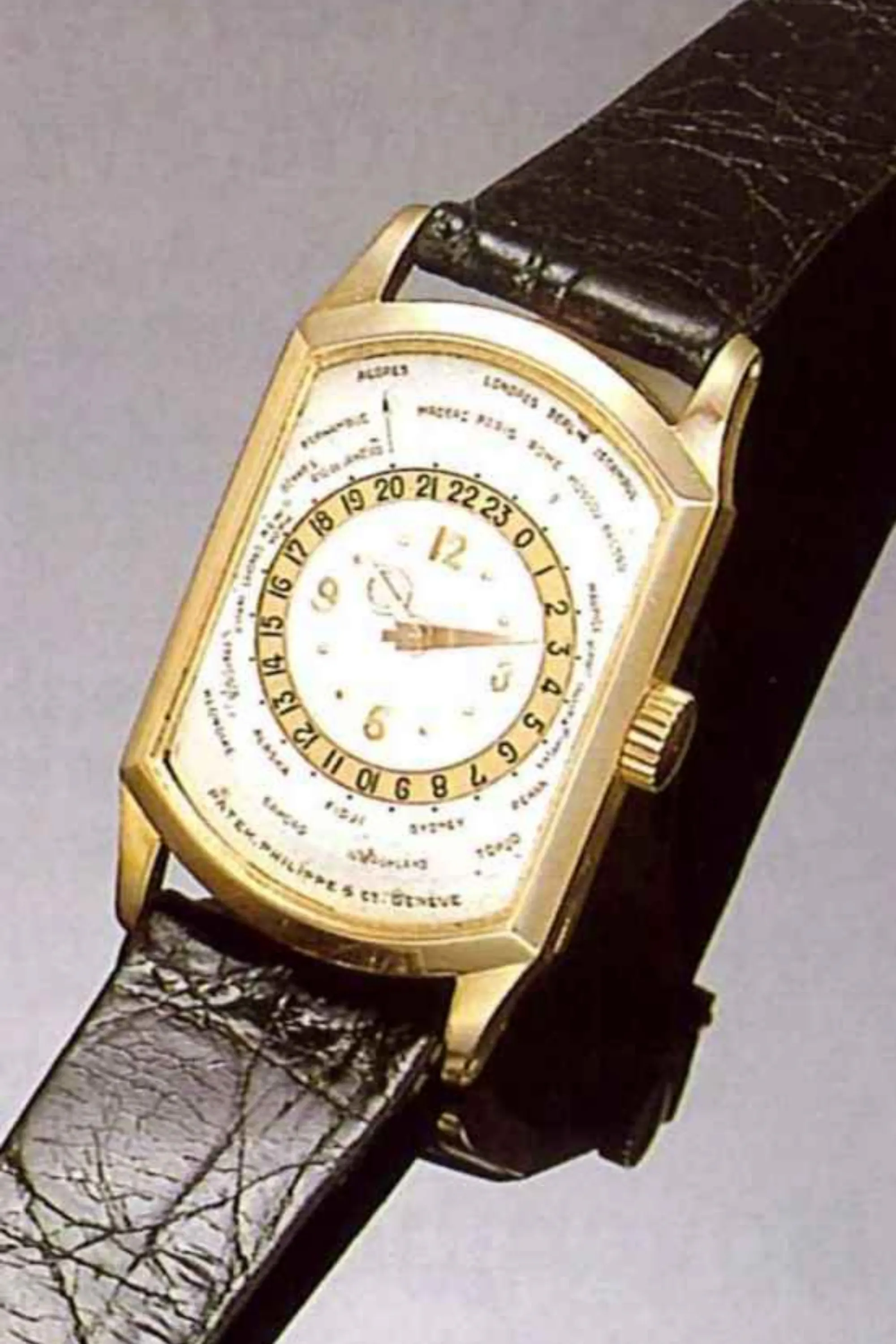
In 1931, Cottier lost his position at Jaeger. Amid an extremely bleak job market, he made the fateful decision to set up his own workshop, on Rue Vautier in Carouge. It was that very year, in this very workshop, that Cottier invented the world time system and subsequently patented it under patent no. 270085. It was an incredibly personal milestone, not least because Cottier’s own father had tried (unsuccessfully) to perfect the complication to no avail.
Throughout the 1930s, Cottier approached a variety of watchmakers/manufacturers with the world time complication in order for them to incorporate it into their watches. In reality however, it would take until 1937 for the innovation to make its way onto a Patek Philippe wristwatch – Reference 515 HU, a square shaped pink gold World Time. Just four of these were made, but the scarcity didn't matter. Louis Cottier had managed to get his foot in the door.
In 1950, after a variety of scarcely produced references from Patek, Cottier updated the world time movement he had created with a rotatable outer city disc; necessitating the addition of a second crown to the opposite side of the movement. This became the foundation for calibre 12’’400, a highly praised 12-ligne (i.e. 27mm) calibre, which became the engine of the historic reference 2523.
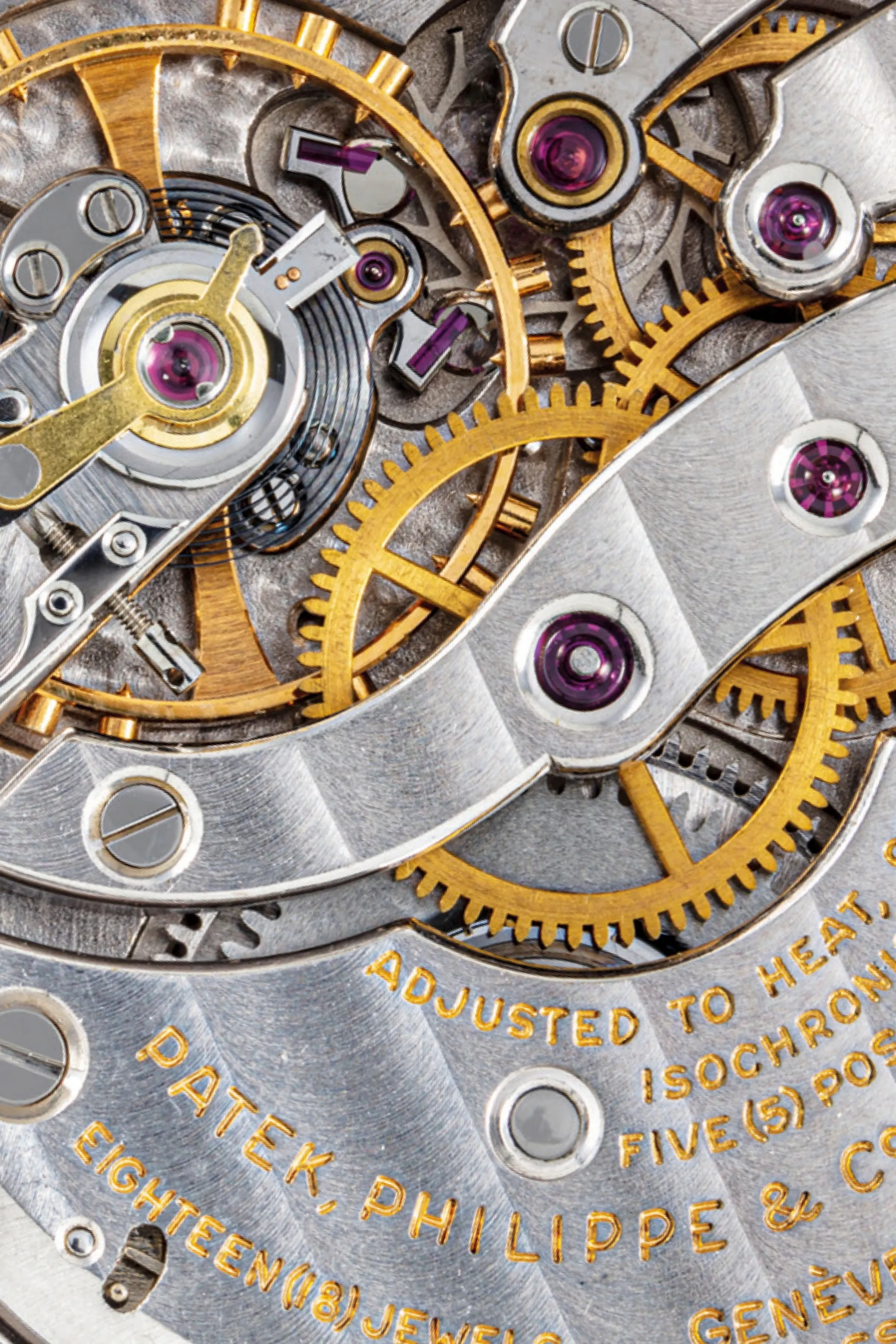
Production of the 2523 was extremely scarce, with only around 26-36 examples made across a 4-year period. The later 2523/1 was even rarer, with only around 20 examples thought to have been made from 1957 to 1968 across both its first and second series.
Cases for the 2523 and 2523/1 were produced by Antoine Gerlach (key number 4), renowned for his angular style of casemaking. These cases were composed in three pieces, with snap-on casebacks and sharp soldered lugs. Interestingly, lug placement changed throughout production of the 2523 and then again with 2523/1’s first and second series.
The crowns also changed throughout production. Originally produced by Boninchi Frères, a Geneva based crownmaker, the crowns on the 2523 were plain and polished. On the 2523/1 however, the crowns feature the Calatrava Cross. It’s unclear if they were still made by Boninchi Frères at this point.
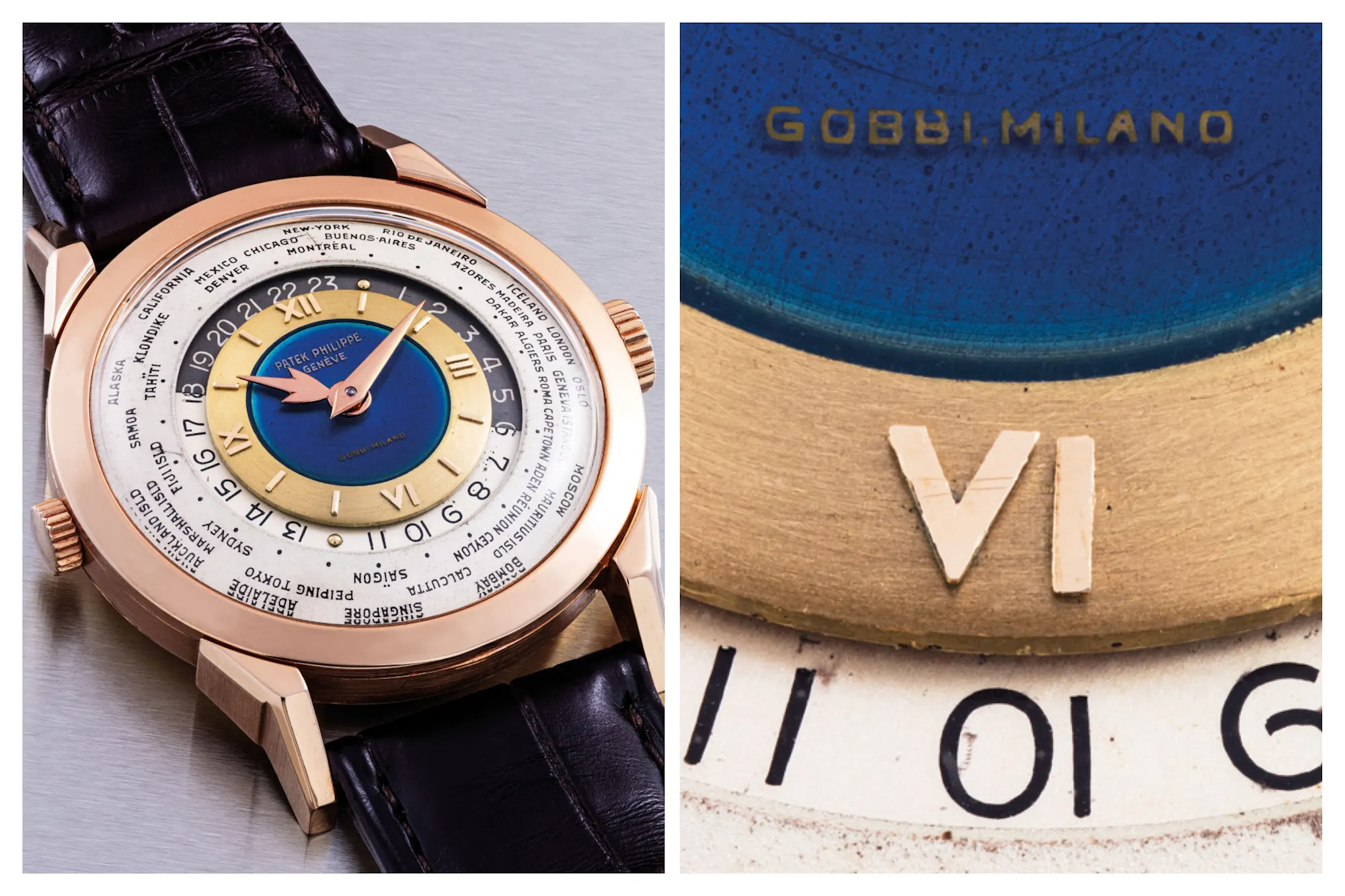
Cases for the 2523 were produced in yellow, pink and white gold, with yellow gold being the most common. Pink gold is extremely rare, with only three appearances at auction since 1989, two of them from the same watch –A Gobbi Milano signed 2523 with a translucent blue enamel dial, most recently in 2019 becoming the most expensive wristwatch ever sold in Asia. No pink gold examples with cloisonné dials are yet to surface at auction, but there is one present in the Patek Philippe Museum. White gold is the rarest metal for the 2523, with only one example produced (now also part of the museum collection in Geneva).
[ Metal ] | [ Units manufactured ] | [ Auction appearances (since 1989) ] | [ Period of manufacture ] |
|---|---|---|---|
Yellow gold | 18 | 18 | 1953-1957 |
Pink gold | 7 | 3 | 1953-1956 |
White gold | 1 | 1 | 1957 |
As for the 2523/1, cases were made exclusively in pink and yellow gold. First series examples are only known in yellow gold, whilst a handful of second series examples are known to have been produced in pink gold. That said, the latter remain an extremely elusive quantity, with only one having appeared at auction since 1989.
[ Metal ] | [ Units manufactured ] | [ Auction appearances (since 1989) ] | [ Period of manufacture ] |
|---|---|---|---|
Yellow gold | ~12 | 14 | 1957-1968 |
Pink gold | ~8 | 1 | 1966 |
Dials were produced by Stern Frères, with the hands made by Louis Cottier himself. The movement numbers are often seen engraved into each component of the dial, leaving absolutely no room for speculation.
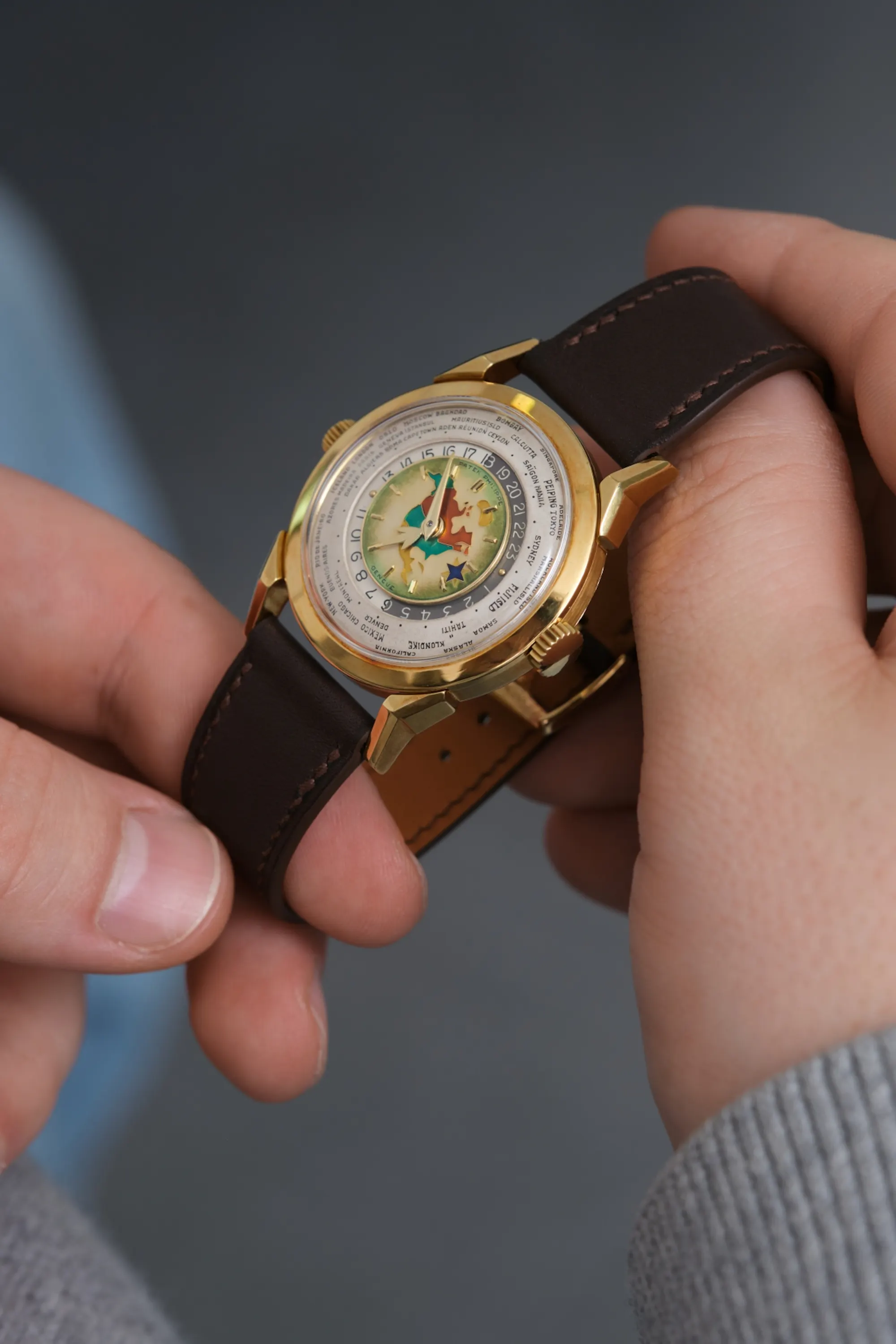
A variety of different dials were produced across both the 2523 and 2523/1, with the cloisonné enamel (world maps) undeniably the most desirable and famous. These works of art were completed by master enamellers like Marguerite Koch, who worked for Stern Frères as the company famously kept their craft alive during the mid to late 1900s. This challenging skill was therefore scarcely seen on watches, with each and every one of them being unique in its own artistic way.
On top of this, they were produced using enamel powder containing chemicals like chrome and lead, which have since been banned due to the associated health risks. There’s no doubt that the translucent hue of the enamel has a certain charm that can’t quite be replicated in the modern age.
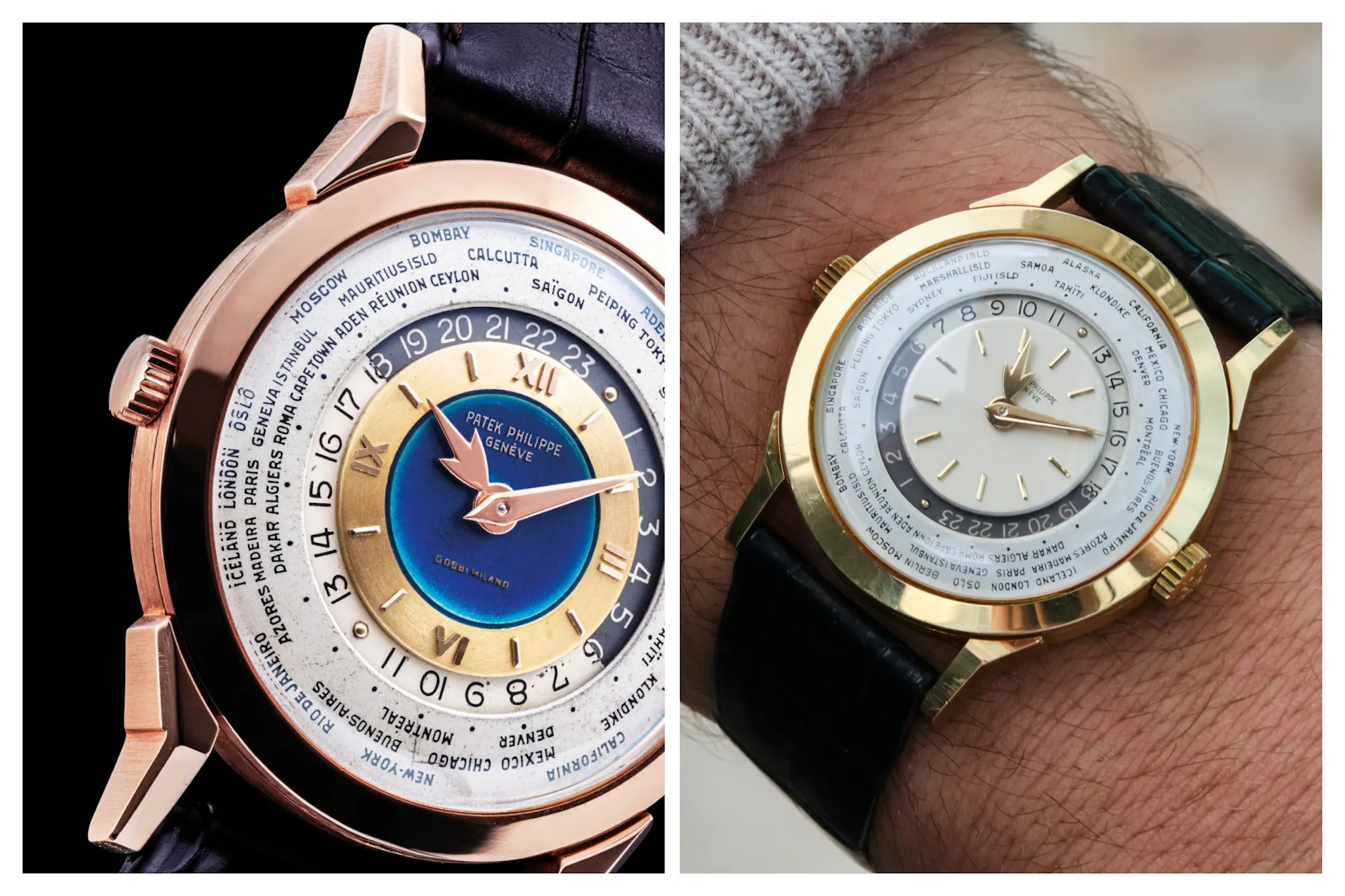
Dial variants on the 2523 were as follows:
The cloissoné dials depicted cartography of various corners of the world: either Eurasia, North America or South America. Since 1989, examples depicting Eurasia and North America have appeared at auction, but notably not South America. One of the four examples of the North America map is featured on the white gold 2523, movement number 722'707.
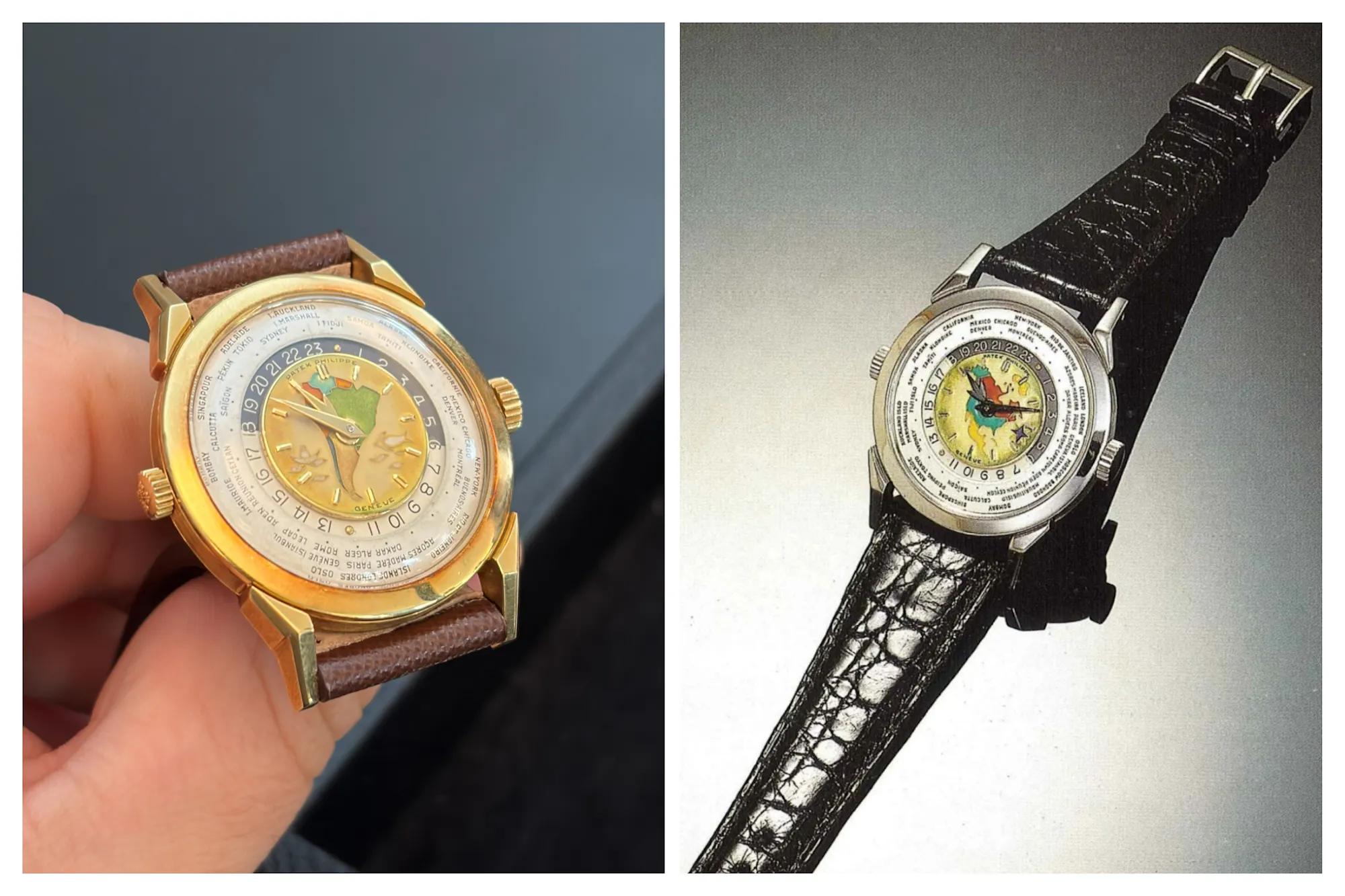
[ Dial ] | [ Units manufactured ] | [ Auction appearances (since 1989) ] | [ Movement numbers ] | [ Period of manufacture ] |
|---|---|---|---|---|
Eurasia | 3 | 4 |
| 1953 |
North America | 6 | 6 |
| 1953-1957 |
South America | 3 | 0 | N/A | N/A |
Blue enamel | 5 | 4 |
| 1953 |
Guilloché (YG) | ~7 | 6 |
| 1953 |
Guilloché (PG) | ~2 | 1 | 722'712 | 1953 |
Dial variants on the 2523/1 were as follows:
The plain silvered dial was seen on the first series of the 2523/1, whilst the guilloché iteration was seen on the second series of the 2523/1. The second series also saw a change in the outer city ring – up until this point the outer city ring was always matte with printed typography, but here it was metallic with a brushed finish and hard enamel typography. Each of the city names are hand engraved then filled with enamel powder and heated to a high temperature, allowing them to rise and set. For the full technique, check out our article on hard enameling.
[ Dial ] | [ Units manufactured ] | [ Auction appearances (since 1989) ] | [ Movement numbers ] | [ Period of manufacture ] |
|---|---|---|---|---|
Plain silvered | ~10 | 9 |
| 1957-1964 |
Guilloché silvered | ~10 | 6 |
| 1960-1968 |
Retailer signatures were also present on both the 2523 and 2523/1, albeit a very rare sighting, with only three confirmed examples having appeared at auction since 1989.
[ Reference ] | [ Retailer ] | [ Units manufactured ] | [ Auction appearances (since 1989) ] | [ Movement number ] |
|---|---|---|---|---|
2523 | Fab Suisse | ~1 | 2 | 722'702 |
2523 | Gobbi Milano | ~1 | 2 | 722'715 |
2523/1 | Tiffany & Co | ~1 | 3 | 724'302 |
The 2523 and 2523/1 are both incredible watches, and the level of craftsmanship involved is no exaggeration. From the hand-finished movements to the unique and painstakingly made cloisonné dials present on many examples, it’s no surprise that across both references only around 50 odd watches are thought to have been cased up and sold. Cottier himself actually insisted on assembling each and every one of the units, as noted by the frequent presence of his monogram on the rear side of one of the dial discs.
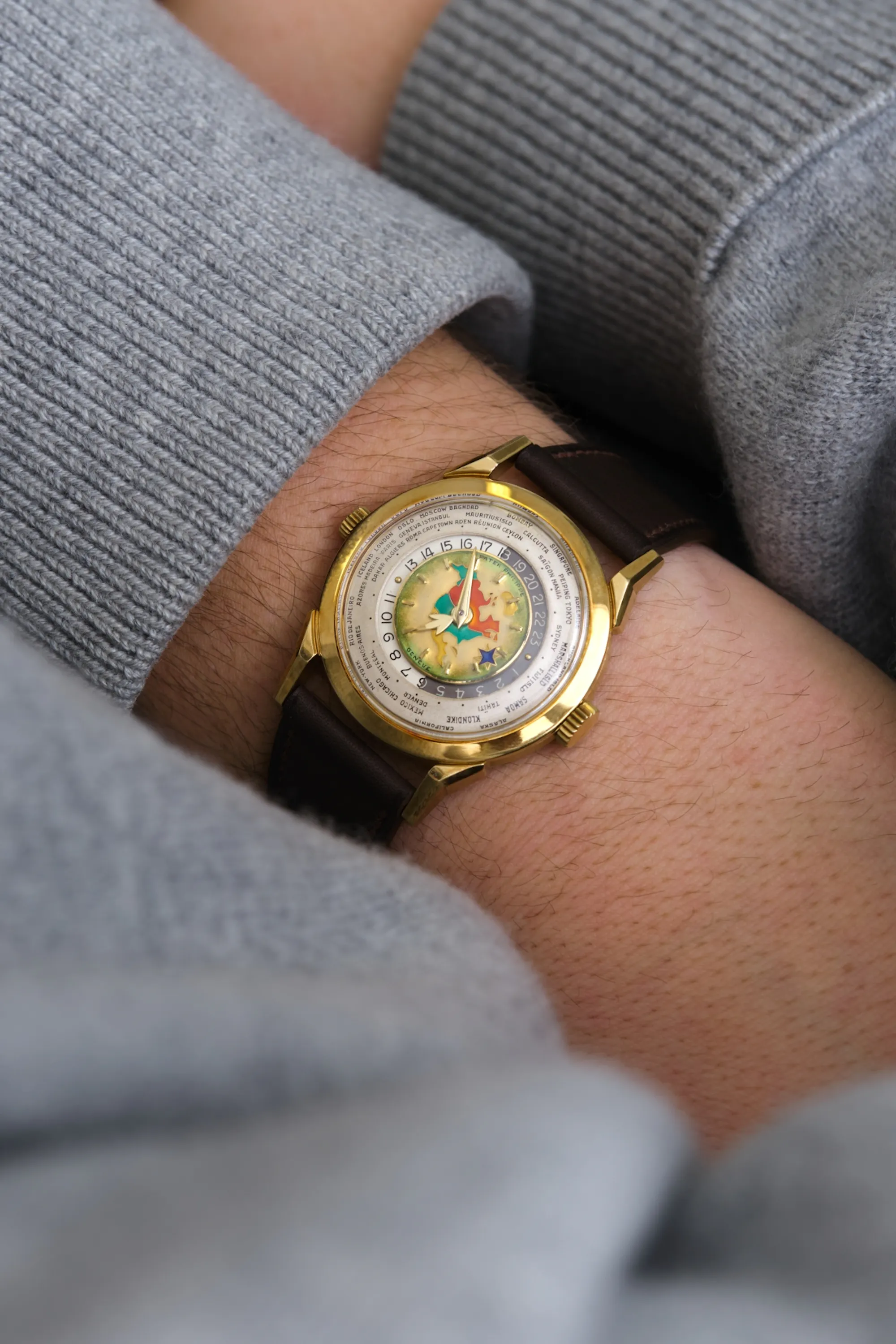
What really distinguishes this reference however, is how it perfectly bridges the gap between the earliest Patek Philippe worldtimers and those we see in the brand’s contemporary line-up. At a diameter of 36.5mm it remains wearable for modern tastes – especially given how smaller case sizes are once again back in vogue. Production numbers are small enough that each example of the 2523 remains a unicorn, yet sufficient to allow for meaningful variation and an increasing amount of scholarship. If you’ve got the cash, the hunt is still well and truly on.
UNEKUAL is proud to have recently sourced and sold an exceptional example of the Ref. 2523 – with ‘North America’ map in cloisonné enamel. Discover all current stock, of historic and neo-vintage provenance, at our webshop.