[001][13.02.26]

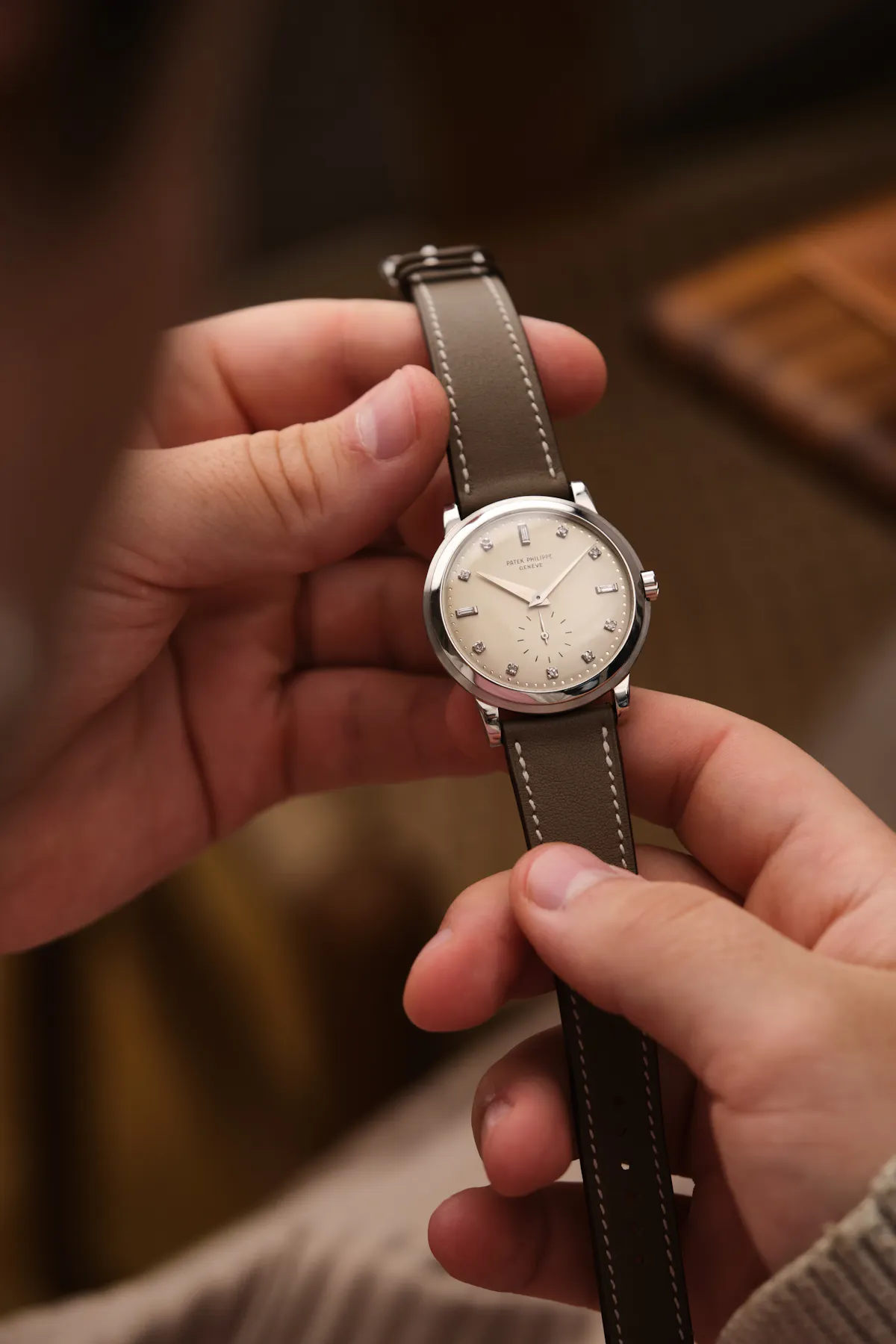
Powered by one of the Swiss watch industry’s most beautiful early self-winding movements; with a design that’s slim, rare and distinctive from the iconic 2526, the Ref. 2552 is an elegant and highly collectible ‘Calatrava’ from the golden age of dress watches.
It’s no mystery that the automatic movement as we know it today - a self-winding mechanism powered by the motion of a full rotor - was invented by Rolex. The year was 1931, and the revolutionary “Perpetual” took the watch world by storm, finally offering a reliable and solid watch movement that did not require manual winding.
Well-aware of the magnitude of this innovation, the brand filed a 20-year patent on the design, paving the way for a global market domination that indelibly associated the Rolex name with the automatic movement itself. As a side effect, however, the patent granted competitors two decades of time to design, test and refine their own full rotor movements - and Patek Philippe was, without a doubt, the one company that did it best.
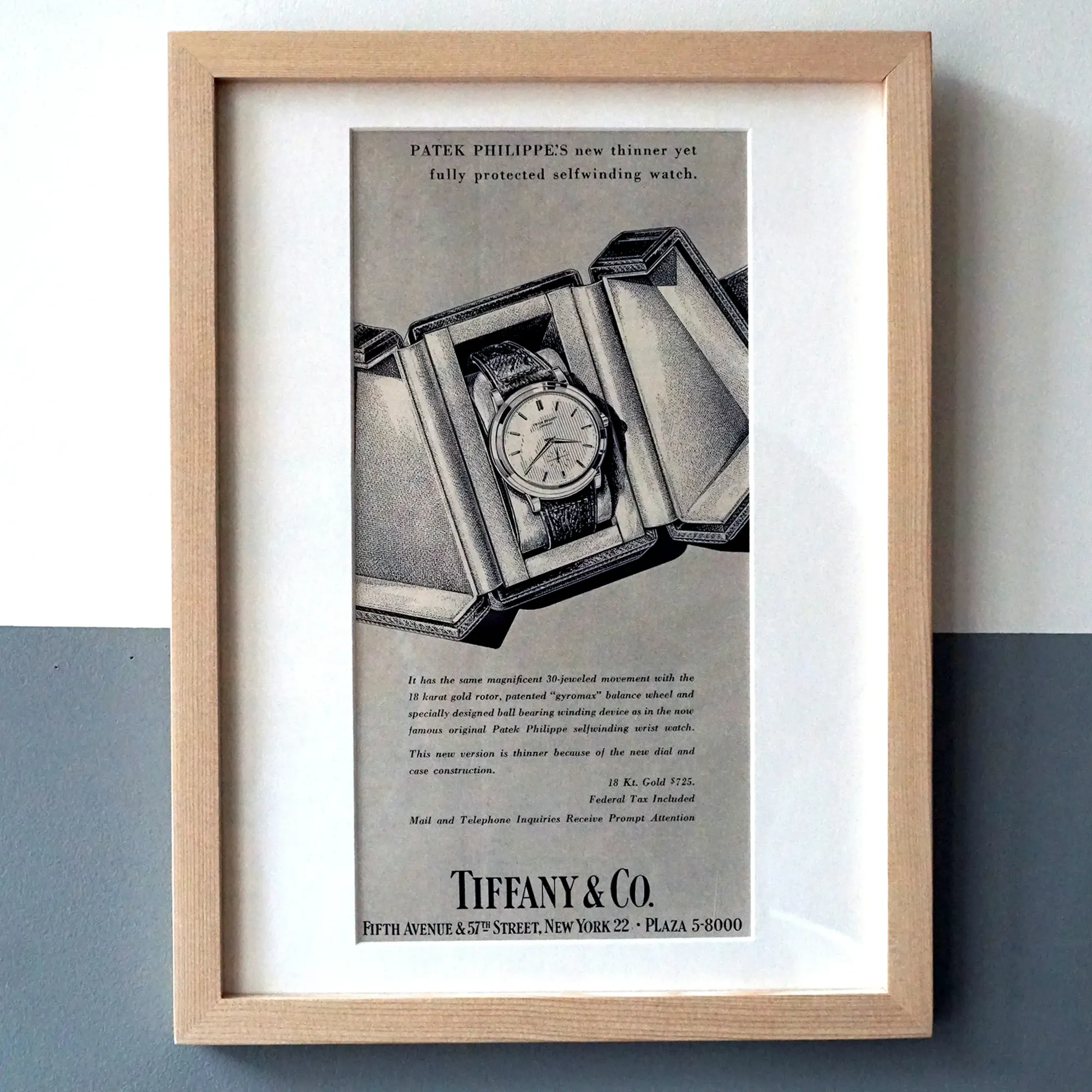
When it made its commercial debut in 1953 - merely two years after the patent expired - Patek Philippe’s caliber 12-600 AT was far superior to any comparable movement, as much as it’s still regarded by many as the finest automatic caliber in history. Featuring a heavy solid gold rotor, an innovative balance wheel (later named the Gyromax), and showing the state-of-the-art finishing one would expect from Patek, it was a work of horological art - and powered one of the maison’s most iconic references, the 2526.
Now, while the reference has gained a cult status among collectors thanks to its timeless lines, historical relevance and attractive detail - such as the enamel dial fitted on the first series - it did have a hard time breaching into the hearts of customers back in the Fifties. The overall thickness required to house an automatic movement (and in a waterproof case no less), paired to the well-known case design with prominent lugs, placed it in a different league from the sleek hand-wound Calatravas Patek was known for.
In an aim to address this issue, the Stern family resorted to Wenger requesting a new dress for their ultimate movement. The casemaker - who had also been entrusted with the creation of cases for the second series 2499 - came up with a design that was radically different from the 2526: although the diameter remained unchanged at 36 millimeters, a wide, stepped bezel and visibly downturned lugs allowed the reference 2552 to sit closer to the wrist, offering a dressier and much requested alternative to its older sibling when it entered the market in 1954. The distinctive bezel quickly earned it the nickname of “Disco Volante”, Italian for “flying saucer”.
Over its seven years production run, there was basically no evolution in the design - possibly a proof that it was almost perfect in the first place. All cases were crafted by Wenger, as testified by the Geneva Key #1 stamped inside the caseback. Interestingly, and despite being considerably slimmer than the 2526, the reference was still water resistant thanks to the screw-down caseback: the instantly recognisable “double P” crown is a nod to this feature. The dials, all manufactured by Stern Fréres, were not enameled but silvered, with applied baton markers and dauphine hands matching the case color. The running seconds track at six o’ clock and the Patek Philippe signature at twelve, printed in raised enamel, add balance and depth.
All in all, less than 100 pieces per year were made, for an estimated total production of 650 pieces in the four precious metals. As it is often the case, however, the distribution across case materials was definitely not even: yellow gold accounts for the vast majority of production (sources suggest roughly 580 pieces were made), with white and pink gold examples being far less common. But the rarest metal for the reference 2552 is, without a doubt, platinum: currently, a mere eight examples are known to the market - four fitted with a regular baton dial, the other four boasting a spectacular diamond-set dial, resulting in one of the most attractive Patek Philippe watches ever.