[001][16.09.25]
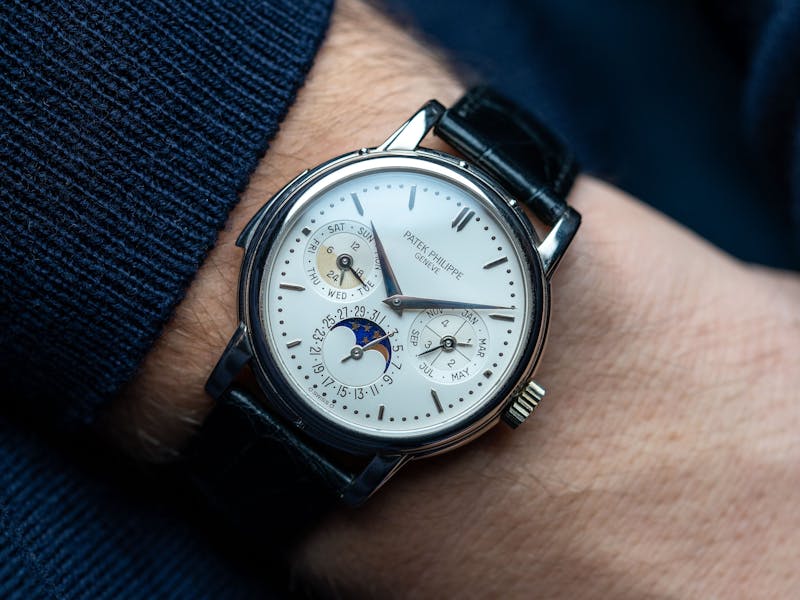
The historical relevance and collectability of the Patek Philippe 1463 is not up for debate: clearly, a host of consistently rising quotations for the reference indicate as much. But among the several hundred watches produced, what are ones you should look out for — assuming they even resurface on the market? We reveal all below.
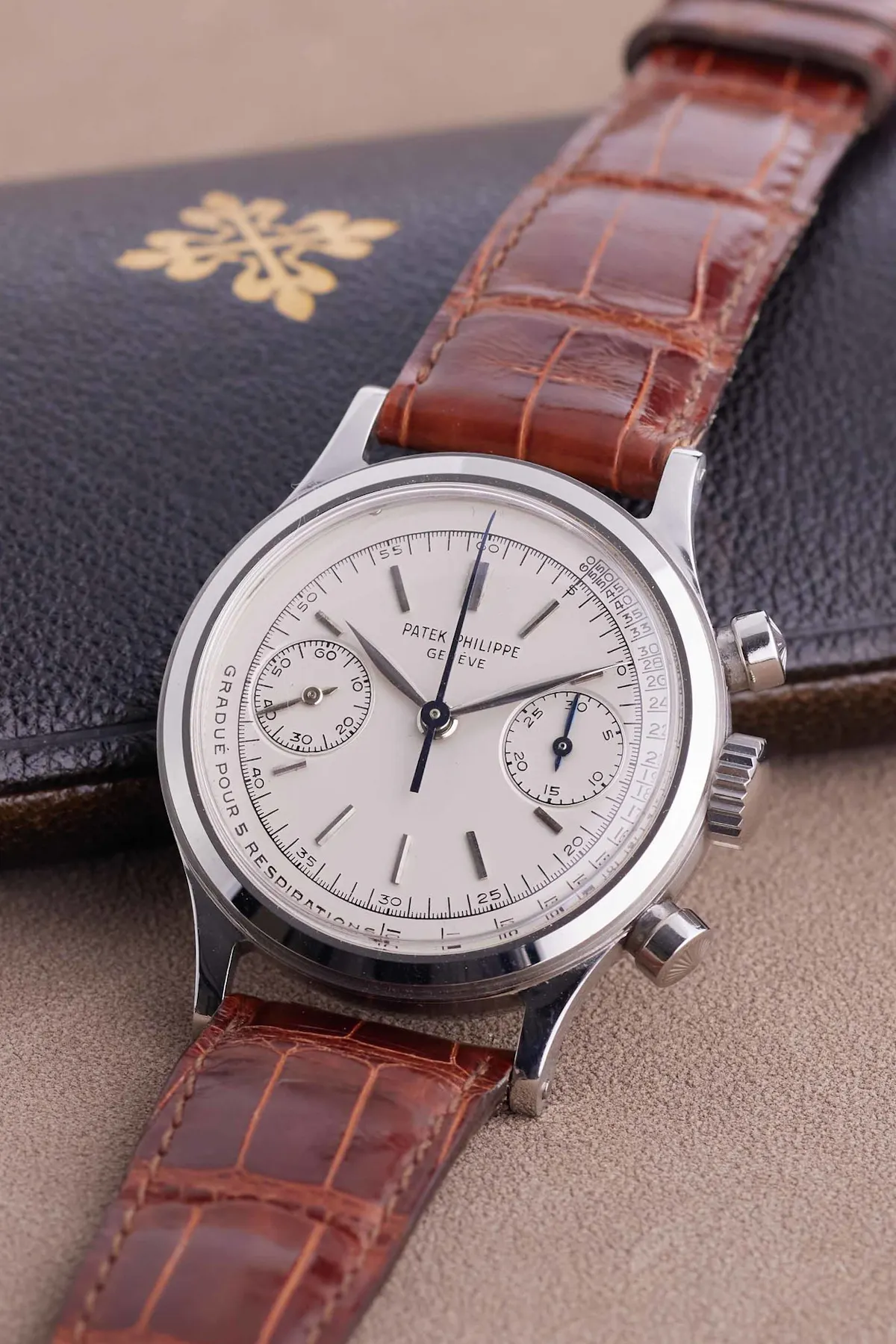
With a production run spanning two and a half decades, and total numbers sitting between 700 and 750 units across steel, yellow gold and rose gold, the Patek Philippe Ref. 1463 is certainly not the rarest bird in the maison’s history. In fact, it comfortably outnumbers most complicated references of its era. Yet, its historical importance cannot be understated, nor its continued appeal among collectors.
A simple explanation definitely has something to do with its features: upon its inception in 1940, the reference was Patek Philippe’s first ever waterproof chronograph, thanks to the instantly recognisable Frères Borgel case incorporating a screw-down back, downturned lugs and — most importantly — thick rounded pushers, which earned it the self-referential moniker Tasti Tondi, Italian for “round pushers”.
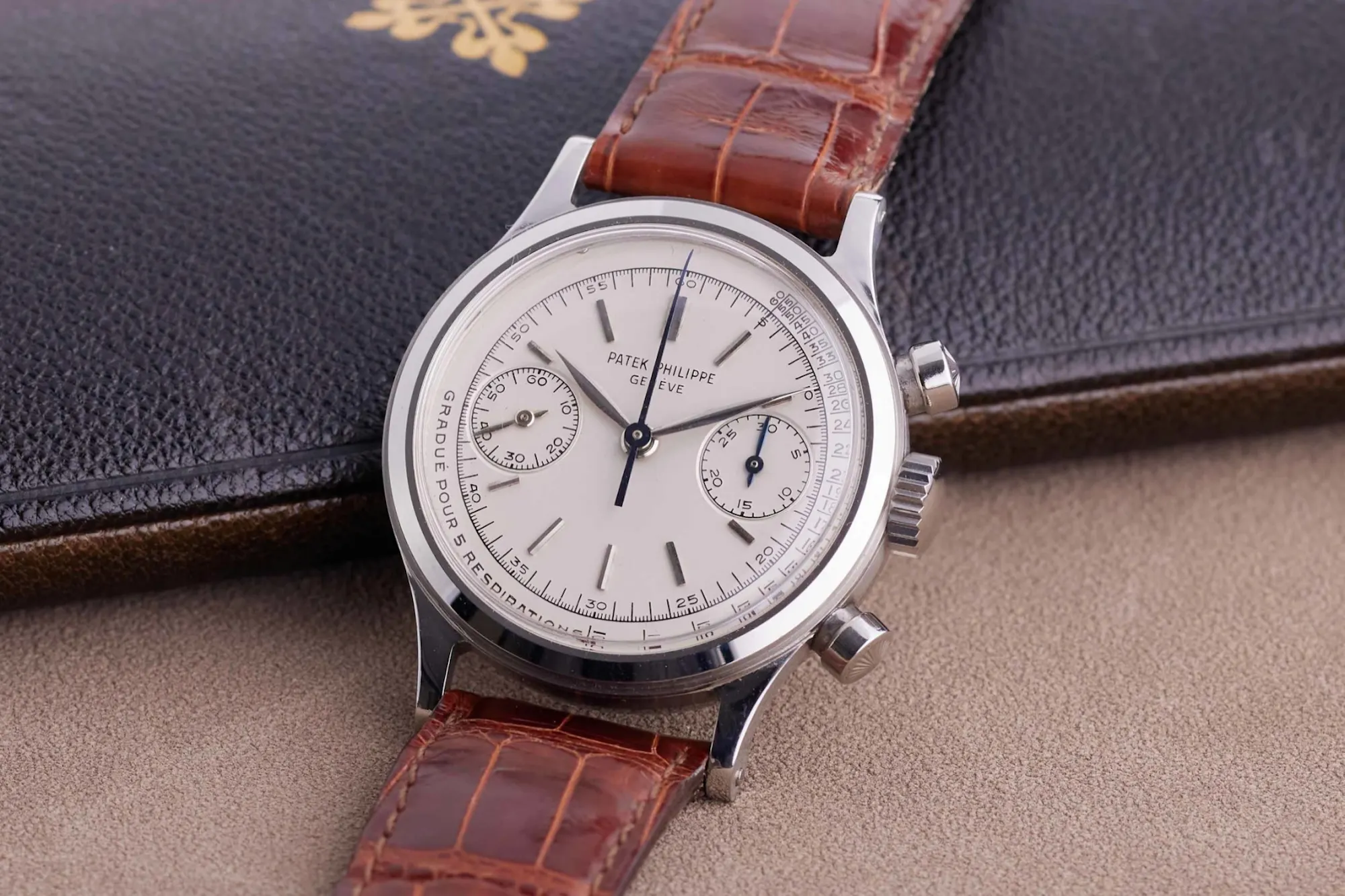
But beyond the spec sheet, there’s much more to the reference. A long permanence in catalogs, matched to generous production figures (by the standard of the 1940s) means that the 1463 comes in an impressive array of configurations: some exceedingly rare, some unique, some almost lost to the passage of history. Below, we’re breaking down five such examples.
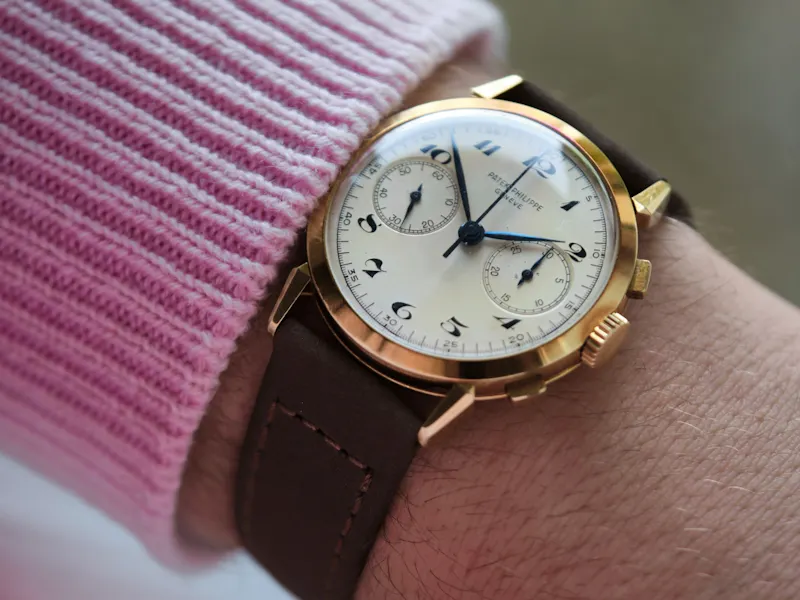
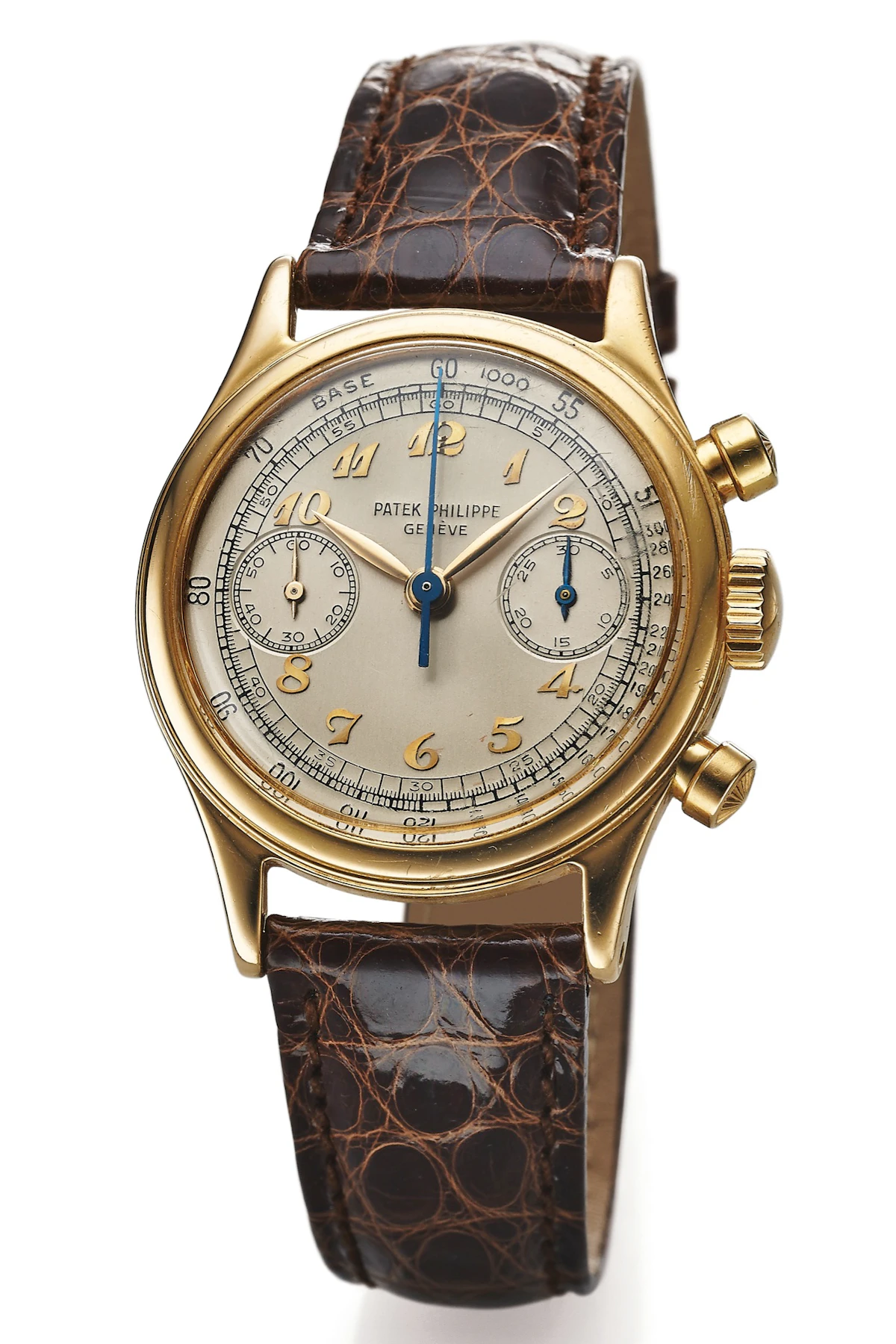
What could seem like a stark contrast at first — pairing elegantly ornate Breguet numerals with a minimal, sporty case — is actually a match made in heaven.
This configuration of the reference strikes the right balance between purpose and elegance, making the Breguet 1463 a chronograph many would gladly wear as a dress watch, especially in the elusive yellow gold execution, of which there are fewer than 20 pieces known.
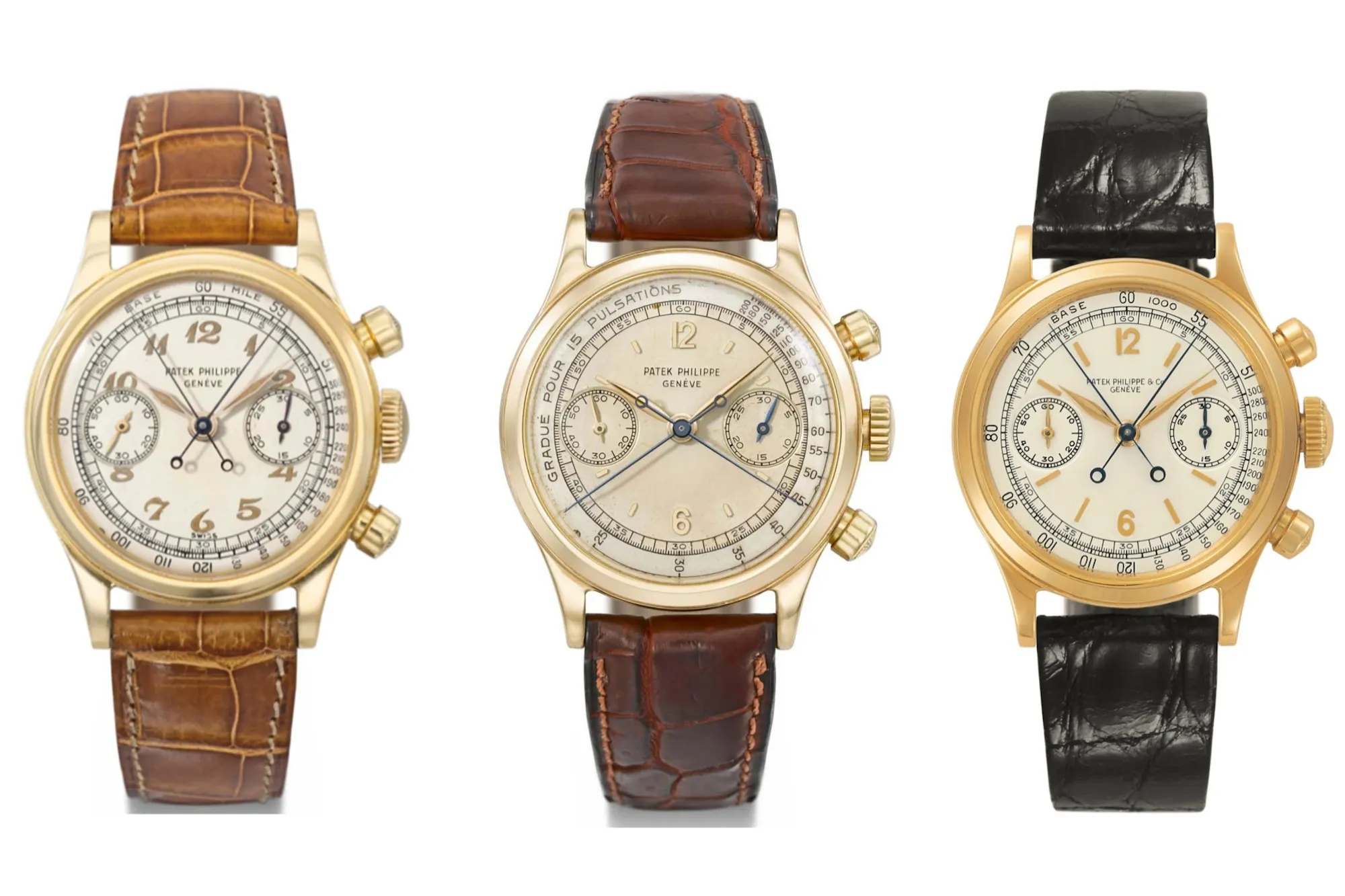
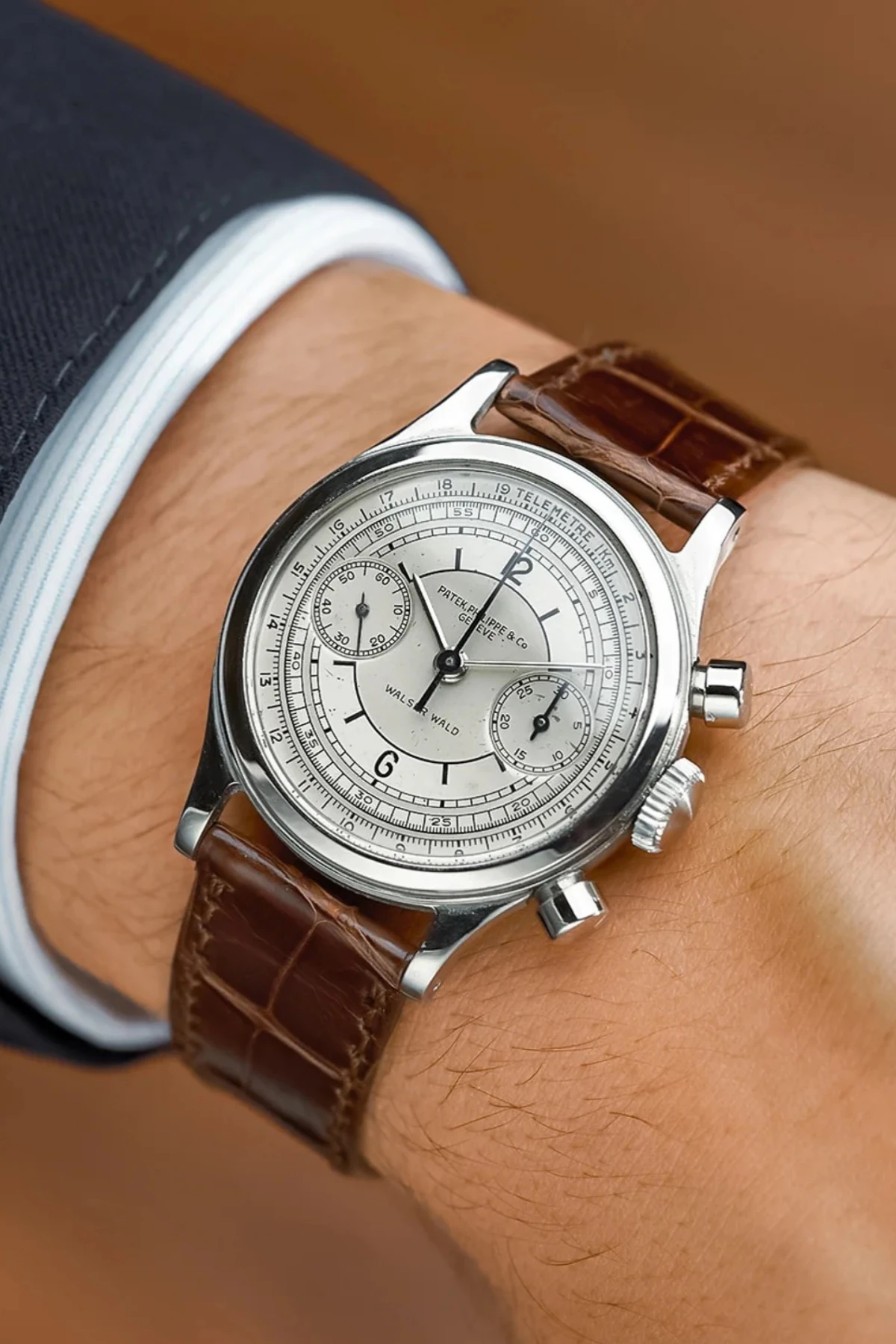
The sheer variety of dials that has accompanied the 1463 is best described as a spectrum. And what sits at the opposite end from the Breguet? Probably this one. A design that most would associate with the Ref.130, the sector also crops up (in unspecifically small numbers) on the 1463. The most notable version, often invoked by collectors, is in steel — signed by Argentinian jeweller Walser Wald.
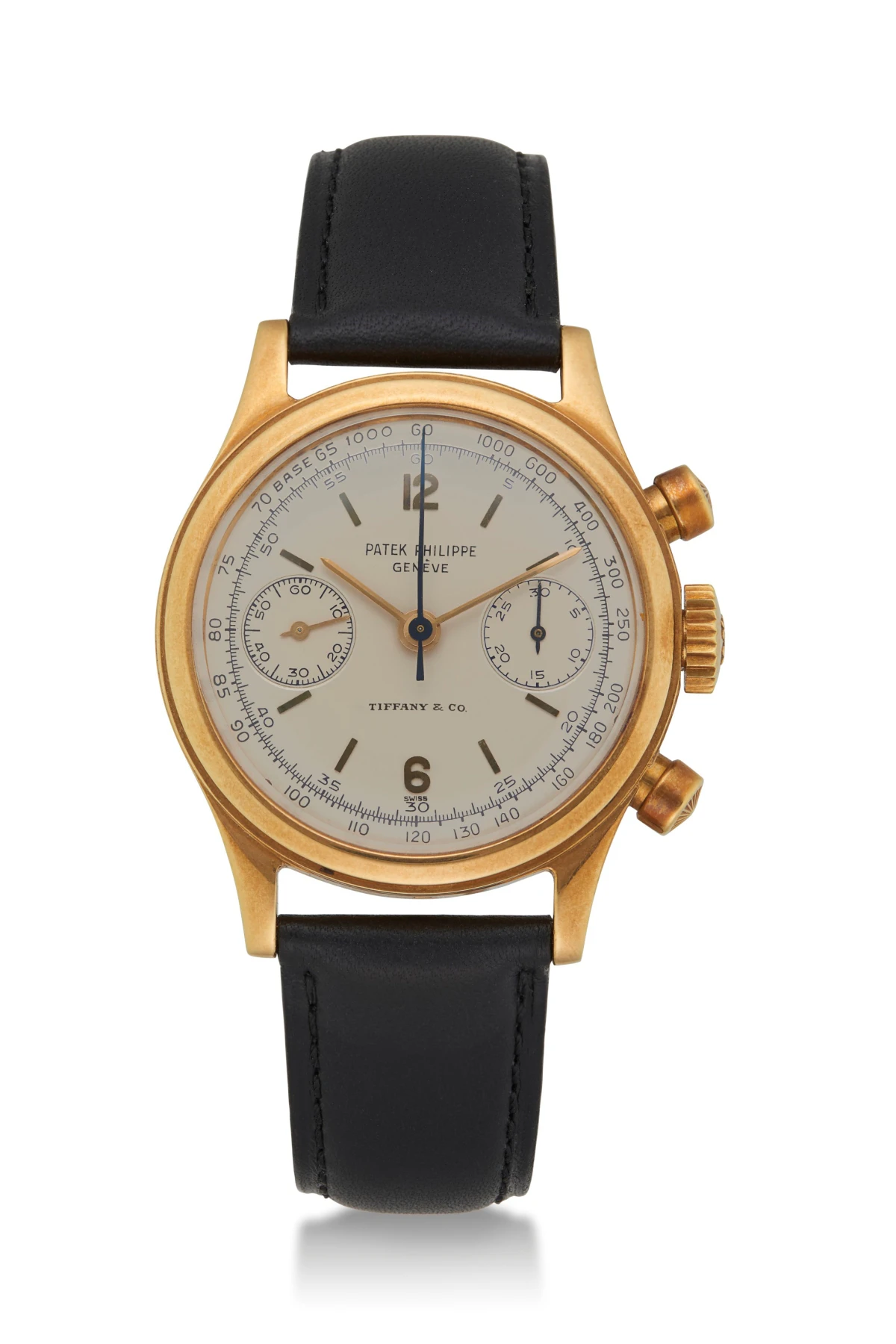
As previously mentioned, the 1463 remained in-catalog over a period spanning three decades. An aesthetic evolution, no matter how gradual, was therefore inevitable. Beginning around case no. 2.615.xxx, Patek started fitting the Tasti Tondi with an updated dial, wiping off the chemin de fer minute track in favor of a more contemporary ‘open railway’ version; as well as thicker applied hour markers and stick hands.
The result is a cleaner, arguably more modern look overall that gets at the 1463’s evergreen appeal. And if it’s one of the rare versions double-signed by Tiffany or Cartier? Even better.
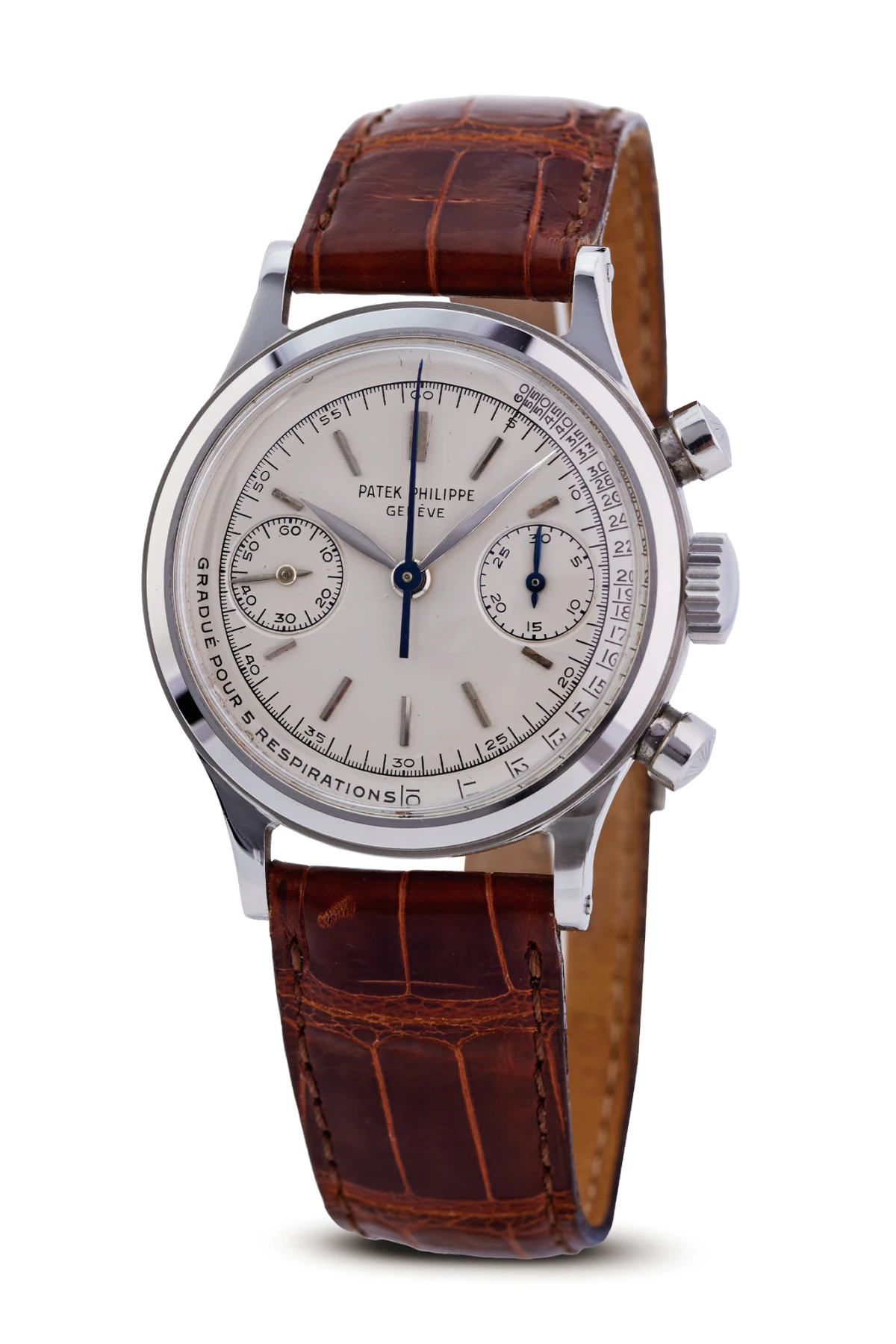
Almost all 1463 dials sport a tachymeter scale (with “Base 1 mile” indicating examples for the North American market, and “Base 1000” for the rest of the world). Pulsometric dials are exceedingly rare, but do exist. Finally, there are the ‘Asthmometer’ dials: a seldom-seen medical scale graduated to measure respirations per minute, of which only two factory-original examples exist.
The dial layout is arguably not the most balanced, since a third of the outer edge is left blank, but as far as conversation starters go, it literally doesn’t get much rarer than this.
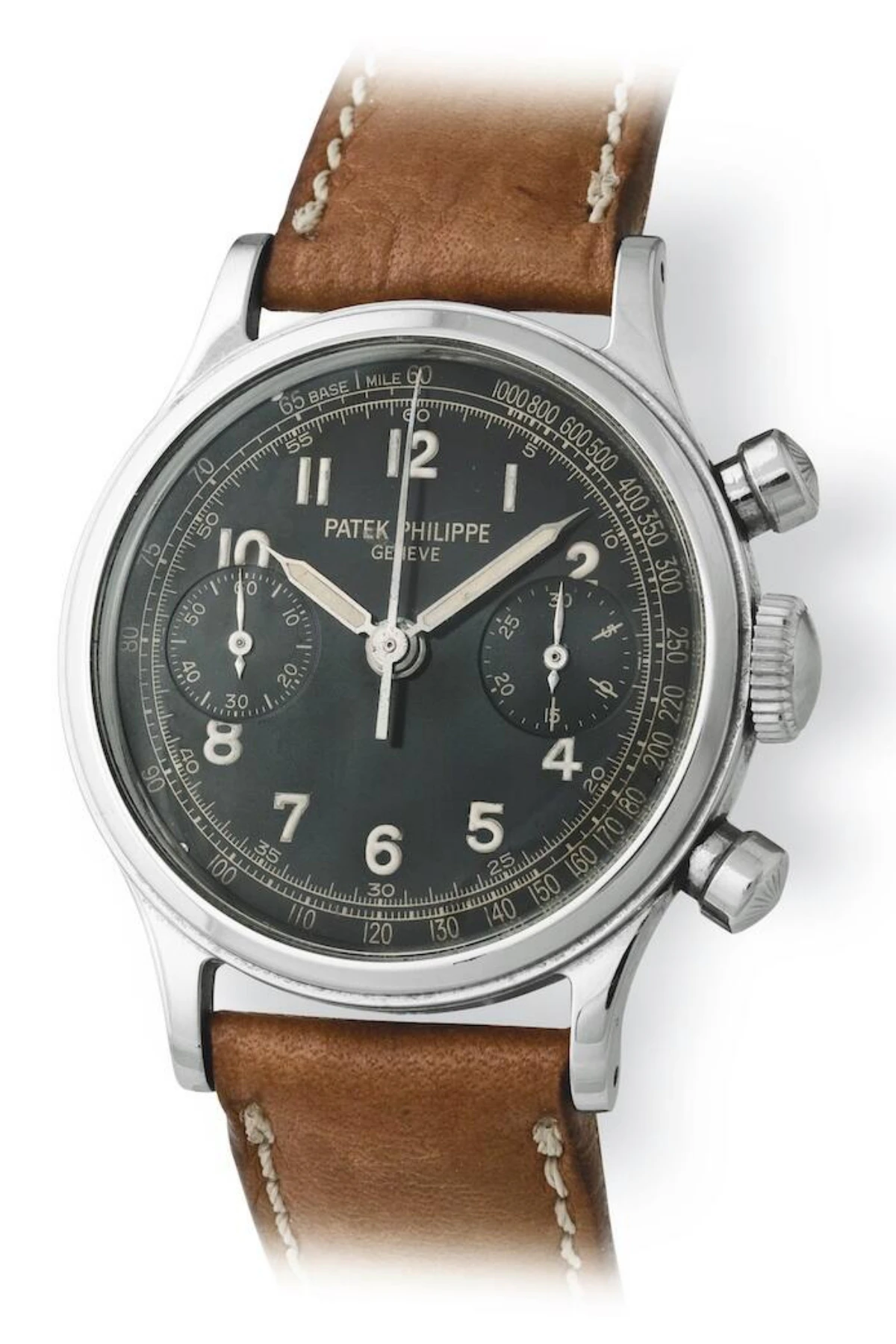
A whole book might not be enough to recount the life and enterprises of Briggs Cunningham — let alone this article. Suffice to say, he was the first privateer to take delivery of a Ferrari in North America, captained the Columbia to victory in the 1958 America’s Cup, and also happened to be a preeminent client of Patek’s.
Unsurprisingly, Cunningham wasn’t content to wear your standard-production 1463. His personal example — one of four known factory-original black dials — was also decorated with radium-coated Arabic numerals and luminous syringe hands, in a decidedly military style that complements the design of the Tasti Tondi case.
Technically it’s off-topic, but we’re at pains to mention that Patek actually introduced a separate reference — Ref. 1563 — for the split-second version of the 1463. Of course, the only way to tell is by the presence of a second seconds hand. Manufactured in just three examples, each unique, the model is arguably the final evolution of the Tasti Tondi lineage.
One is securely and perpetually residing in the Patek Philippe Museum, but the other two remain in private hands, making speculation about their reappearance in public as exciting as it is unlikely…