[001][11.06.26]
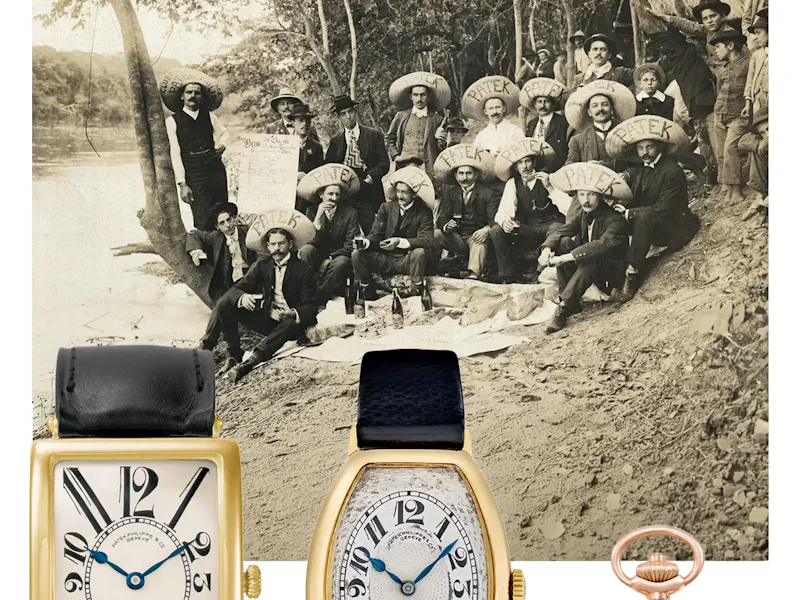
Patek Philippe has long excelled in chronographs. Whilst it may not be the first vintage chronograph that springs to mind, the Ref. 1579 is a solid offering from a collector’s perspective – even if it remains a somewhat overlooked quantity in the secondary market.
1941 was a special year for Patek Philippe, to say the least. Whilst most of Europe was definitively at war, the world's greatest manufacturer of watches continued to produce excellence. 1941 saw the introduction of the reference 1526, the world’s first serially produced perpetual calendar wristwatch; as well as the reference 1518, the world’s first serially produced perpetual calendar/chronograph wristwatch. Yes, really – two of the Swiss watch industry’s most historic breakthroughs in the same year.
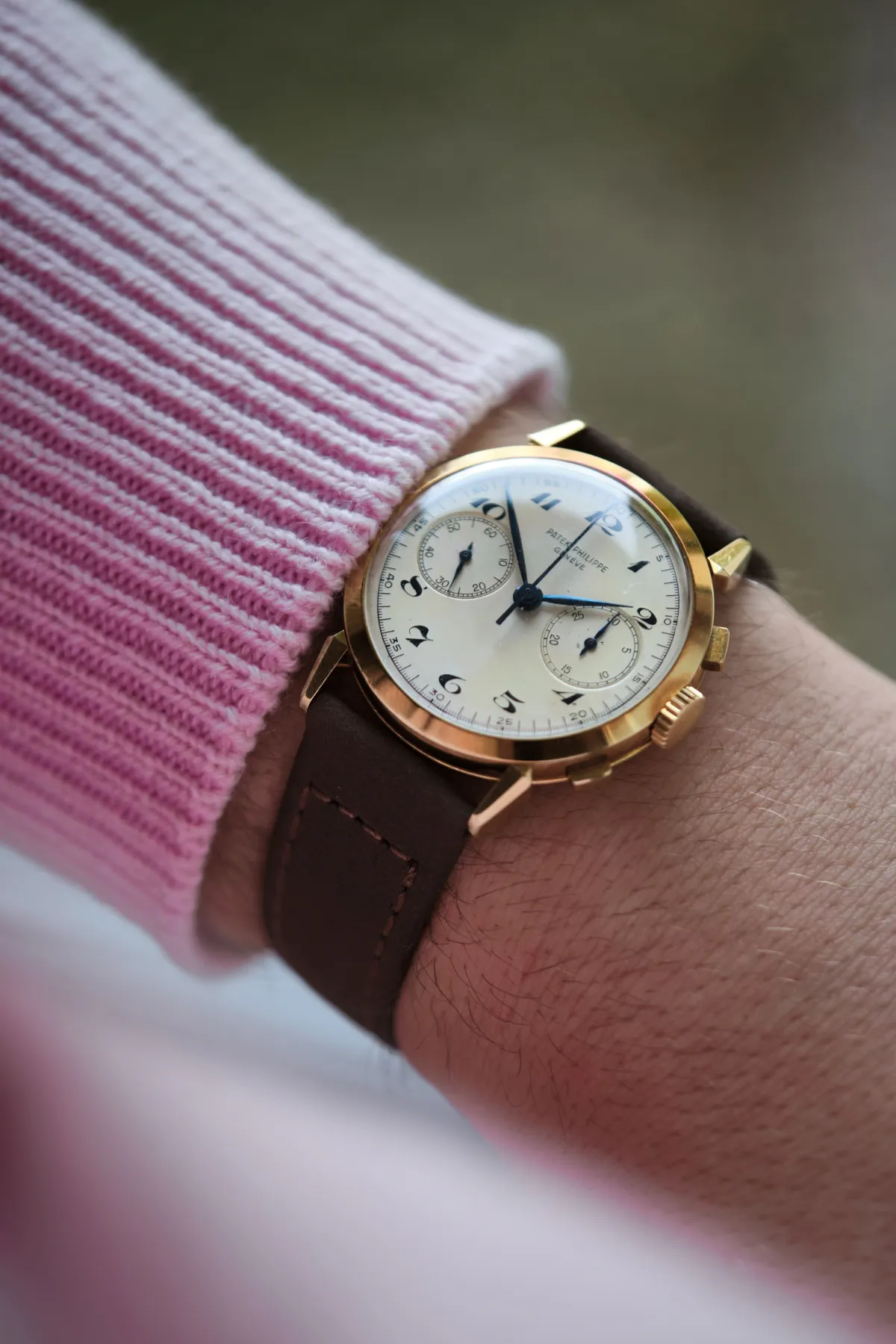
Perpetual calendars aside however, 1941 also saw the introduction of the reference 1579, a chronograph with – to put the matter colloquially – a ton of sauce. Brought in just one year after the more well-known Ref. 1463, the 1579 was powered by calibre 13-130: a manually wound column-wheel chronograph imported from Valjoux (in the form of the 13-ligne) then finished in-house.
Calibre 13-130 was housed in a 36mm case produced by none other than Wenger (Key 1), Patek Philippe’s most prolific case maker. For the 1579, Wenger favoured an angular approach of the kind that could also be associated with Antoine Gerlach (Key 4). It features aggressive ‘spider’ lugs with multiple facets – the kind of artistic licence we adore from Patek, albeit in a fashion we don’t see so often.
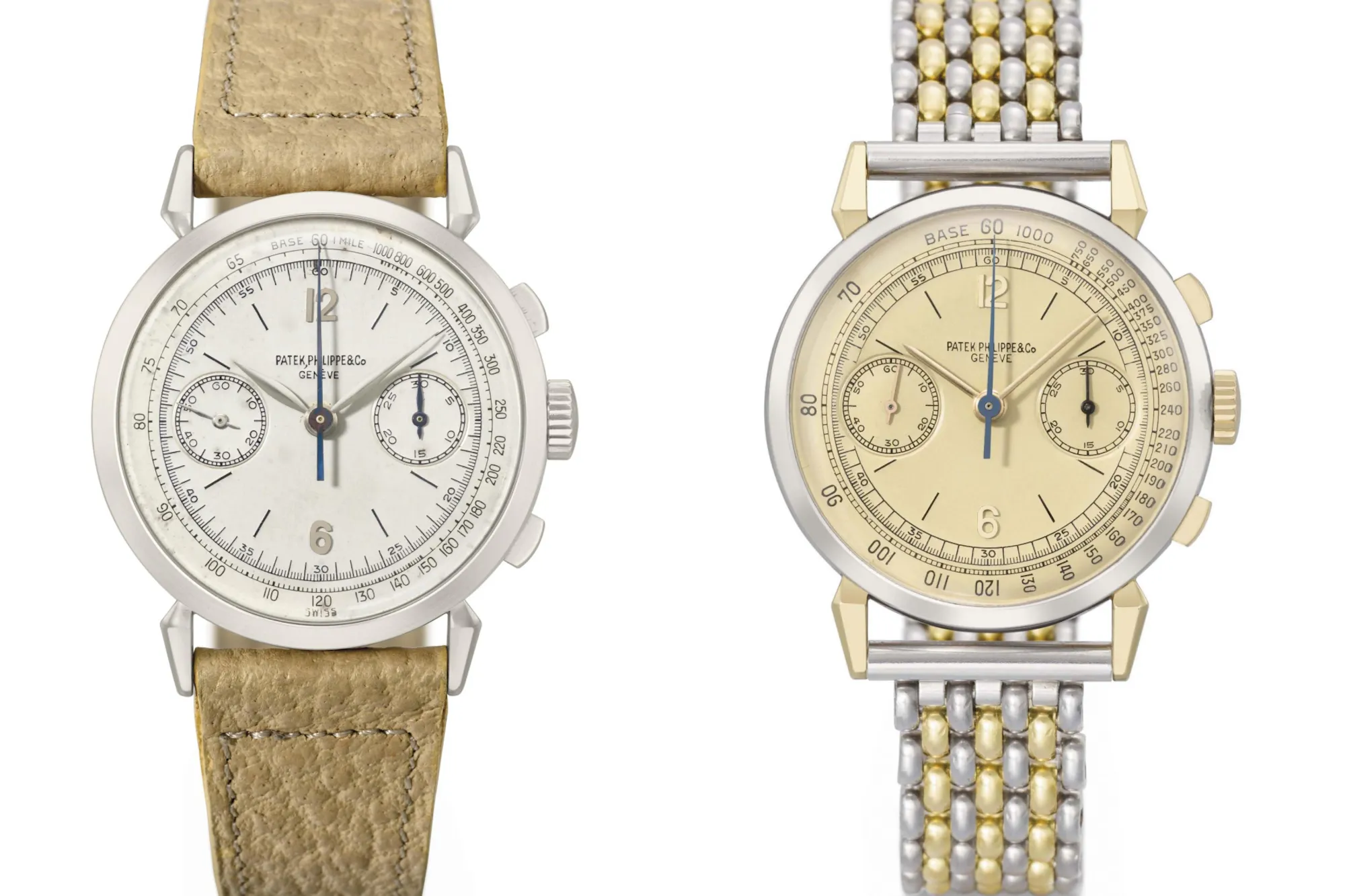
Production of the 1579 was moderate, with around 470 examples thought to have been produced between its introduction in 1941 and discontinuation in 1964. Of these, the vast majority were cased in yellow gold, as was the norm throughout the mid-20th century. A much smaller number were cased in pink gold. As well as this, there are seven documented examples having been produced in steel (one was retrospectively fitted by Patek in 1989) and a further three examples produced in platinum.
One single example with a unique engraved bezel was produced in pink gold. A further two were produced in a bimetal combination of steel and yellow gold, but under reference 1579/1.
[ Metal ] | [ Units Produced ] | [ Total auction appearances (since 1989) ] | [ Period of manufacture ] |
|---|---|---|---|
Yellow gold | 275 | ~85 | 1941-1955 |
Pink gold | 185 | ~55 | 1943-1960 |
Steel | 7 | 7 | 1941-1950 |
Steel & yellow gold | 2 | 1 | 1943 |
Platinum | 3 | 4 | 1946 |
TOTAL | 470 | 151 | 1941-1964 |
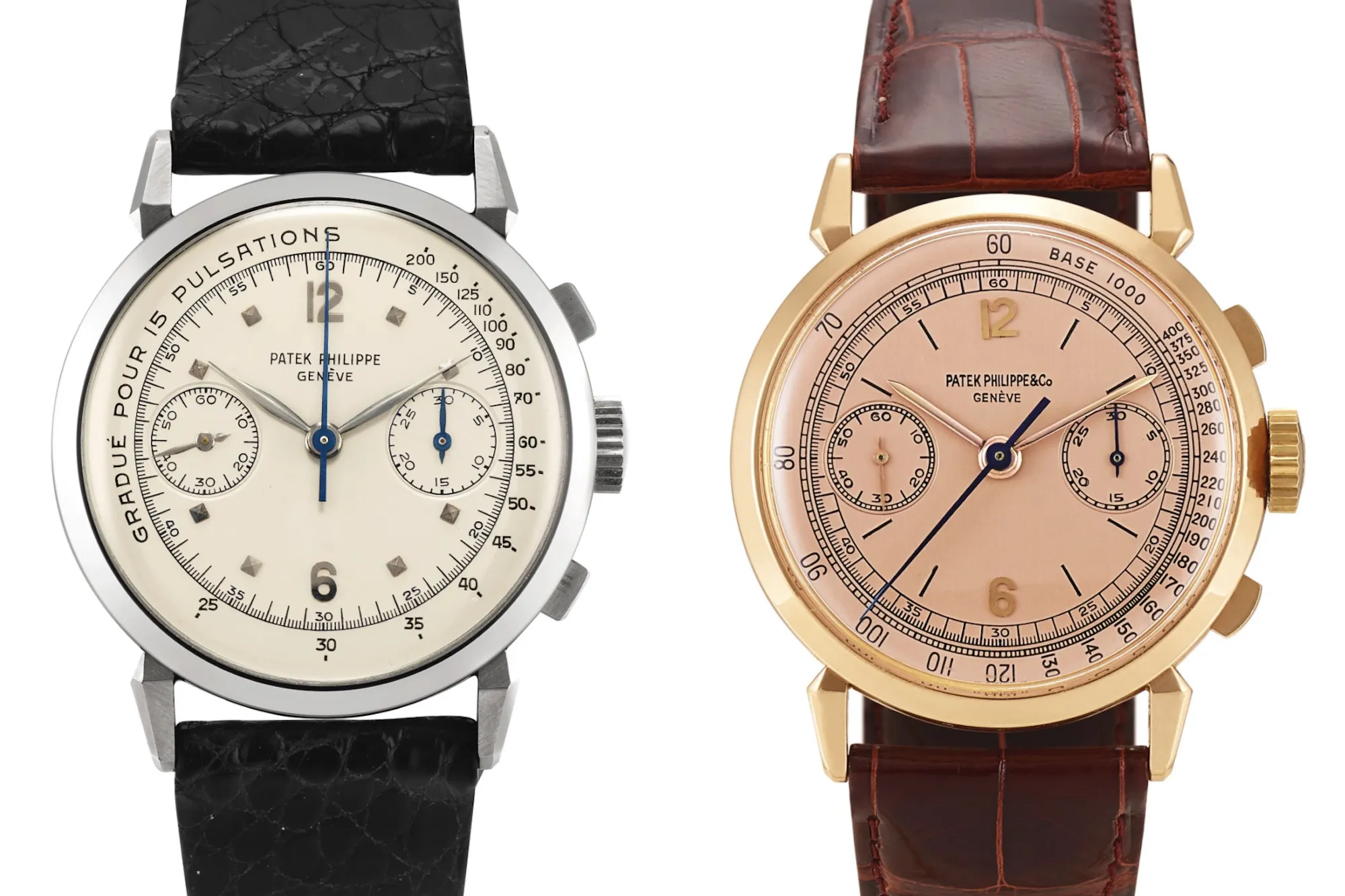
Dials were produced by Stern Frères and mostly finished in the classic silvered look. Both signatures, and the scales around the periphery of the dial were hard-enamelled – a quintessential Stern Frères flourish throughout this period of dial-making history. A small handful were produced in pink gold, accompanied by cases in the same precious material.
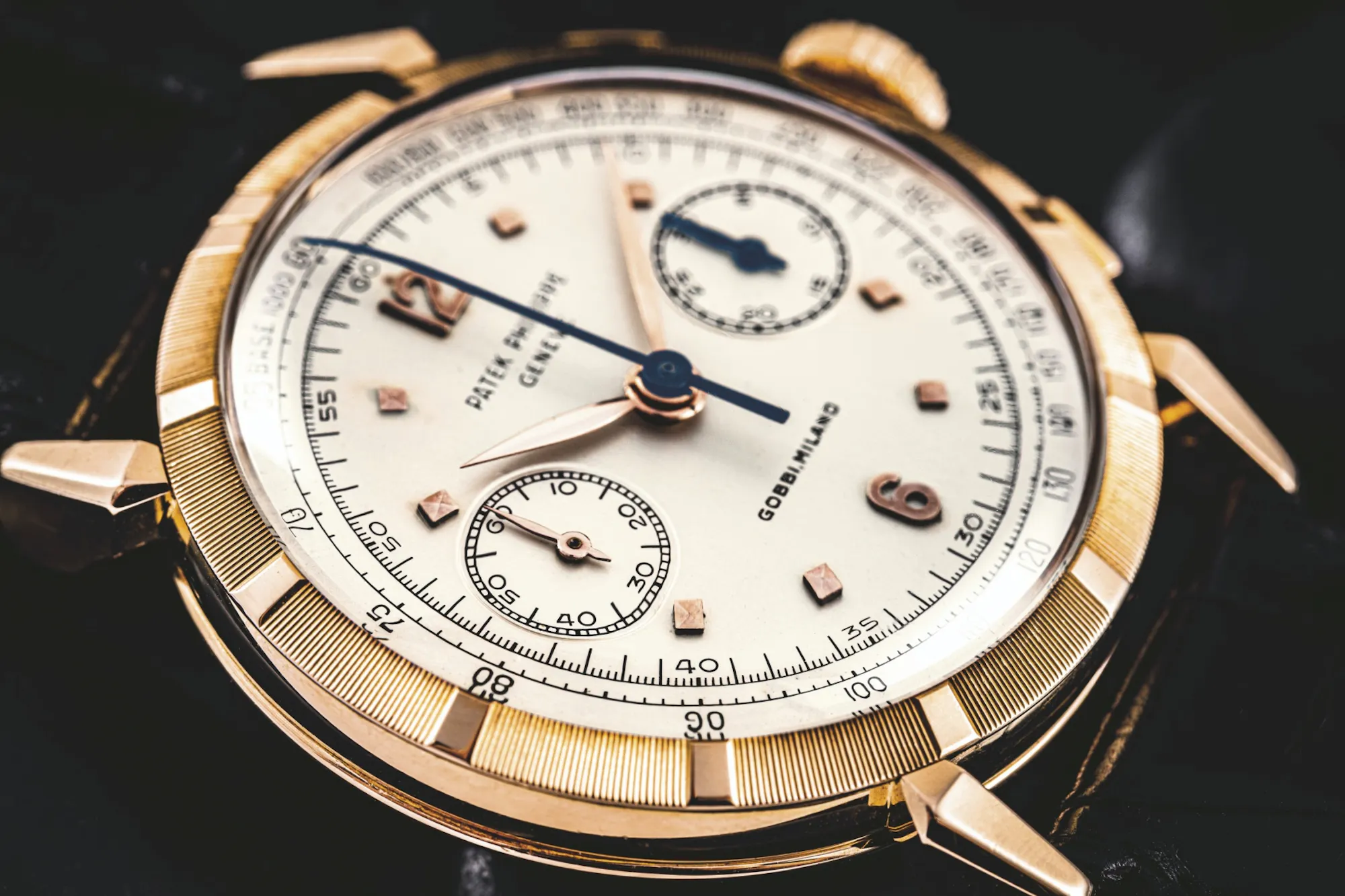
Production for the reference was split into two different series, both with their own variance in dial layout. The first series featured an extension of the hard enamel to the baton indexes, accompanied by applied Arabic numerals in gold at both 6 and 12. The second series kept the applied Arabic numerals at 6 and 12, but replaced the hard enamel batons with applied gold squares, in a subtle Clous de Paris style. Dials also featured a combination of feuille hands and batons (seemingly in no fixed order). Consistent with the period, the central chronograph hand is always blued.
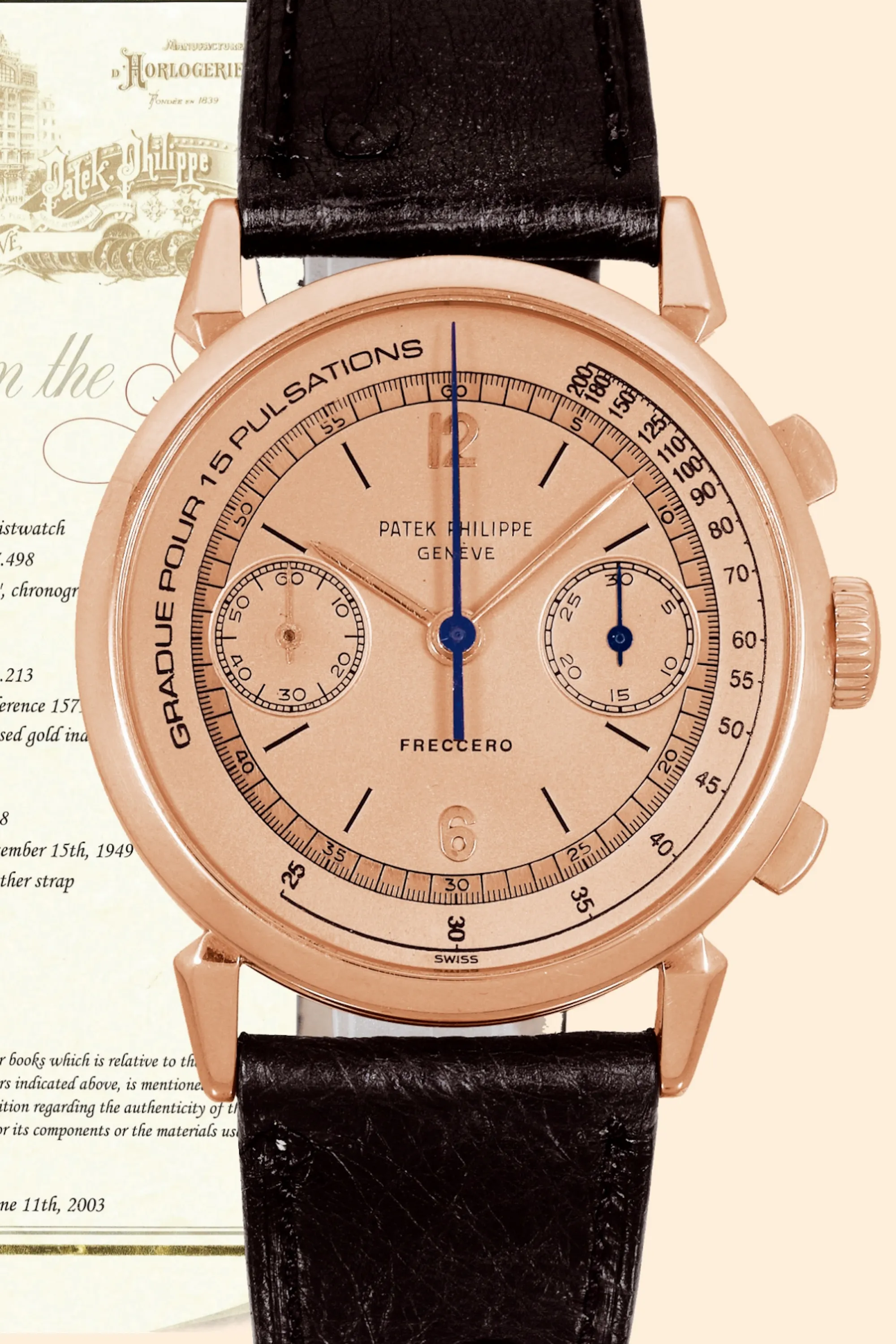
Beyond this, a number of different variations were seen, including a handful of examples featuring pulsation scales in place of the traditional tachymetre, and one example with enamelled Breguet numerals known (appeared twice at auction).
[ Signature feature ] | [ Total auction appearances (since 1989) ] | [ Period of manufacture ] |
|---|---|---|
'Pink on pink' gold dial/metal | Breguet numerals | Pulsation scale |
9 | 2 (unique watch) | 10 |
1943-1950 | 1953 | 1944-1952 |
[ Retailer Signature ] | [ Total auction appearances (since 1989) ] | [ Unique auction appearances ] | [ Movement numbers ] | [ Period of manufacture ] |
|---|---|---|---|---|
Gobbi Milano | 9 | 6 |
| 1949-1956 |
Freccero | 7 | 4 |
| 1946-1955 |
Gübelin | 7 | 4 |
| 1947-1955 |
Haussman & Co | 5 | 4 |
| 1949-1952 |
Somazzi | 2 | 2 |
| 1960 |
Serpico Y Laino | 1 | 1 |
| 1950 |
Rolandi | 1 | 1 |
| 1951 |
TOTAL | 31 | 21 | N/A | 1946-1956 |
In discussion, I often find that the 1463 takes the biscuit, insofar as interest from enthusiasts is concerned. But there’s something so cool about the 1579 – its sharp ‘spider’ lugs give the watch such an unmistakable wrist presence. Additionally, it was produced in moderate numbers with just the right amount of variation in-series, making it an excellent contender when it comes to collectability.
On one final note: Patek’s cases are the best in the business. Even today the brand continuously invests in the development of new case shapes to keep its contemporary releases fresh and exciting. But among these, we occasionally find something that stands out apart from the crowd. The 1579 is, in my eyes, one of those watches.