[001][13.02.26]

Groovy ‘60s style? Partially British-made? And with a heritage that remains shrouded in mystery? Oh, behave!
Over the past three decades, Cartier – as a single globe-spanning entity – has brought back many of the archival creations that made it synonymous with elegant design in the 20th century. There have been new Crashes, bangle-fied Baignoires, Pebbles and then, in 2025, the revival of the Tank À Guichet.
Indeed, for fans of ‘The Jeweller of Kings’, nowadays it’s more useful to concentrate on what watches haven’t been rebooted or resurrected for the modern era. Five minutes of internet sleuthing will likely bring you to the Maxi Oval’s doorstep.
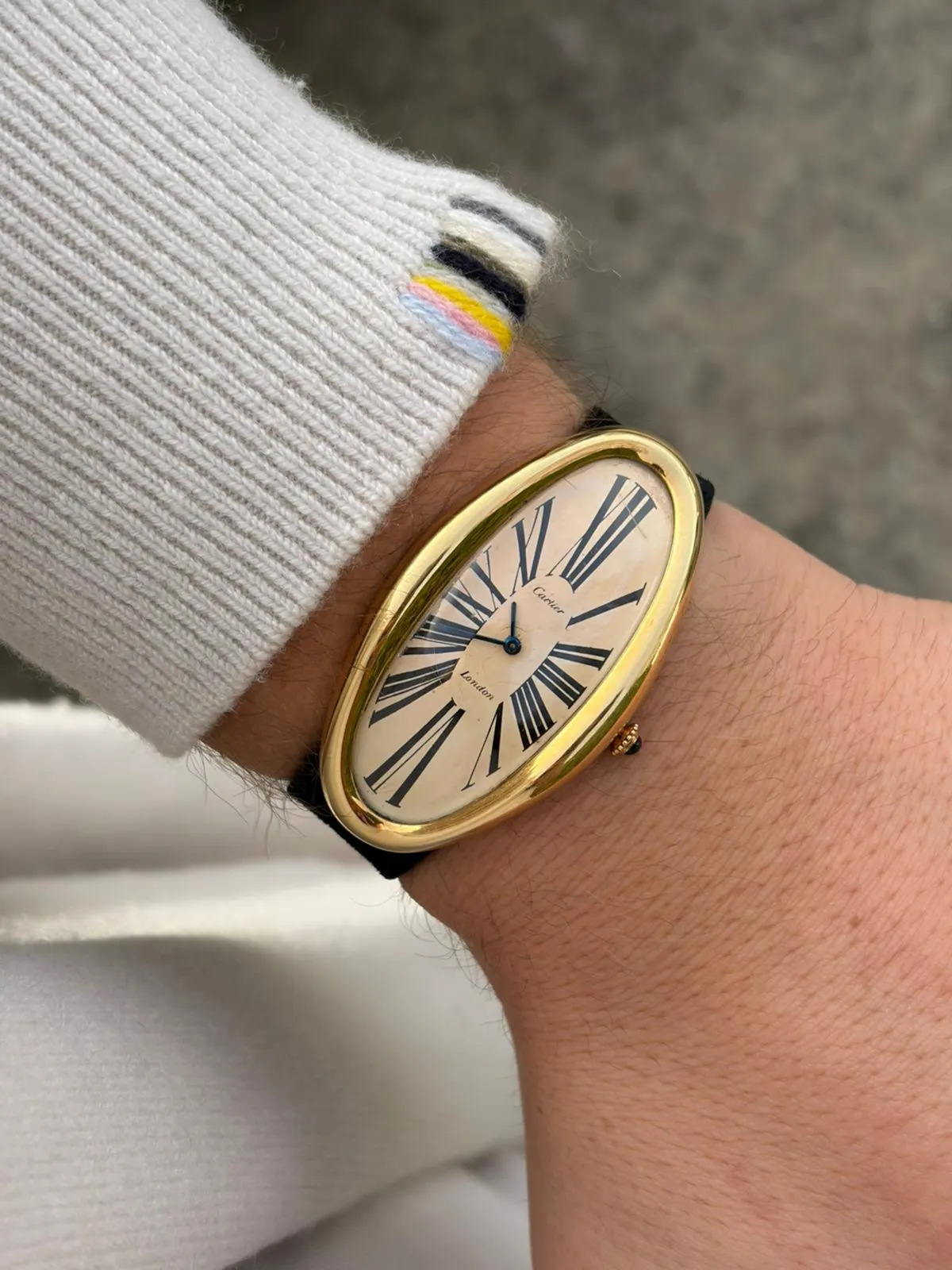
Recently, we happened to have had the pleasure of handling an example with Cartier London provenance (sold in a hot minute, I’m afraid) and it was a sobering reminder that the brand will have a high bar to clear – should it choose to modernise the biggest, brashest descendant of the well-known Baignoire in the coming years.
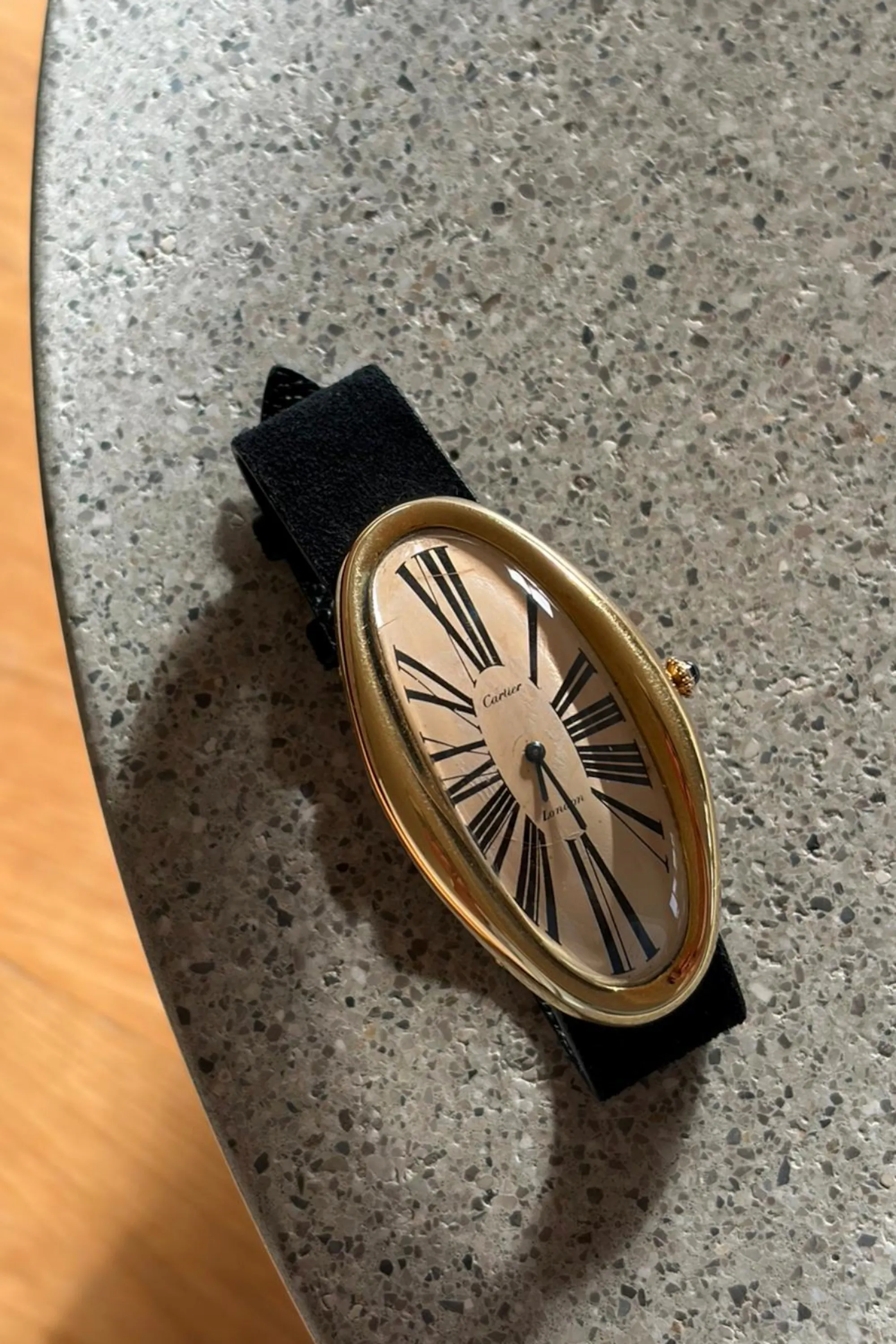
Considering the individual mythos we now ascribe to the Cartier Crash (i.e. whole collector’s guides or annual auction reportage), it’s only fair to approach the Maxi Oval through a similar lens. Accepting that premise is vital to today’s discussion. Yes: the Maxi Oval owes part of its DNA to the Baignoire Allongée – but curbing the conversation there is an oversimplification.
The Allongée moniker wasn’t formally inaugurated until 1973. The design itself however – an ‘elongated’ take on the original Baignoire – was already in production during the 1960s. From this foundation, Jean-Jacques Cartier (fourth generation of the eponymous clan) conceived the idea of the Maxi Oval: an even more audacious evolution on the Allongée that first arrived, on the swish streets of Mayfair, in 1968.
Francesca Cartier Brickell, Jean-Jacques’ granddaughter, has mentioned how the Maxi Oval signalled her ancestor’s broad swivel toward “practical accessories like cases and watches, such as the Crash” during the Swinging Sixties – at a time when Londoners were being immersed in fashion, music, and film inspired by counterculture.
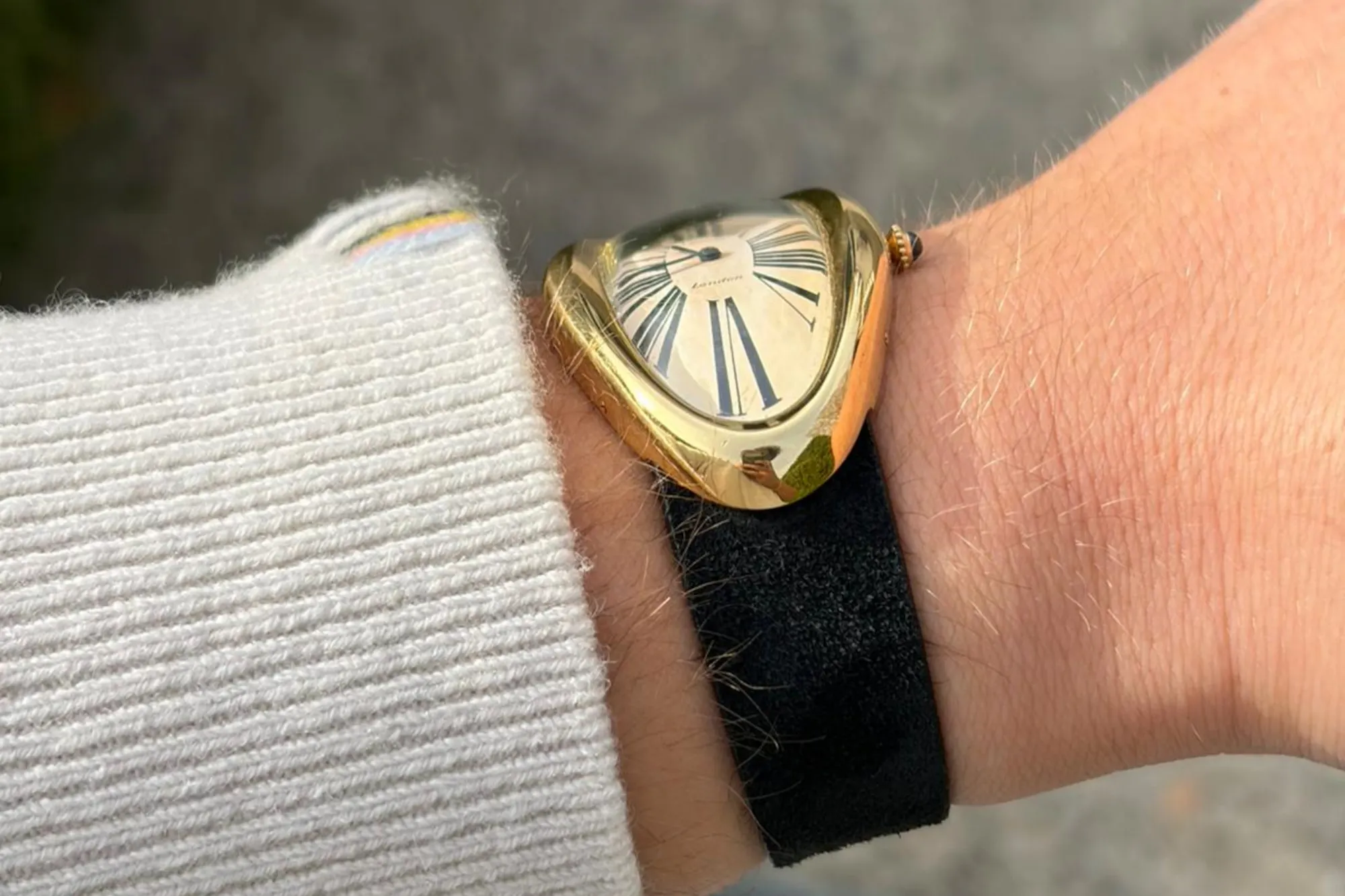
Even if all we can do is speculate, it’s good (fairly credible) fun to imagine that the designers of Cartier London had Sgt. Pepper on the radio as they laboured to create the Maxi Oval. Despite its dramatic presence on the wrist, owing to the arcing ovoid case and ‘exploded’ Roman numerals, the design did satisfy Jean-Jacques’ desire to make an object that was also legitimately functional. Six decades later, the Maxi Oval more than holds up in the legibility and ergonomy stakes – precisely because of its peculiar design.
On the textbook male wrist, the 30mm x 57mm sizing works fantastically: stretching, in oh-so-Cartier fashion, from spur to spur. An effective way to understand this ‘oversized’ charm is to line the Maxi Oval up next to the Baignoire Allongée. Vintage examples of the latter are usually sized at about 24mm x 52mm – making for a case that is subtly narrower and shorter than that of the big ol’ Maxi Oval.
Were we writing about a watch made in more serialised volumes (e.g. multiple series of Patek Philippe Ref. 2499) it’s around this point that we’d break down the various metals and dial variations said watch is available in. Not so with the Maxi Oval.
Like numerous vintage Cartier watches of the pre-Richemont era, credible stats about the Maxi Oval remain thin on the ground – and open to conjecture. This is exacerbated by the fact that all three historical Cartier ‘temples’ (Paris; London; New York) worked largely independent of one another, making it difficult to establish total production numbers and crosscheck provenance of Maxi Ovals sold in each locale at any given time.
It wasn’t until the early ‘90s, as Cartier was on the verge of being acquired by investors who would go on to form the Richemont group, that the brand brought a semblance of uniformity to the design – with limited editions like the (confusingly titled) Maxi Baignoire Allongée.
What we do know, from analysis of this particular Maxi Oval, is that acquiring an example with authentic London provenance is in an order of difficulty comparable to that of finding a 1973 Pebble. In other words: there’s rare, and then there’s London-made-Maxi-Oval-rare.
Armchair experts often make equivocal statements about there being “no more than a handful” of authentic London Maxi Ovals; and while that’s technically true, the more revealing tidbit is just how little the watch appears at auction. Since 2018, London Maxi Ovals have surfaced just four times publicly – notably hammering for €273,000 back in 2023. Compare that with the aforementioned Maxi Baignoire Allongée – Cartier made that as a ‘limited’ edition of 400 pieces globally – and it’s apparent that the two are in totally separate realms of collectability.
Lack of consensus surrounding the London Maxi Oval can be frustrating for newcomers attempting to get a clear picture of Cartier’s watchmaking output during the ‘60s and ‘70s – yet that same inconsistency can be thrilling to behold for seasoned collectors.
Jean-Jacques’ decision to open a dedicated watchmaking studio for Cartier London, helmed by British designer Rupert Emmerson, meant that almost all the period-accurate Maxi Ovals coming out of Bond Street were individually unique in some way – a byproduct of the fact that Emmerson and his artisans were making the lion’s share of each piece on British soil.
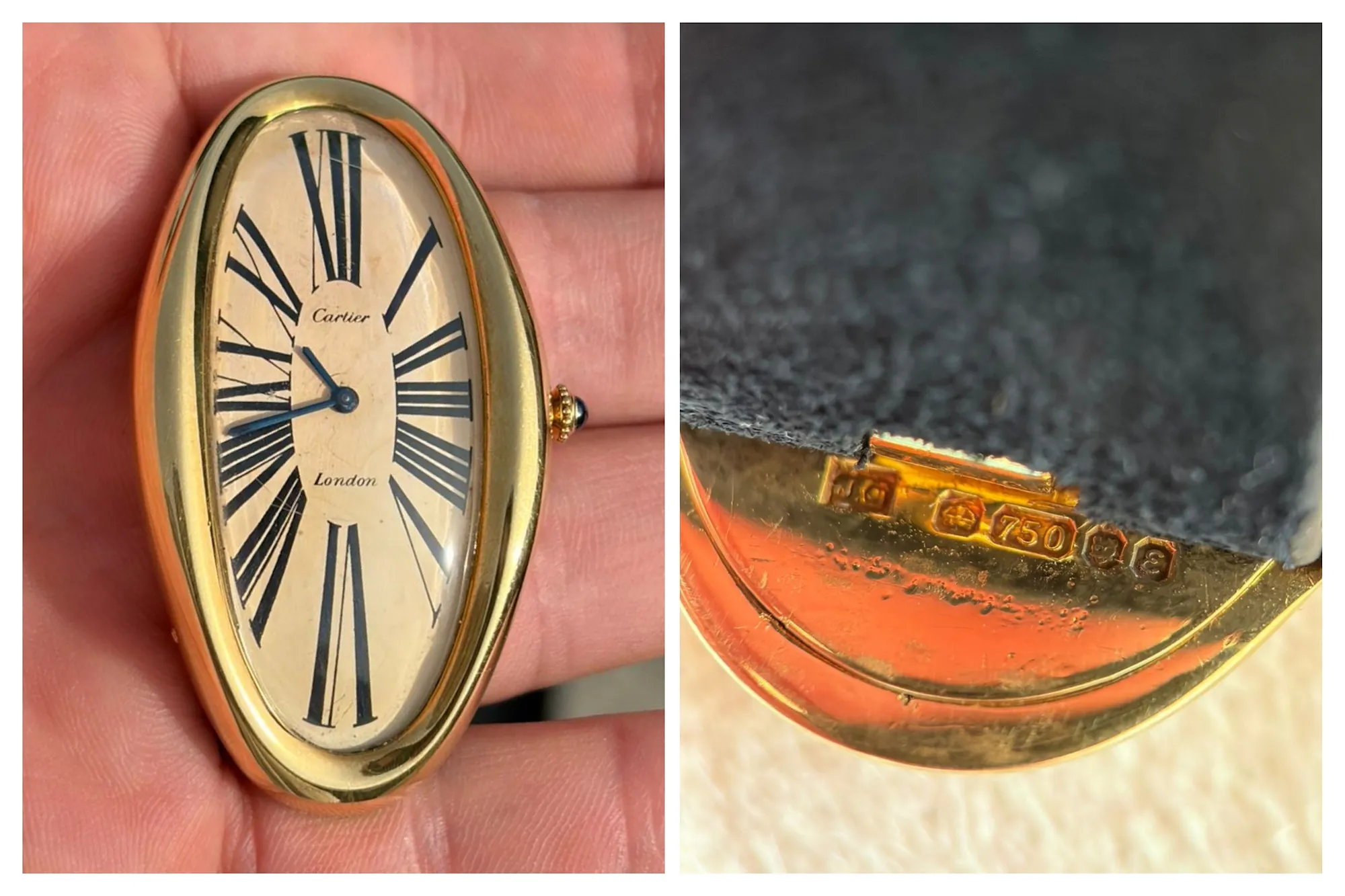
By way of example: the Maxi Oval we recently handled is crafted with a rectangular caseback and ‘London’ dial signature, while the version mentioned earlier (sold in Monaco for €273,000) sports an even simpler Cartier-only dial and unusual, semi-circular caseback.
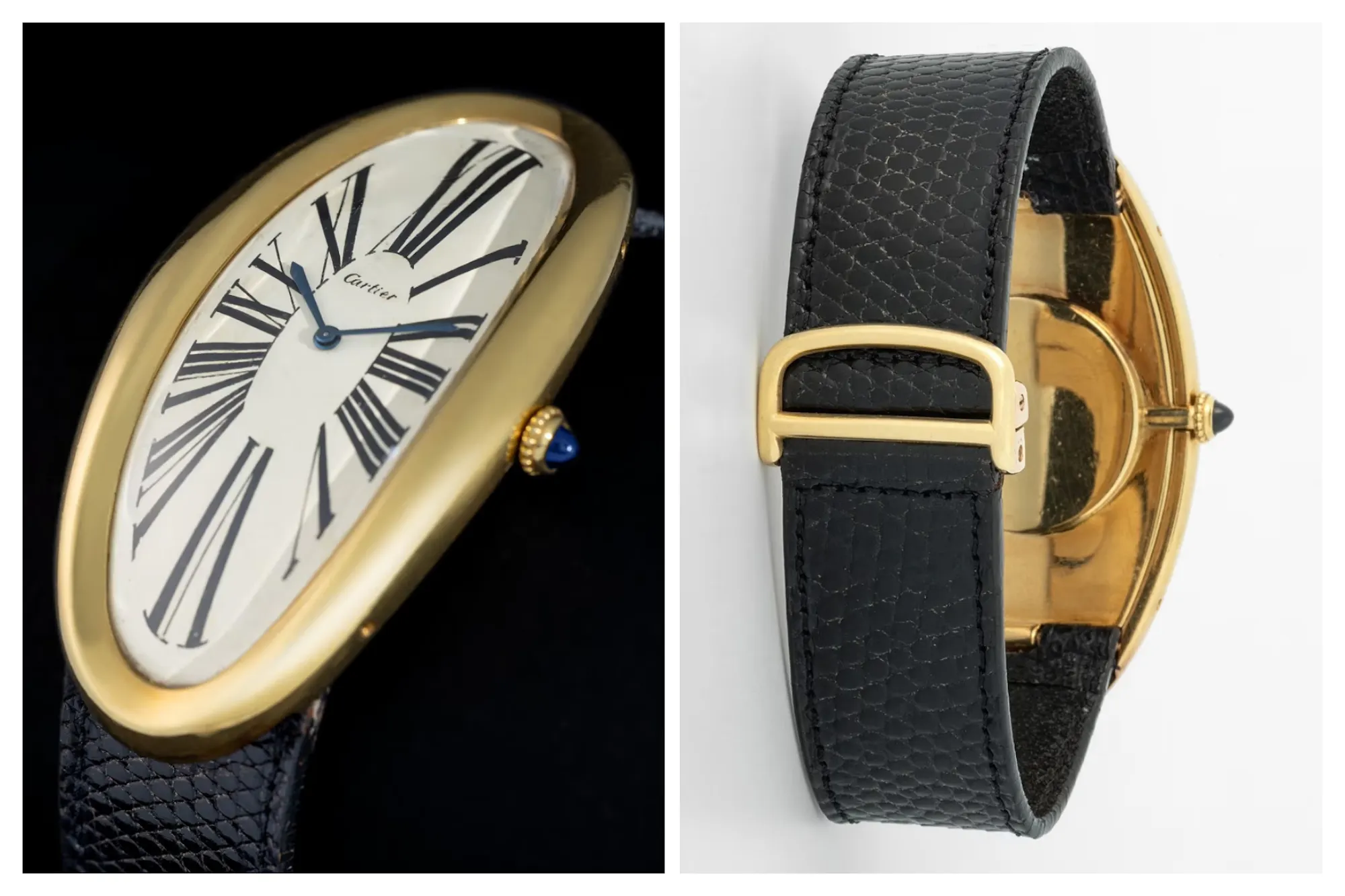
Interestingly, the throughline between these watches is that they’re both powered by a Jaeger-LeCoultre based-movement – one of the distinctions most often cited between London Maxi Ovals and their Cartier New York siblings. It’s just another reminder that, among collectors with a knack for detail, the urge to collect the works of a specific Cartier ‘temple’ at a specific moment in history can be perpetually rewarding.