[001][27.05.25]
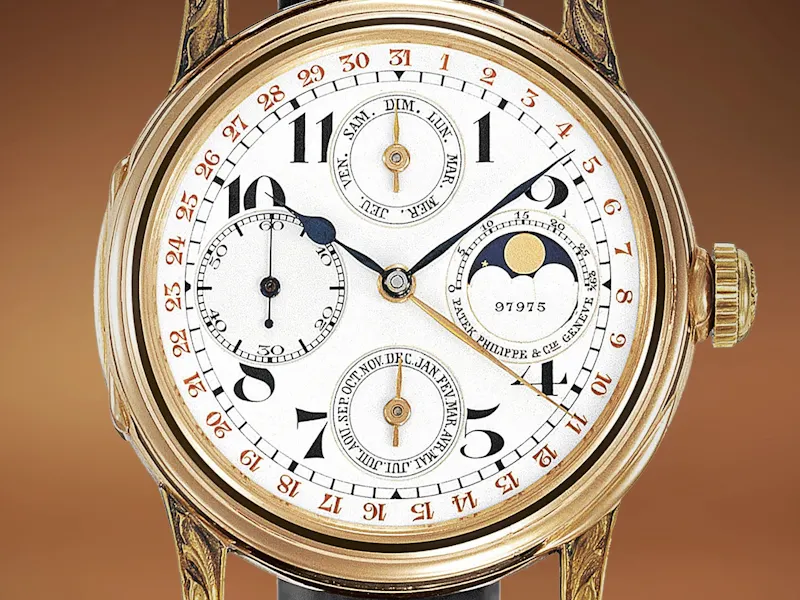
Patek’s OG perpetual calendar is widely lauded for its rarity and successful implementation of serial production. How come it's not on your radar yet ?
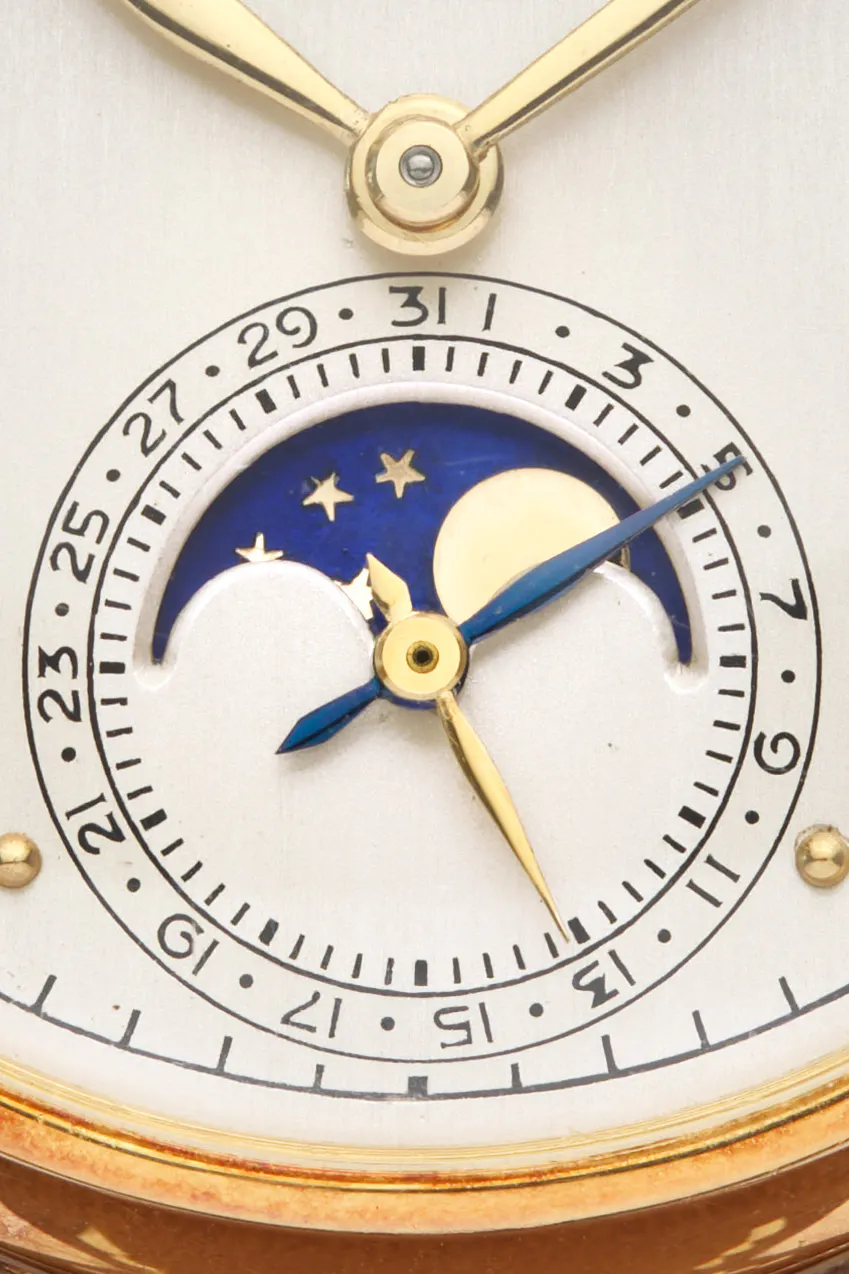
Whereas various Patek references of the 1950s, such as the 1518 and 2499, have gone on to become household names in the world of vintage collecting, the Ref. 1526 remains a comparatively underrated artefact — especially when you consider its biggest claim to fame.
Produced between 1941-1952, it was the first serialised perpetual calendar wristwatch in the history of Swiss watchmaking. Additionally, the 1526’s ‘rectilinear’ design language — in which each of the displays is arrayed in a single vertical line — laid the groundwork for multiple generations of Patek perpetual calendars that followed: references 2497, 3448 and so forth.
In and of itself, the fact that this is Patek’s inaugural perpetual calendar watch is enough to secure it ‘Hall of Fame’ status, but there’s so much more that’s worth sharing.
One detail that is often glossed over is the formidable difficulty associated with creating this reference — relative to place and time. Having never before produced a perpetual calendar wristwatch in such relatively large numbers, Patek committed to making around 210 of the 1526s over an 11-year period.
Additionally, the watch’s first year of production — 1941 — was marked by some of the most brutal (and consequential) battles of WWII. Within these tumultuous historical circumstances, the Stern family’s decision to make upwards of 10 perpetual calendars per year feels nothing short of audacious.
The scale of their ambition is thrown sharply into focus when you learn what was going on at other Maisons around the same time. AP didn’t unveil its own first effort at a perpetual calendar wristwatch (complete with early leap-year indicator) until 1948; and even though the Ref. 5516 was in production for nine years, only a dozen examples made it into clients’ hands.
We probably don’t want to get carried away comparing production volumes for the 5516 and 1526, though. By any modern industrial benchmark, the latter is still a rare bird of a reference: made mostly in yellow gold, occasionally in pink gold and on one documented occasion, in steel.
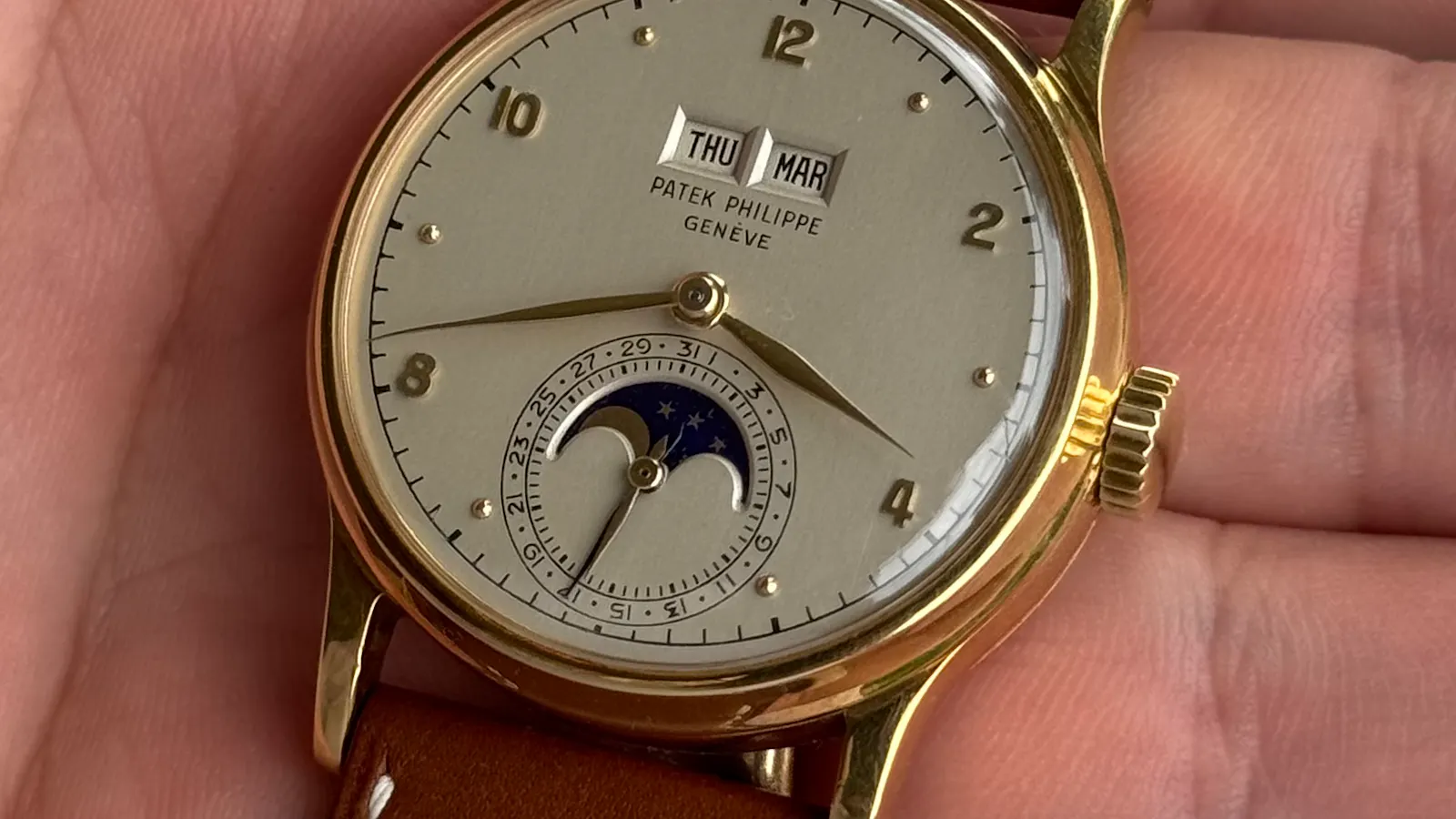
While age offers some explanation as to why the 1526 hasn’t surged in market value quite so aggressively as neo-vintage Patek, another factor at play is sheer visibility. In the course of writing this article, I revisited (very anecdotally, mind you) each of the biannual watch auctions conducted by Phillips - between 2020-2025 - in London, Hong Kong and New York.
Public data indicates that, between these 30 odd auctions, only three 1526s were sold - always in the house’s Geneva and New York locations. Of the ‘Big 3’ auctioneers, Philips has had the most success with the reference by far: having managed to move a yellow gold example (in 2022) for CHF$264,600; and another pink gold variation (in 2023) for CHF$190,500.
The 2022 example feels like an outlier in several regards: assuming that due consideration is given to condition, Covid hysteria, and overall completeness. Sure, the halcyon days when you could nab a yellow gold 1526 for $65,000 are long gone, yet these watches still embody an incredible value. (For context: less than half what its successor, the 2497, usually fetches at auction.)
Beyond age and relatively infrequent appearances, the other explanation for the 1526’s uneven performance is an aesthetic one. It feels bleedingly obvious to say out loud, but an increasing number of collectors who bid on these important references do so with the intention of wearing them. Through that lens, one can see why the 1526’s design codes mightn’t gel with contemporary tastes.

Good thing then that Team UNEKUAL are pathological contrarians.
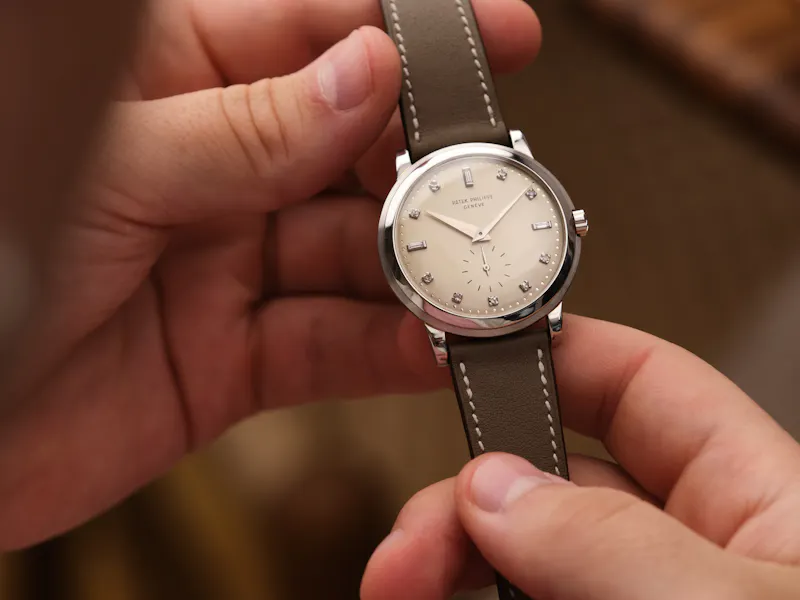
Even if we consider the most typical 1526 (e.g. 35 mm, yellow gold case, silvered dial) the challenges of its size and wearability have been grossly exaggerated. The Calatrava-coded case sports a flowing, simple shape - one which plays well with a variety of wrist sizes, aided greatly by the long slightly downturned lugs.
I’ve occasionally overheard specialists describe the 1526 design language as a “pretty sartorial” one; and while that characterisation generally does make sense (it’s a small gold dress watch from the 1940s after all) it’s surprising how great it looks when deployed casually.
Consider Clark Gable, ‘King’ of classical Hollywood cinema, as he appears in the 1955 adventure film Soldier of Fortune. In what’s probably the 1526’s most notable on-screen cameo, Gable wears the watch with little more than a crewneck tee and a pair of trousers. But, in an individual little flex, he chose to accessorise it with a Cartier tang buckle (see the above screenshot).
This exact setup - cuban bracelet and all - wouldn’t look out of place in 2025. And that alone should tell you something about the ineffable charm of the 1526 - and why its days of flying under the radar are numbered.