[001][20.05.25]
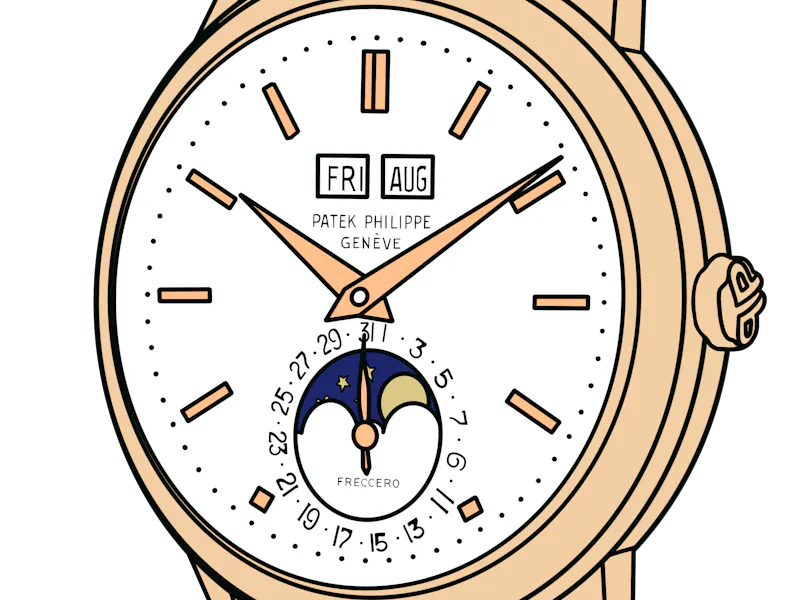
It’s no secret that Patek Philippe is well-known for its movement-making prowess, yet these three stand out as evergreen examples of the maison's technical elegance.
For a brand with so many historic firsts, how do you pick just three movements that changed the game? Before establishing some subjective criteria, some objectivity. The one thing we wouldn’t budge on is that Patek Philippe actually had to develop these: sorry to those who were expecting LeCoultre or Lemania ébauches. So, rather than just picking out the movements with the largest number of complications, or those with the most detailed finishing, they also have to be historically significant – having changed the direction of the company in one way or another.
The early 1930s were a landmark time for the company, as it would see dialmakers Charles and Jean Stern purchase the name. Naturally bringing about a restructure, the Sterns’ first executive measure was to hire Jean Pfister – in a move that would see them begin producing movements in-house, rather than relying on suppliers like LeCoultre.
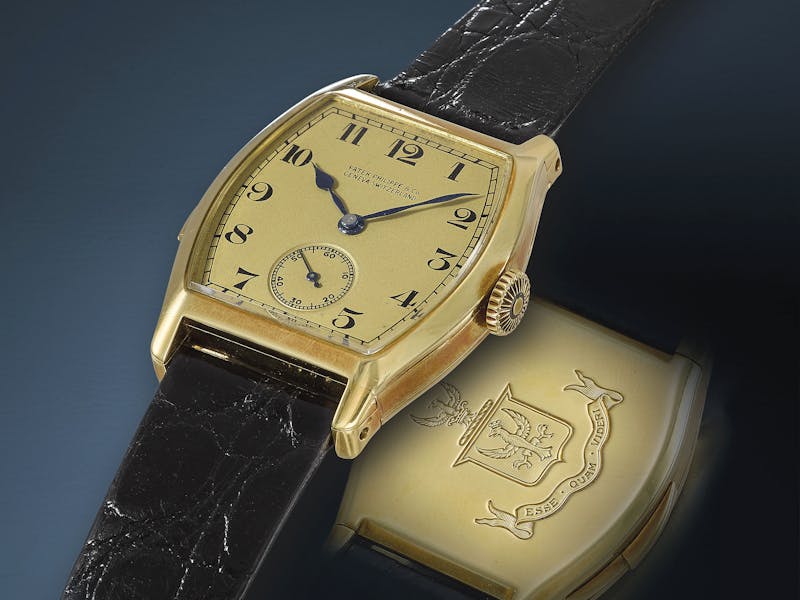
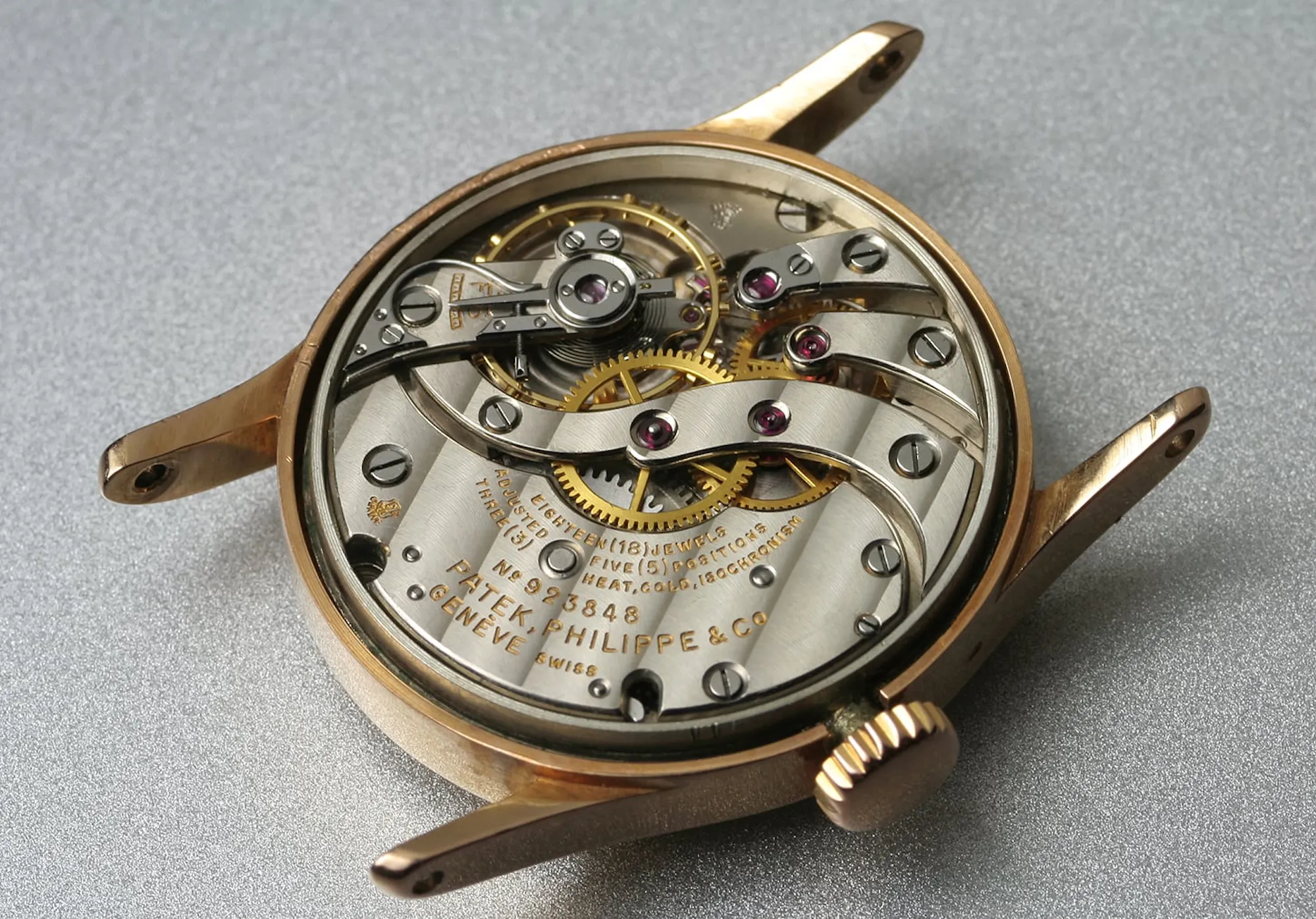
In 1934, two years after Pfister’s appointment, the Calibre 12-120 would see the light of day, replacing a 12-ligne LeCoultre movement and ending what is now considered as the first series of the legendary Calatrava Ref. 96. Being Patek Philippe’s first in-house wristwatch movement is enough to get it a spot on this list for its historical significance, but it also forwarded the brand’s technical abilities while maintaining tradition. As was the case for many wristwatch movements at the time, the 12-120 derived its layout from pocket watch architectures. Its traditional Genevois design displayed swooping cocks and bridges, with a directly driven small seconds layout.
The many structural components of the 12-120’s design lent themselves well to decoration. Geneva striping dominated the surfaces, the chamfers hand-polished and embellished by sharp interior angles, and the steel componentry black-polished for contrast. For its diameter, it featured a large balance wheel adjusted by a swan neck regulator that would see many revisions throughout the 12-120’s 40-year lifespan powering Calatravas. In 1949, it became known as the 12-400 and gained additional shock-resistance, finding its way into the highly collectible Ref. 3417 ‘Amagnetic’ models of the late 1950s, and eventually modified with a Gyromax balance and anti-magnetic components in 1960, becoming the 27-AM-400.
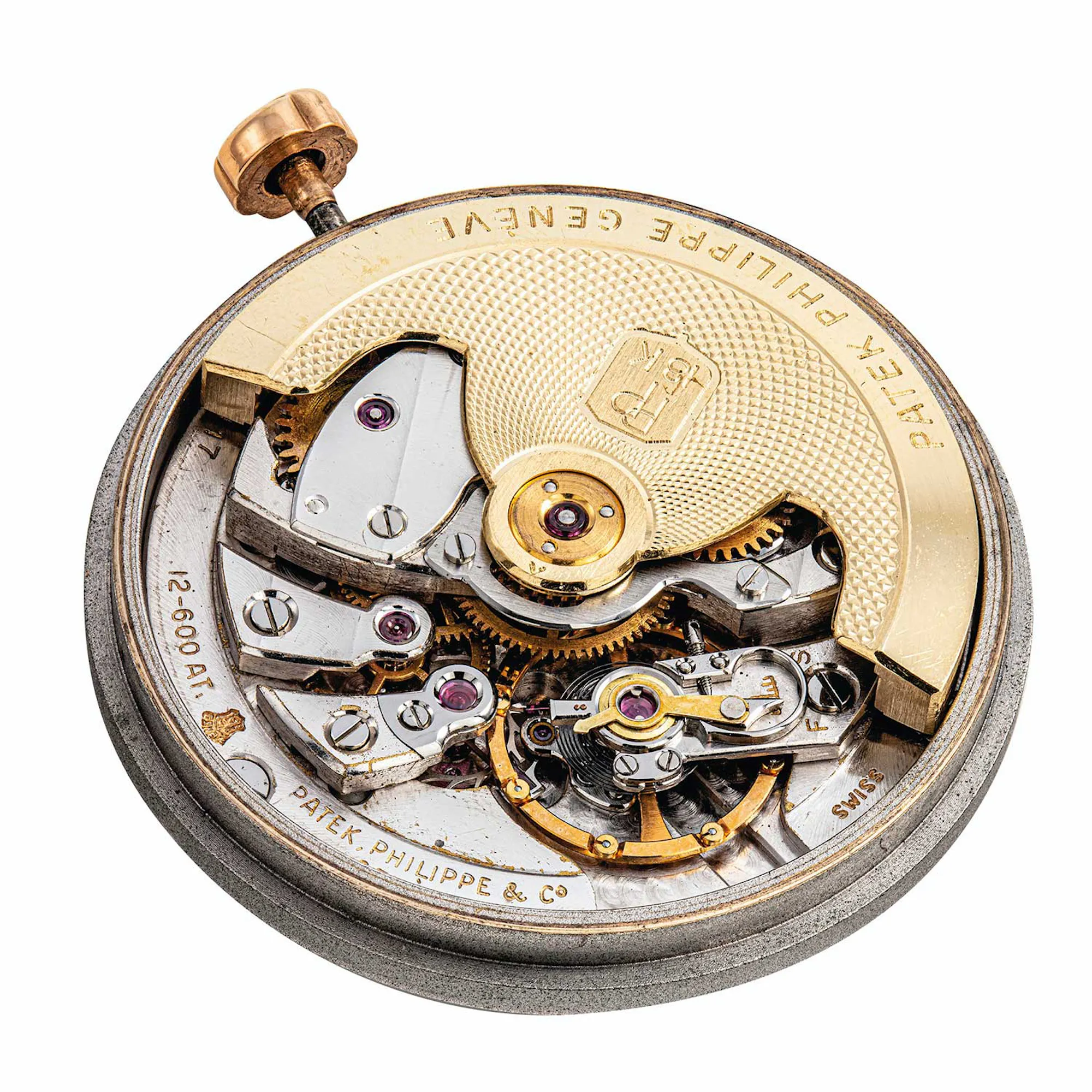
Though responsible for many innovations throughout their illustrious history, Patek Philippe’s involvement with automatic movements in fact came more than two decades after Glycine and Rolex had pioneered the technology. When the Calibre 12-600 AT debuted in 1952, it became obvious that Patek Philippe made the most of the long years developing it, waiting for the Rolex patent over a full-rotor automatic to expire. It featured Patek’s signature Gyromax balance (still in use today), a Breguet overcoil regulated by a swan neck, and a unique architecture that drew from earlier, manually wound movements, with cocks (or finger bridges, for those who can’t hold back the giggles) for the balance wheel, escape wheel, and fourth wheel, allowing for more extensive bevelling.
Clearly, however, the centrepiece of this movement is in, well, the centre. That big hunk of 18k gold made all the difference. Not only was it decorated beautifully with a grain d’orge guilloché pattern, but it was also extremely efficient and wound bi-directionally – thanks to a set of pawls and rockers allowing the rotor to be driven indirectly. With some 7,000 made over an eight-year run, it’s still highly respected today, with many watch industry insiders declaring it among the finest movements ever made.
As for the watches it has powered, there is no more important and beloved than the Ref. 2526, which was (and is) so good that it undoubtedly affected the way people looked at the movement within. The 2526’s eggshell enamel dials are the stuff of legends, while the water-resistant case makes it feel decidedly more contemporary than other dress watches of the 1950s.
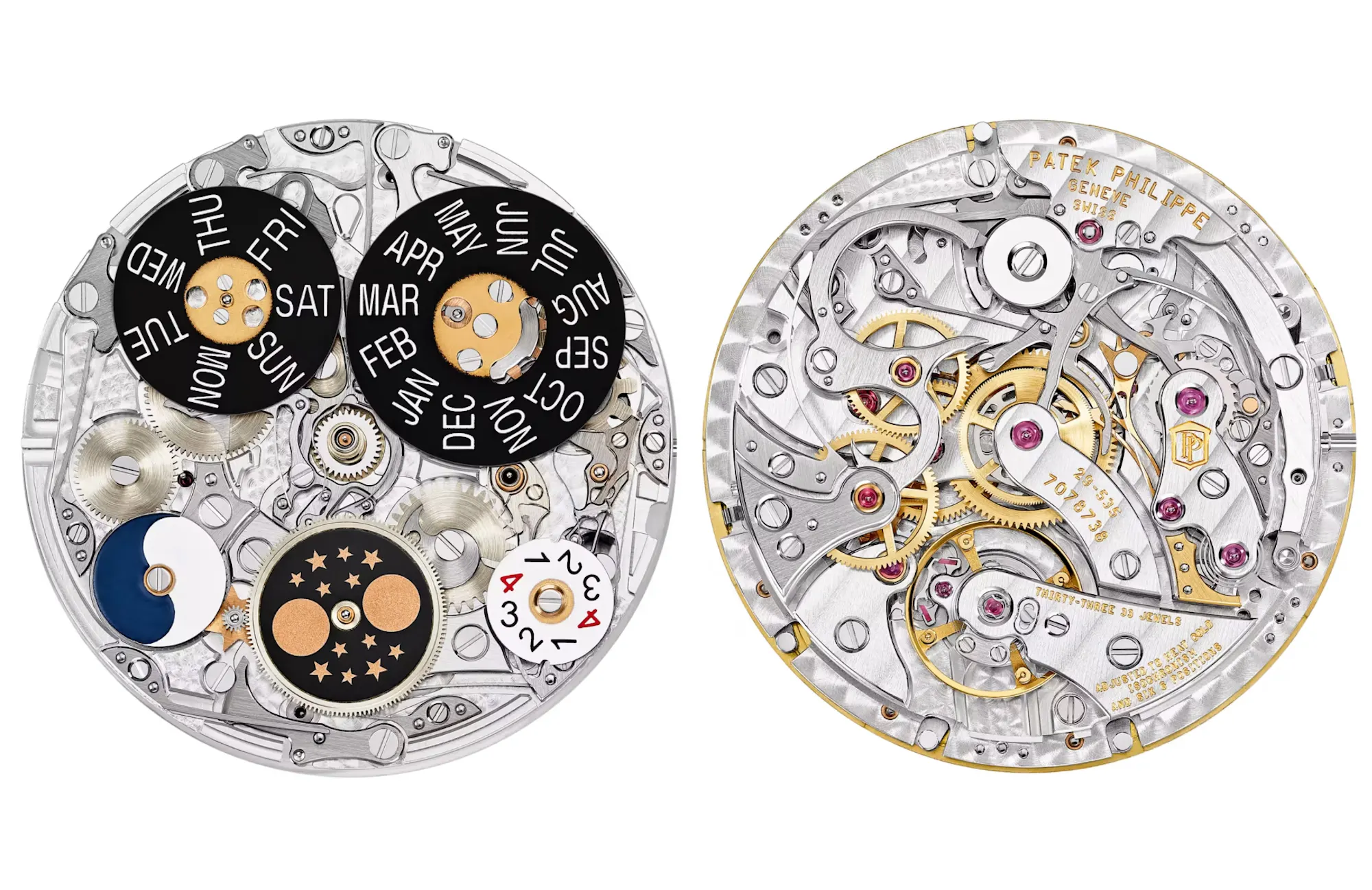
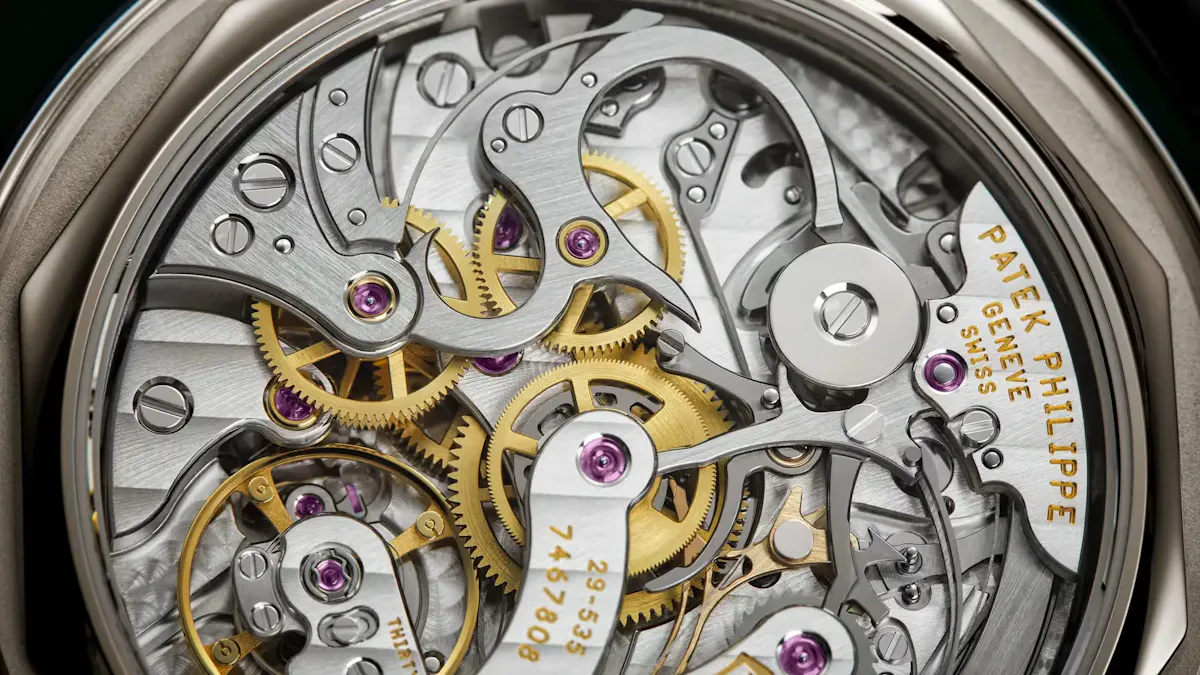
There is no category of Patek Philippe more revered than its long line of perpetual calendar chronograph watches. Collectors love these for their pioneering designs and accompanying rarity, and no matter which generation you look at, they all have a certain magic that is seldom rivalled – even by Patek’s other similarly venerable contemporaries. But when someone mentions a “Lemania Patek”, ears are bound to perk up (we’ve written about the special relationship between these two already). Given their importance, the watch that ended that shared legacy needed to be one that was exceptionally good. The Ref. 5270 and its accompanying calibre CH 29-535 PS Q, thankfully, were.
Introduced in 2011, it was based on the 29-535 PS from two years prior, and utilises a lateral clutch and column wheel for the chronograph’s transmission: greatly improving aesthetics, despite the shortcomings of the former when compared with a vertical clutch. All of Patek’s savoir faire, however, more than made up for this.
The brand improved the tooth profile of the chronograph teeth to eliminate jitters, improved the minute cam to reduce backlash when resetting the chronograph hand, and improved starting and stopping the chronograph by perfecting the designs of the clutch and blocking levers. Needless to say, the movement was decorated as well as you’d expect for a flagship Patek Philippe, and continues to power the 5270 in Patek’s catalogue today.